K-State Breaks Ground on $128 Million Veterinary Diagnostic Lab
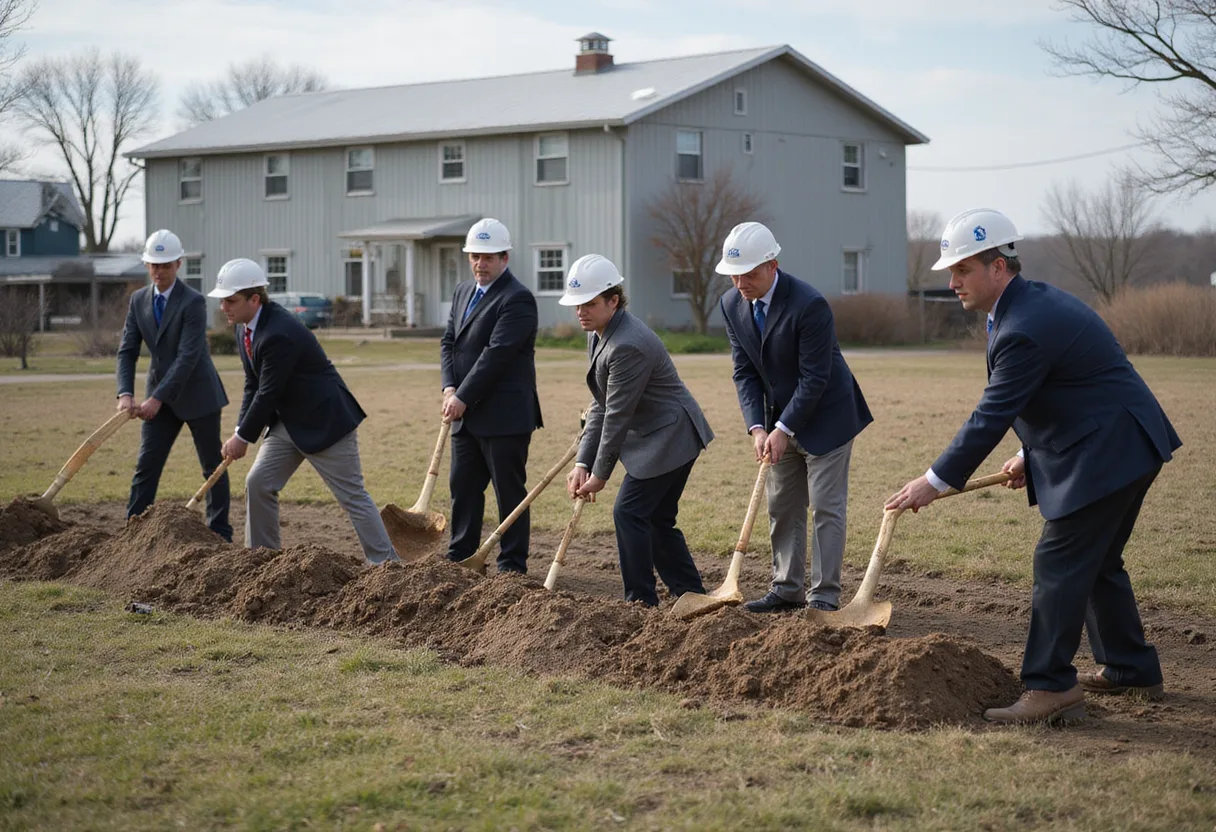
Kansas State University has broken ground on a $128 million veterinary diagnostic laboratory, one of the year's largest animal-health infrastructure investments.
Updated
Photo: AI-generated
Kansas State University has broken ground on a $128 million veterinary diagnostic laboratory, a figure that places the project among the most significant single investments in animal-health diagnostic infrastructure announced this year.
The groundbreaking, reported by KCLY Radio, marks the move from funding commitment to construction for a facility that will serve veterinarians, producers and public-health agencies across the region. The number carries the story: $128 million in dedicated diagnostic capacity at a university already recognized as a hub of veterinary medicine and animal-health research.
Why does a diagnostic lab matter at the exam table?
Diagnostic laboratories sit upstream of nearly every clinical decision. When a practitioner sends a sample, the turnaround time, test menu and biosafety capacity of the receiving lab determine how fast a diagnosis becomes a treatment plan.
A $128 million facility signals expanded capacity on all three fronts. For companion-animal medicine, that means faster pathogen identification, broader molecular testing and stronger support for oncology and infectious-disease workups. For food-animal practice, a large diagnostic footprint supports herd-level investigations — brucellosis surveillance, foreign animal disease rule-outs, feedlot outbreak tracing — where a delayed answer costs money and, in worst cases, market access.
The public-health dimension matters just as much. Roughly 60-70% of emerging infectious diseases in humans are zoonotic, and diagnostic labs like the one K-State is building act as early-warning sensors. Sample by sample, they detect influenza strains, salmonella serotypes and vector-borne pathogens before those agents reach wider populations.
What does the location tell us?
Kansas State, in Manhattan, Kansas, anchors one of the densest animal-health business corridors in the United States. The region hosts major pharmaceutical and biologics manufacturers, federal animal-health programs and the National Bio and Agro-Defense Facility, NBAF.
Siting a $128 million diagnostic laboratory in that cluster creates practical advantages. Shared expertise flows between institutions. Research findings move into validated tests faster. Graduates trained in the facility enter the diagnostic workforce already familiar with the platforms practicing veterinarians rely on.
How does the investment break down for practitioners?
While the source report does not detail the specific test platforms, staffing levels or opening timeline, the scale of the commitment points to several likely practice-level effects once the lab is operational:
- Higher throughput — a facility of this size typically reduces sample backlogs during outbreak seasons, when avian influenza or porcine epidemic diarrhea events overwhelm existing capacity
- Expanded assay availability — new molecular and sequencing workflows generally reach accredited diagnostic labs before private reference labs adopt them
- Training pipeline effects — construction of this magnitude usually accompanies expanded residency and graduate programs in pathology, microbiology and molecular diagnostics
What happens next?
Construction now begins. Universities typically deliver projects of this scope in phases over multiple years, and K-State will face the standard tests of any large academic build: contractor execution, equipment procurement and accreditation continuity through the transition.
For veterinarians in Kansas and the surrounding states, the practical question to watch is the operational one. When the doors open, will sample turnaround improve measurably for the clinicians who send cases there today?
A groundbreaking is a beginning, not a result. But $128 million committed to veterinary diagnostics represents a bet that animal-health infrastructure — long the quiet corner of the profession — deserves the same investment priority as the clinics and hospitals it serves.
The project's true impact will register in the numbers practitioners see daily: days to result, tests available and outbreaks caught early.
Source: Google News: Veterinary diagnostics
Grace Kim
Show full bio
Staff writer covering regulation, policy and their impact on Small- and large-animal clinical practice at The Vet Scope.
Related articles
New York State Awards $19.5M for Veterinary Diagnostic Lab Expansion
New Bolton Center Breaks Ground on $94M Diagnostic Lab
Penn State Breaks Ground on $65 Million Animal Diagnostic Lab
UPenn Breaks Ground on $94 Million Pennsylvania Veterinary Diagnostic Laboratory
UPenn breaks ground on $94 million veterinary diagnostic laboratory