UPenn Breaks Ground on $94 Million Pennsylvania Veterinary Diagnostic Laboratory
The University of Pennsylvania has broken ground on a $94 million Pennsylvania Veterinary Diagnostic Laboratory, a project positioned to reshape regional testing capacity for veterinarians, livestock producers, and public-health agencies.
Updated
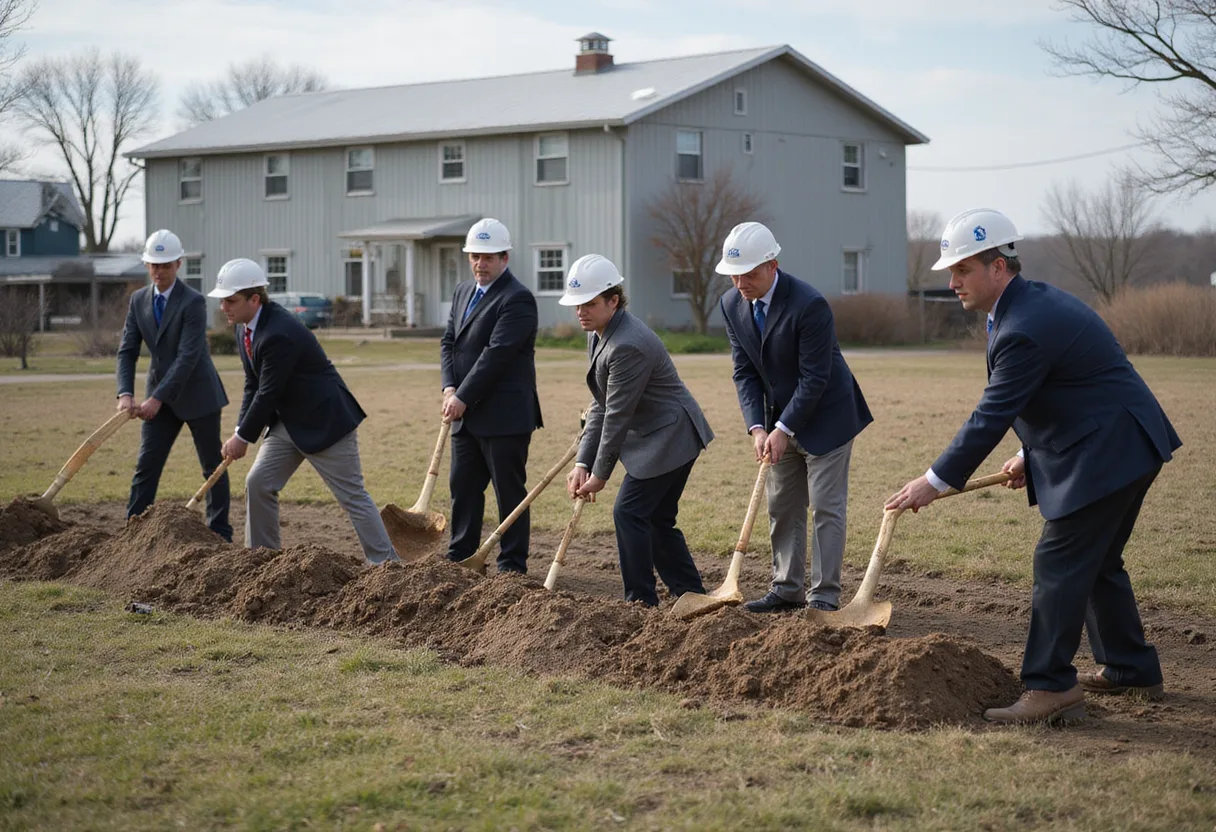
Photo: AI-generated
A $94 million veterinary diagnostic laboratory is under construction at the University of Pennsylvania, according to pennwatch.org. The project, named the Pennsylvania Veterinary Diagnostic Laboratory, has reached the groundbreaking stage, signaling the start of a multi-year build on a facility positioned to reshape regional testing capacity.
What a $94 million build signals
Capital projects of this scale typically reflect a complete replacement of existing laboratory space rather than a renovation. New construction at this budget level generally accommodates enhanced biosafety-level capabilities, dedicated necropsy facilities, modern histopathology suites, and digital imaging infrastructure that older academic buildings cannot support. The investment places the laboratory in the same tier as recently built or planned facilities at peer institutions serving as state or regional reference laboratories.
How veterinary diagnostic laboratories function
Veterinary diagnostic laboratories process submitted specimens from companion animals, livestock, poultry, and wildlife. Submissions include blood, serum, tissue, swabs, and feces. The laboratories return identification and characterization of bacterial, viral, parasitic, and toxicologic agents. Testing menus at academic facilities typically include bacteriology, virology, parasitology, toxicology, histopathology, clinical pathology, and molecular diagnostics such as PCR.
A laboratory's value to referring veterinarians depends on three variables: the breadth of its test menu, the speed of result return, and its accreditation status. The American Association of Veterinary Laboratory Diagnosticians (AAVLD) accredits U.S. veterinary diagnostic laboratories, and that accreditation is the standard that state animal-health agencies, the USDA, and referring practices look for when routing samples.
What it could mean for Pennsylvania practitioners
Expanded regional capacity shortens the chain between sample collection and result return. Pennsylvania veterinarians currently route a meaningful share of advanced tests to out-of-state reference laboratories. A new in-state facility with full-service capacity could absorb those submissions, reducing both transit time and cost per case.
For food-animal practice, the implications are operational. Pennsylvania is a leading state in dairy production and poultry, and faster diagnostic turnaround on cases involving Salmonella, highly pathogenic avian influenza, bovine viral diarrhea virus, or Mycobacterium avium subspecies paratuberculosis directly affects herd-level decisions on movement, treatment, and culling. A consolidated laboratory also supports antimicrobial-susceptibility testing aligned with federally relevant reporting standards.
For companion-animal practice, the gains are clinical. On-site access to advanced molecular panels, cytology, and histopathology reduces the lag between sample draw and treatment adjustment. Internists, oncologists, and dermatologists rely on rapid pathology turnaround for case management.
The public-health layer
Veterinary diagnostic laboratories also function as sentinels for zoonotic disease. Testing of livestock, wildlife, and companion-animal specimens contributes to surveillance for pathogens that move between animals and people, including Salmonella enterica, Campylobacter jejuni, rabies virus, and highly pathogenic avian influenza. State public-health agencies and the USDA's National Animal Health Laboratory Network (NAHLN) depend on accredited university and state laboratories for confirmatory testing during outbreak response.
A new laboratory built to current biosafety standards expands the state's capacity to participate in that federal network. It also strengthens Pennsylvania's position in coordinated surveillance for emerging and endemic livestock diseases.
What to watch next
The milestones that will determine the laboratory's eventual impact are the announced opening date, the formal accreditation pathway, and the testing menu released to referring practices. Practitioners should also track whether the laboratory joins the NAHLN, which would integrate its testing into the national infrastructure for animal-disease surveillance.
Construction has started. When the Pennsylvania Veterinary Diagnostic Laboratory begins receiving submissions, the measure of its value will be how quickly Pennsylvania veterinarians, livestock producers, and public-health agencies shift their sample routing to take advantage of it.
Source: Google News: Veterinary medicine
Amara Osei
Show full bio
Correspondent covering companies, deals and strategy in Small- and large-animal clinical practice at The Vet Scope.
Related articles
Penn State and Pennsylvania Agriculture Break Ground on Diagnostic Lab Expansion
Penn State Breaks Ground on $65 Million Animal Diagnostic Lab
Penn State, PDA break ground on Animal Diagnostic Laboratory expansion
Penn Vet Breaks Ground on $94 Million Chester County Lab
New Bolton Center Breaks Ground on $94M Diagnostic Lab