University of Kentucky Names New Veterinary Diagnostic Laboratory Director
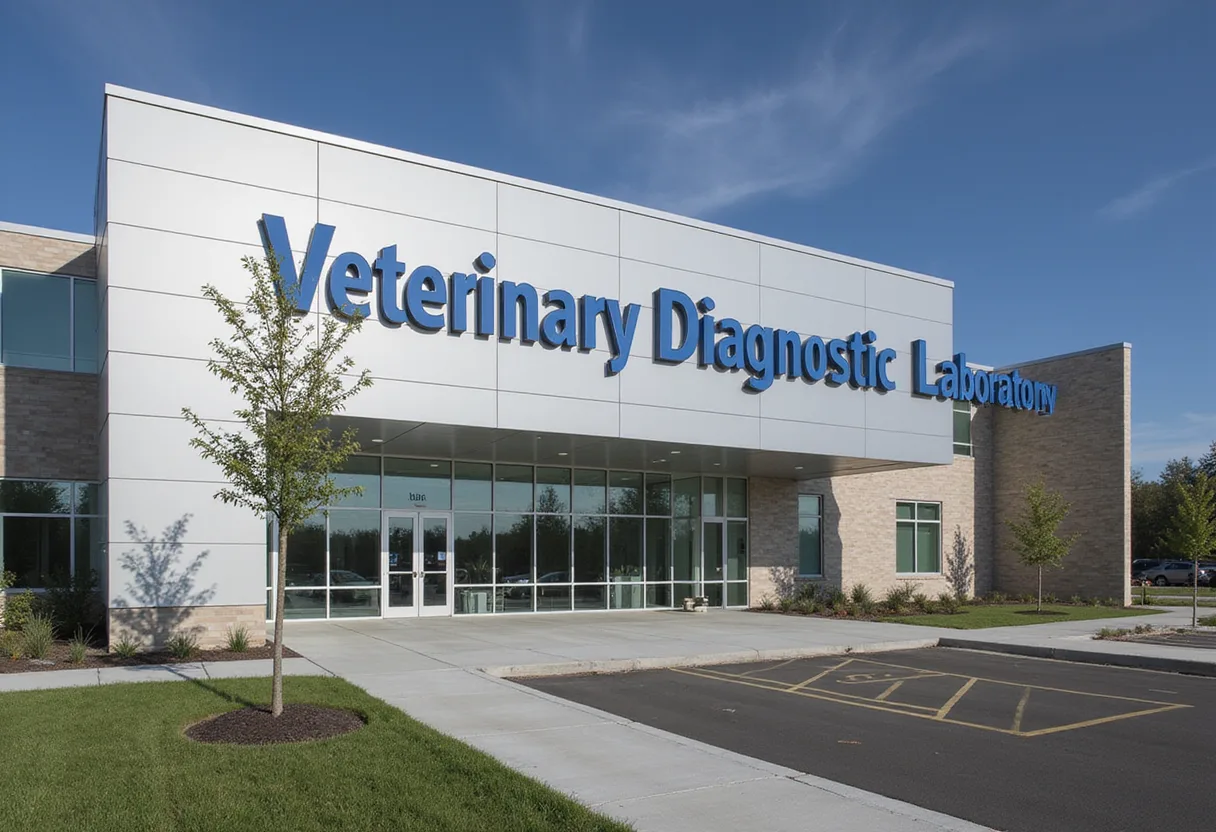
The University of Kentucky has named a new director of its Veterinary Diagnostic Laboratory, a facility central to equine and food-animal diagnostics across the Commonwealth.
Updated
Photo: AI-generated
The University of Kentucky has named a new director of its Veterinary Diagnostic Laboratory, the institution announced via UKNow.
The appointment places new leadership over one of the country's most active state diagnostic laboratories, a facility that sits at the center of Kentucky's equine industry and its food-animal sector. The university did not detail the incoming director's prior role, start date, or the portfolio of the departing director in the announcement as published.
Why does this laboratory matter to practitioners?
The University of Kentucky Veterinary Diagnostic Laboratory functions as a full-service diagnostic facility serving veterinarians, animal owners, and public-health agencies across the Commonwealth. Laboratories of this type handle the caseload that private practice cannot run in-house:
- necropsy and histopathology for livestock, companion animals, and wildlife;
- bacteriology, virology, and serology, including reportable-disease testing;
- toxicology and molecular diagnostics relevant to herd-health investigations.
For Kentucky specifically, the stakes are concentrated in the horse industry. The state's equine economy depends on fast, accurate laboratory confirmation of infectious agents — the difference between a contained single-farm event and an industry-level outbreak. Diagnostic laboratory leadership directly shapes turn-around priorities, test-menu decisions, and surveillance reporting relationships with state and federal authorities.
What changes with a new director?
Director transitions at major diagnostic laboratories typically reset three practice-level variables: which assays are offered and at what turnaround, how surge capacity is managed during outbreak responses, and how findings flow to referring veterinarians and regulators.
Food-animal practitioners rely on the laboratory for reportable-disease confirmation routed to state animal-health officials and, where applicable, USDA surveillance programs. Companion-animal practitioners use the same infrastructure for postmortem diagnostics and specialized infectious-disease testing. A new director's stated priorities usually signal where caseload capacity and test development will head over the following two to three years.
The university's announcement did not specify the new director's species-focus background, an omission practitioners in the region will watch closely. A director drawn from equine internal medicine or pathology would suggest continuity with the laboratory's historic caseload mix; a food-animal or microbiology background would signal a different emphasis.
Who needs to follow this?
Three audiences have direct operational exposure to the appointment:
- Equine practitioners in Central Kentucky, whose necropsy and infectious-disease submissions dominate the laboratory's high-consequence casework;
- Food-animal veterinarians, who depend on the laboratory for herd investigations and reportable-disease documentation;
- Public-health partners, including state agencies that coordinate zoonotic and reportable-disease surveillance through the facility.
The Vet Scope will update this story when the university publishes the incoming director's name, credentials, and effective date.
For now, the announcement confirms a leadership change at a laboratory whose output — case confirmations, surveillance data, and outbreak response — reaches every large-animal practice in the region.
Source: Google News: Veterinary diagnostics
Amara Osei
Show full bio
Correspondent covering companies, deals and strategy in Small- and large-animal clinical practice at The Vet Scope.
Related articles
University of Kentucky Names New Director of Veterinary Diagnostic Laboratory
UPenn Breaks Ground on $94 Million Pennsylvania Veterinary Diagnostic Laboratory
Penn State and Pennsylvania Agriculture Break Ground on Diagnostic Lab Expansion
K-State Breaks Ground on $128 Million Veterinary Diagnostic Lab
Penn Vet Breaks Ground on State-Funded Diagnostic Laboratory