State Officials Ask USDA to Authorize H5N1 Vaccination for Dairy Cattle
NASDA and NASAHO asked USDA on November 5 to authorize voluntary H5N1 vaccination of dairy cattle, citing 44 new herd cases in 30 days and dairy losses up to $700,000.
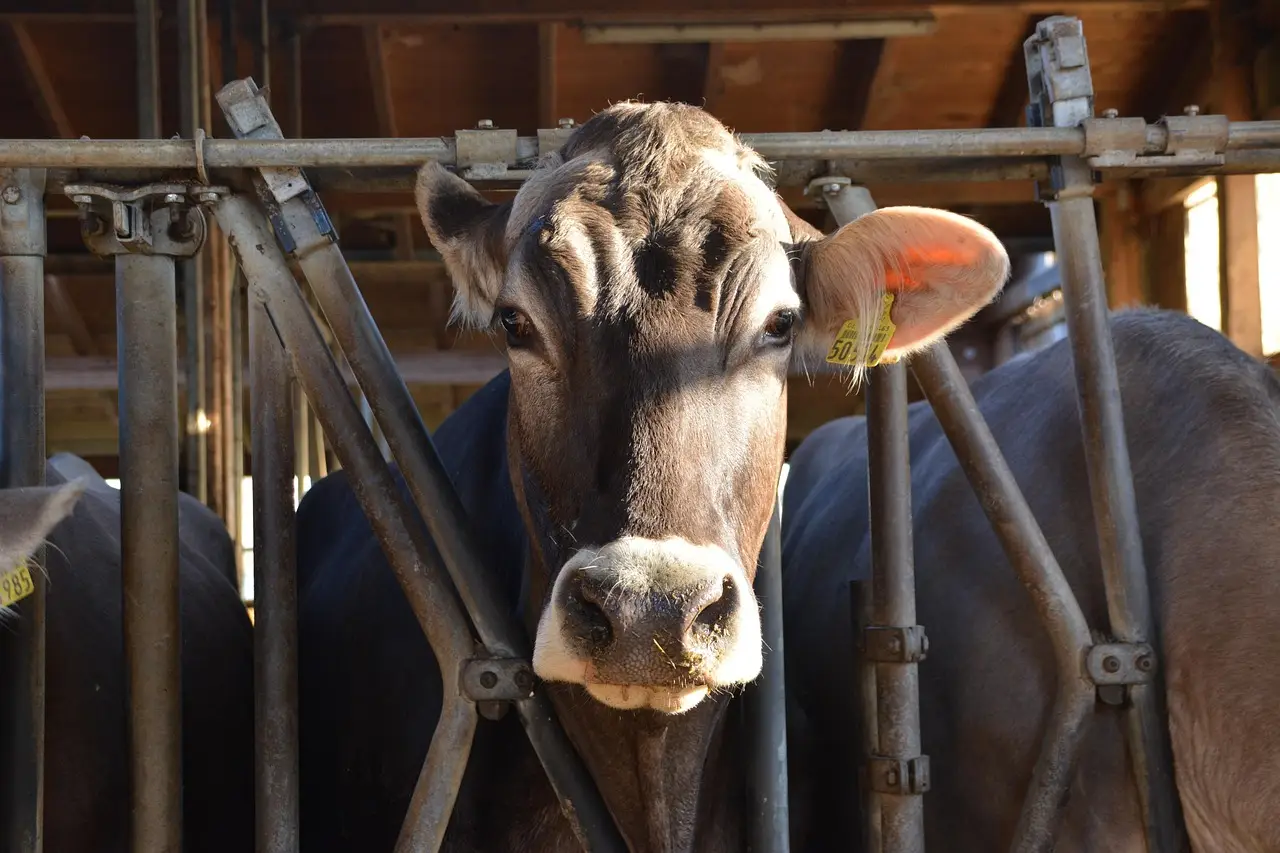
Photo: Portraits of Modern Dairy / unsplash
Two national organizations asked USDA on November 5 to authorize an emergency H5N1 vaccination framework for dairy cattle, as federal data show 44 confirmed herd infections across 7 states in the past 30 days. The National Association of State Departments of Agriculture (NASDA) and the National Assembly of State Animal Health Officials (NASAHO) delivered their letter to Agriculture Secretary Brooke L. Rollins after meeting with USDA officials the same day.
Washington accounts for 30 or more of the recent 44 cases, according to USDA Animal and Plant Health Inspection Service (APHIS) figures current through November 19. Colorado, Idaho, Indiana, Oklahoma, Oregon, and Texas each reported between 1 and 5. The most recent confirmation, on November 14, came from an Oklahoma dairy herd.
Since the first dairy cattle detections in 2024, APHIS has confirmed 1,234 cases in cattle: 917 in 2024, 171 in 2025, and 146 so far in 2026. Livestock detections now span 22 states. USDA confirmed first-ever infected herds in Indiana and Oregon earlier this month.
What are state officials proposing?
The groups want a voluntary national emergency vaccination framework, starting with a limited pilot program in willing states. Vaccination within a state would proceed only in consultation with that state's animal health official and with the official's concurrence. The letter argues the pilot would let USDA, states, and industry evaluate vaccine effectiveness, surveillance protocols, implementation needs, and potential trade impacts before wider deployment.
The framework would establish a pathway for broader use if epidemiological conditions warrant it. The groups also call for a task force that includes state animal health officials to set criteria for state participation, vaccine deployment, postvaccination surveillance, animal identification and movement, and the conditions for expanding or ending vaccination.
The letter suggests a vaccination strategy could prioritize affected herds, states, and other populations based on epidemiological risk. In short, the plan is a risk-targeted pilot, run by states, with an exit path.
NASDA's news release is explicit that vaccines would not replace core measures. Surveillance, biosecurity, movement management, and animal identification and traceability remain the foundation; vaccination would be an additional voluntary option.
What did the organizations say?
NASDA CEO Ted McKinney argued current tools are not enough. "The dairy industry must have effective tools to combat HPAI," McKinney said. "Current surveillance strategies like the National Milk Testing Strategy and premovement testing have been critical in early detection, but an integrated disease control strategy must go beyond biosecurity and movement controls and include veterinary countermeasures."
NASAHO President Alex Hamberg, VMD, PhD, pointed to the economic stakes. "HPAI continues to loom as a significant threat to animal health, our food supply and commerce," Hamberg said. "Veterinary and state government leaders need every available tool to protect the agricultural economy in their states and empower our farmers in combating this virus to protect their dairy herds and poultry flocks."
The letter warns that natural infection generates only short-lived protective immunity, leaving herds susceptible to reinfection. The groups wrote that without a proactive, coordinated eradication strategy, H5N1 risks becoming endemic in US dairy cattle, requiring years of management and continued response to costly spillover events in poultry.
What are the herd, flock, and trade costs?
The food-animal impact is already measurable. Despite aggressive supportive care, many sick cows never return to pre-infection milk production, are culled early, die, or experience late-term abortions. Some affected dairies have reported gross revenue losses of up to $700,000.
Spillover from dairy operations has hit poultry as well. As of July 2025, at least 17 states had experienced commercial poultry losses linked to cattle spillover. The letter cites 115 domestic flocks infected with the B3.13 strain, accounting for 28% of total poultry detections and the loss or depopulation of more than 36 million birds.
Trade is the third pressure point. Trading partners closely monitor animal disease events, the letter notes, and prolonged outbreaks raise the risk of export disruptions, additional certification requirements, and reduced market confidence in US dairy, beef, poultry, and genetic products. NASDA and NASAHO say any vaccination strategy should minimize potential trade and market disruptions.
Where do cattle vaccines stand now?
No H5N1 vaccine for dairy cattle is currently authorized. According to the letter, USDA has said it continues to support rapid development and timely approval of H5N1 vaccines for dairy cattle, and several candidates are undergoing field trials or awaiting final approval for emergency use. Poultry vaccine research also continues, including a USDA-funded Louisiana State University project reported by dvm360.
For now, control in dairy cattle rests on surveillance, biosecurity, and movement controls. CDC guidance lists veterinarians and veterinary staff among workers who may face exposure risk, keeping the outbreak a occupational-health concern for practitioners as well as a production issue.
USDA has not announced a decision on the request. If the agency authorizes the pilot, state animal health officials would gain a new tool against a virus that has now infected herds in nearly half the country.
Source: dvm360.com
Daniel Okafor
Show full bio
News editor covering technology and product news in Small- and large-animal clinical practice at The Vet Scope.