Shearing Ewes at Day 50 of Gestation Raises Lamb Birth Weight
SDSU research published in the Journal of Animal Science shows shearing ewes at gestation day 50 yields heavier, larger lambs with better survivability — at no added cost.
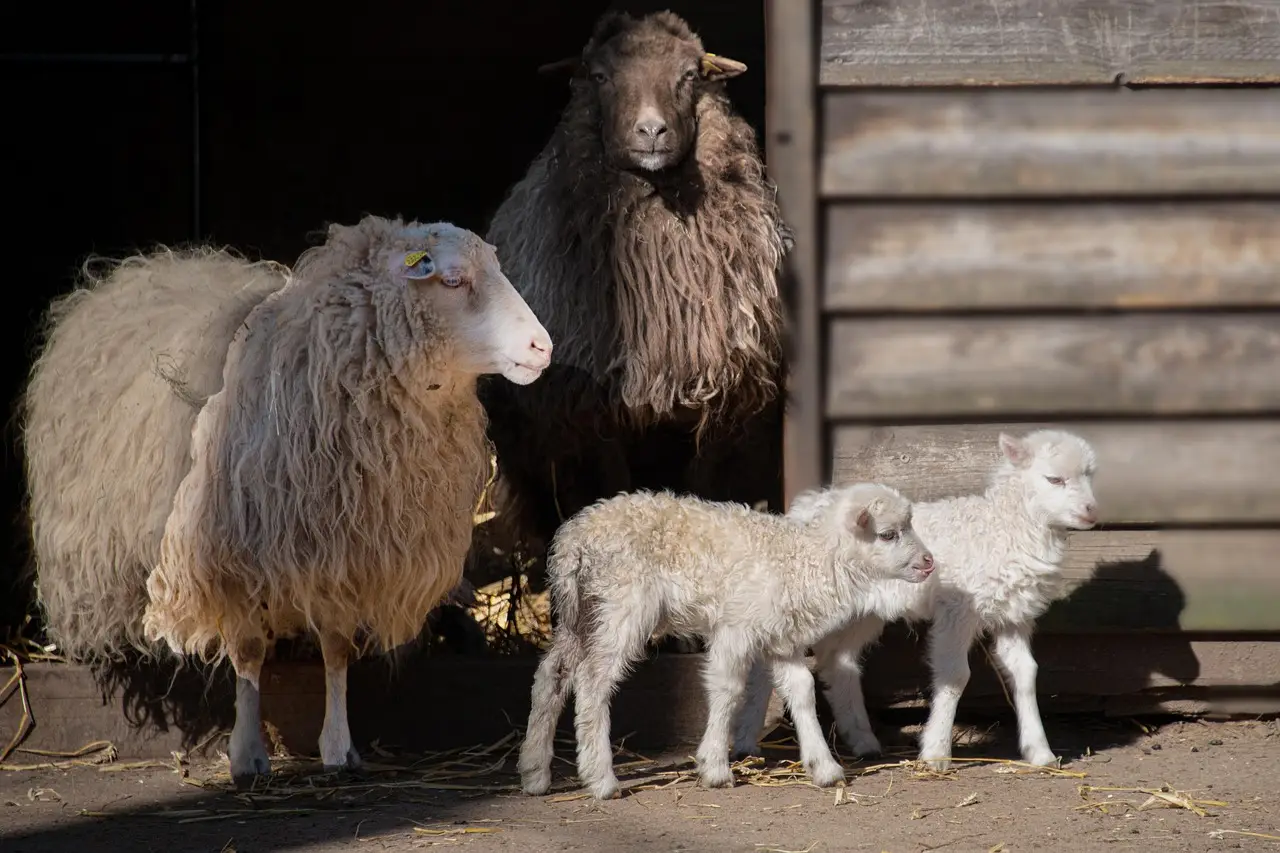
Photo: Gruendercoach / pixabay
Shearing ewes at day 50 of gestation instead of the standard day 120 produced larger, heavier lambs at birth, according to newly published research from South Dakota State University in the Journal of Animal Science.
The study, led by Alex Vasquez-Hidalgo, Ph.D., an assistant professor in the SDSU Department of Veterinary and Biomedical Sciences, examined how limited cold stress during pregnancy shapes fetal development. Twin and triplet lambs born to ewes shorn at day 50 showed higher birth weights, greater body size, increased umbilical blood flow and heavier weaning weights months later.
"It's always been known that heat stress, in any pregnant animal, is going to cause problems for the developing fetus, so I wondered what cold stress does," Vasquez-Hidalgo said. "It appears that some cold stress, not extreme of course, but some cold stress is beneficial for the physiology of the pregnant ewe."
What changes in the barn?
In the United States, ewes due to lamb in spring are typically shorn at around 120 days of pregnancy, largely to improve cleanliness at lambing. Vasquez-Hidalgo noted that researchers in other countries with similar climates had shorn ewes earlier to simulate cold stress and recorded higher birth weights. He set out to test whether the effect could be replicated in a U.S. flock, and his team became the first to run a study of this type in the country.
The physiological logic is straightforward, he explained: "The idea is that while the ewe's body works to keep warm, it passes physiological information to the growing lamb, preparing the baby to be adaptable to a colder climate."
The practical payoff rests on a well-established link between size and survival. "Our research showed that twin and triplet lambs born to ewes shorn at day 50 had higher birth weights," Vasquez-Hidalgo said. "This is good for producers because there is a positive correlation between birth weight and survivability."
How the study was run
The day-50 timing was deliberate. Vasquez-Hidalgo and graduate student Mara Johnson selected it because it coincides with placental growth, the period when the organ that transfers nutrients from dam to fetus is developing.
From days 50 to 110 of pregnancy, the team used ultrasound to measure umbilical blood flow and fetal and placental development in two groups: ewes shorn at day 50 and ewes left unshorn. Lambs were born at roughly 147 days of gestation. At delivery, researchers recorded lamb and placental weights and collected placental tissue to compare gene expression between the groups.
The findings extend beyond the birth pen. Lambs whose mothers experienced limited cold stress were larger at birth, carried better umbilical blood flow in utero and remained heavier at weaning months later — markers the researchers describe as positive signals for long-term health.
A zero-cost management tool
For producers, the intervention requires no new inputs. "We can tell a producer it is likely if you shear ewes on day 50 of pregnancy, specifically if they're carrying twins or triplets, you're probably going to improve lamb birth weights and survivability," Vasquez-Hidalgo said. "This is a managerial tool that producers don't have to spend more on."
The guidance targets the litters where it matters most. Twin and triplet pregnancies carry elevated risk of low birth weight, and those are the lambs that showed the clearest gains in this study.
What comes next
Follow-up work is already underway. Vasquez-Hidalgo is investigating whether lambs from early-shorn ewes actually perceive temperatures differently than their counterparts, and whether that difference confers a survival and growth advantage.
A second question is causal: whether limited cold stress alone drives the increased birth weight, or whether the physical act of shearing produces the same result. Until those results land, the day-50 shearing recommendation stands as a low-cost option for flocks lambing in spring.
Source: morningagclips.com
Daniel Okafor
Show full bio
News editor covering technology and product news in Small- and large-animal clinical practice at The Vet Scope.
Related articles
University of Minnesota webinar targets newborn lamb and kid survival
Ewes Held at BCS 3.5–4.0 Live Longer and Produce More
Calf Jackets in Cold Weather: What Michigan Data Says About Use
OSU Extension flags late winter as high-risk window for livestock
Small ruminants under stress: new review maps thyroid–redox links