Ewes Held at BCS 3.5–4.0 Live Longer and Produce More
A seven-year prospective study of 6000 ewes in eleven English flocks links a body condition score of 3.5–4.0 at mating, scanning and lactation to longer survival and higher lifetime productivity.
Updated
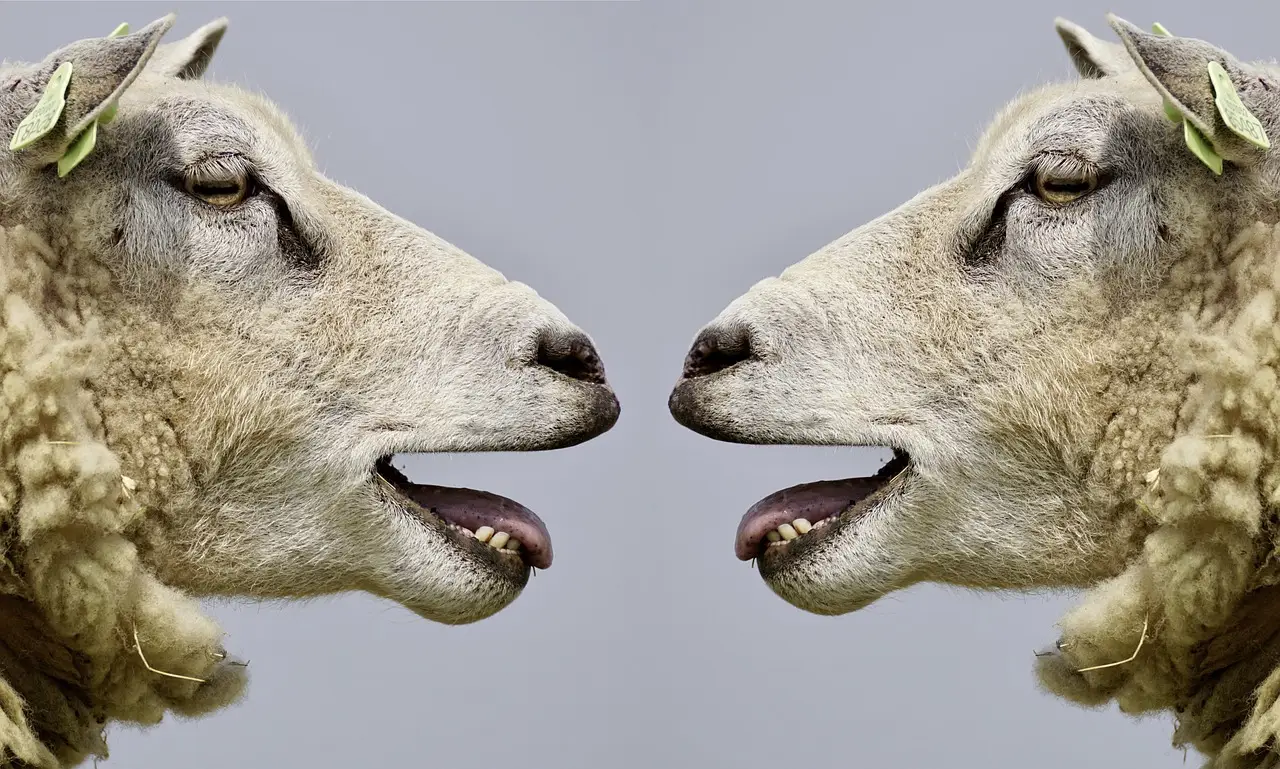
Photo: suju-foto / pixabay
Ewes kept at a body condition score of 3.5 to 4.0 at mating, scanning and during lactation showed longer survival and higher lifetime productivity. That is the core finding of a seven-year prospective longitudinal study covering 6000 ewes in eleven flocks across England, published in Preventive Veterinary Medicine on 15 October 2026.
The research team — Amey Brassington, Liz Genever, Fiona Lovatt, Nerys Wright and Laura Green — tracked the same animals across their productive lives rather than sampling at a single time point. That design matters. Prospective longitudinal work in commercial sheep flocks is rare, and it lets the authors link condition at defined management moments to outcomes that accumulate over years, not seasons.
Why does condition score at three specific moments matter?
The study pinned its analysis to three checkpoints: mating, scanning and lactation. Each point carries a distinct physiological demand. Mating determines conception. Scanning reflects how well the ewe has held condition through early pregnancy. Lactation is the point where thin ewes either recover or begin a decline that successive lambings deepen.
Ewes scoring 3.5 to 4.0 at those checkpoints survived longer and delivered greater lifetime productivity than flockmates that did not. The study defines that band as the target condition, sustained across all three stages rather than achieved at any single one.
The practical takeaway: condition scoring is not a once-a-year event but a repeated measurement at fixed points, with 3.5 to 4.0 as the working benchmark.
What changes at the handling gate?
For practitioners advising sheep clients, the study converts an often vague instruction — "keep ewes fit" — into a numeric target with longitudinal evidence behind it. The implications for farm practice include:
- Scoring ewes by hand at mating, scanning and in lactation, and recording the numbers.
- Identifying animals drifting below 3.5 early, while nutritional correction can still work.
- Using condition data at culling decisions, since sustained low scores predicted shorter productive life.
- Prioritising feed resources toward ewes that can be returned to the 3.5–4.0 band, rather than spreading them evenly.
None of this requires new equipment. It requires a scoring routine at the three named moments and a willingness to act on the numbers.
How strong is the evidence?
The numbers give the study weight: 6000 ewes, eleven commercial flocks in England, seven years of follow-up. The prospective design means condition scores were recorded as they happened, not reconstructed from memory or farm records after the fact.
Because the flocks were commercial operations in England, the results speak directly to lowland and upland UK sheep systems rather than to research-flock conditions. Flocks elsewhere, or under sharply different nutrition and climate, should apply the target band with that caveat in mind.
The evidence takeaway: this is one of the larger and longer datasets linking ewe condition to lifetime performance in commercial English flocks.
What are the companion-animal and public-health angles?
This is a food-animal story, and its implications sit squarely in that sector. There is no companion-animal application. On the public-health side, the relevance is indirect but real: longer-surviving, productive ewes reduce replacement rates, which lowers the number of young stock entering the flock and with it the disease exposure that arrives with each new intake.
The sector takeaway: better condition management supports flock health stability and reduces turnover across the national sheep population.
What comes next?
The full analysis in Preventive Veterinary Medicine offers the detailed survival and productivity figures that advisors can carry into flock health planning sessions this breeding season, and subsequent work will likely test how the 3.5–4.0 target performs across a wider range of systems and climates.
Source: Preventive Veterinary Medicine (Elsevier)
Elena Vasquez
Show full bio
Market editor covering money, funding and market shifts around Small- and large-animal clinical practice at The Vet Scope.
Related articles
First-Calving Body Weight Tracks Through to Milk Yield and Culling
Dairy Science study pairs automated BCS with lactation data to lift revenue
Frontiers Editorial Maps Advances in Livestock Genetics and Breeding
Three-Year BLV Proviral Load Study Published in Journal of Dairy Science
OSU Extension flags late winter as high-risk window for livestock