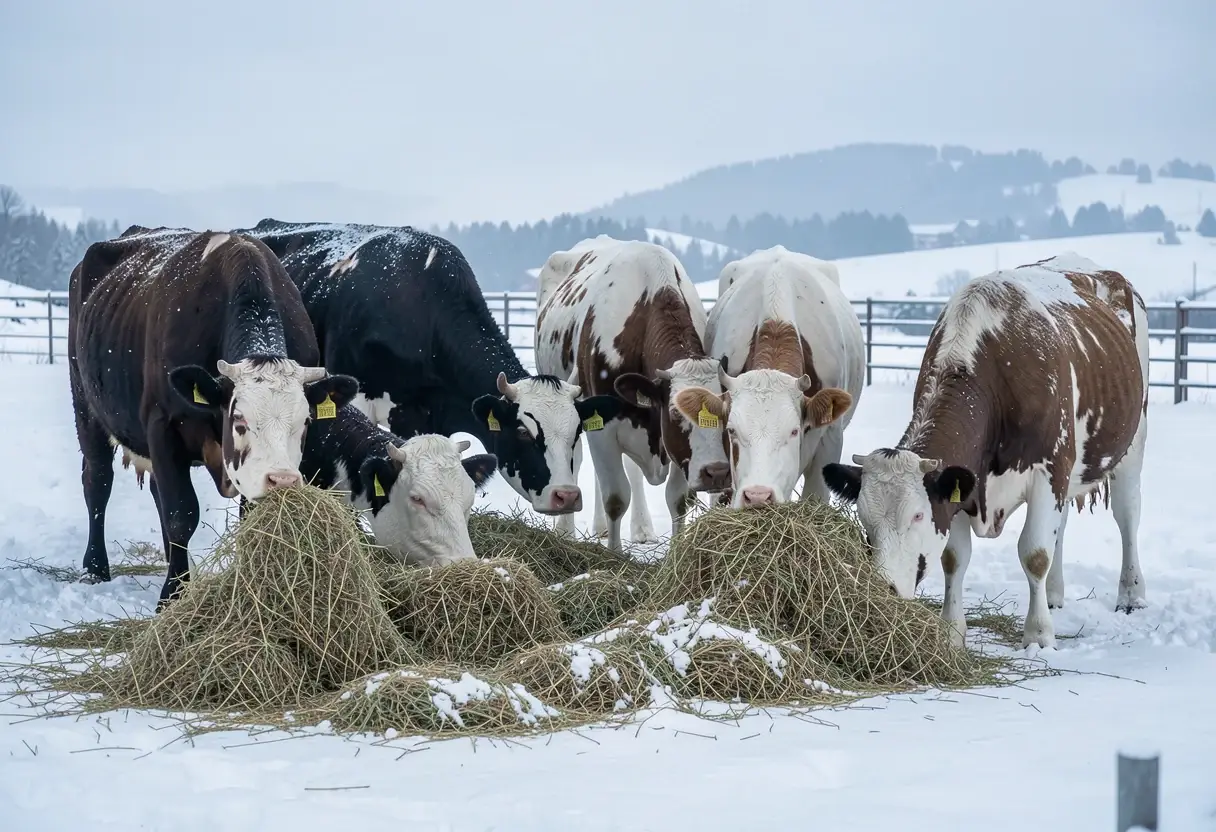
Cold, Wet Coats Push Beef Cattle Energy Needs Up 2% Per Degree
Penn State Extension calculates cold-weather feed math: wet-coated cows cold-stress at 59°F, and a 30-cow herd needs ~500 lb extra hay per cold week.
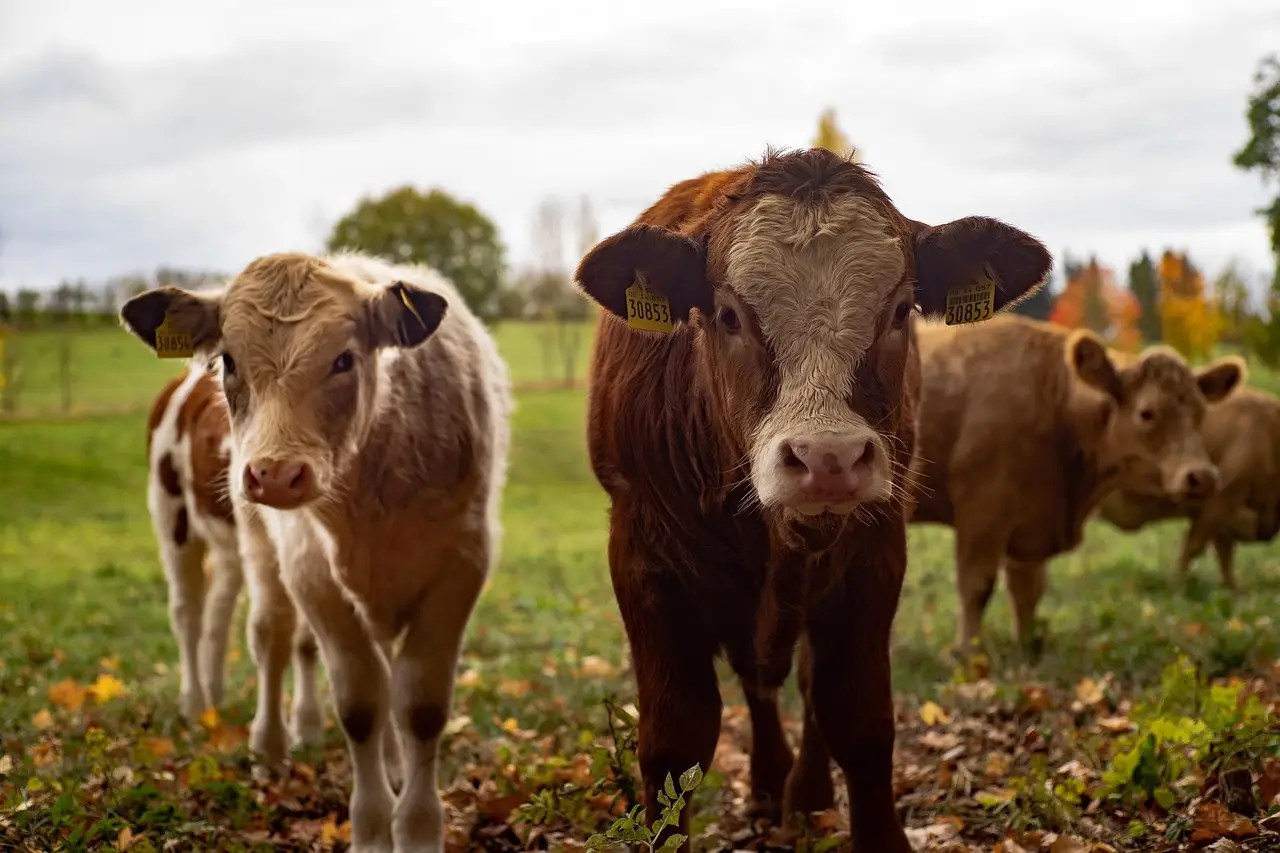
Photo: AI-generated
A beef cow with a wet hair coat can enter cold stress at 59°F — nearly 40 degrees warmer than the same animal with a heavy, dry winter coat, which tolerates conditions down to 18°F without extra energy. That figure, published by Penn State Extension in University Park, Pennsylvania, is the arithmetic behind winter feeding decisions that begin the moment temperatures drop.
How cold stress works
Cattle hold body temperature inside a range called the thermoneutral zone. Once the effective temperature falls below the animal's lower critical temperature (LCT), the cow burns additional energy just to stay warm. The LCT is not fixed. It moves with coat condition: dry and heavy coats insulate well, while wind, precipitation, and mud strip that protection away. Wet, windy conditions are the worst combination because water and moving air accelerate heat loss from the hide.
What changes at the feed bunk
The Extension guidance gives a practical rule. For cows in adequate body condition — a BCS of 5 or higher on the 1-to-9 beef scoring system — with a dry coat, energy requirements rise about 1% for every degree Fahrenheit below the LCT. For cattle with wet coats, the increase may reach 2% per degree.
Penn State Extension works a full example:
- A cow with a normal, dry winter coat has an LCT of 32°F and normally needs 12 lb of total digestible nutrients (TDN) per day.
- The effective temperature drops to 22°F, putting her 10°F below her LCT.
- Ten degrees times 1% equals a 10% increase, or 1.2 additional lb of TDN.
- Her new daily requirement is 13.2 lb of TDN.
Translating that into hay takes one more step. Medium-quality dry hay at 56% TDN and 90% dry matter supplies about 0.50 lb of TDN per pound of hay (0.56 × 0.90 = 0.504). Before cold stress, the cow needs 12 ÷ 0.504, or 23.8 lb of hay daily. During cold stress, she needs 13.2 ÷ 0.504, or 26.2 lb. The difference is roughly 2.4 lb of hay per cow per day.
What it means for the whole herd
Scale that to 30 cows and the numbers grow fast: about 72 additional pounds of hay daily, or roughly 500 pounds over one week of sustained cold weather. That is half of a 1,000 lb round bale — before accounting for feeding waste.
The Extension material flags two caveats. First, the figures are estimates; actual needs depend on forage quality, body condition, stage of production, and weather. Second, cattle eating lower-quality hay may physically be unable to consume enough extra forage to close the energy gap. In those cases, offering better hay or an energy-dense supplement works better than simply feeding more of the same.
Forage testing and body condition
Forage anchors most winter feeding programs, but its value varies with species, maturity at harvest, harvesting conditions, and storage. A forage test reports TDN and crude protein, letting producers check whether the available supply meets herd requirements. Producers feeding wrapped baleage must also adjust for its higher moisture content when calculating how much to offer.
Timing matters because demands climb in late gestation and lactation, exactly as spring calving approaches. On the 1-to-9 system, mature cows should calve at a BCS of 5–6; first-calf heifers benefit from slightly greater condition. Cows that enter calving season thin may show reduced reproductive performance and a delayed return to estrus.
Management beyond the bunk
Nutrition is only half the equation. Windbreaks, dry bedding, and well-drained pens cut cold stress directly, and access to clean, unfrozen water remains essential — inadequate water intake limits feed intake in turn.
The guidance draws on two extension references: Hartman, D. (2025), "Cold Stress and Beef Cattle," Penn State Extension, and Warner, J. & Waggoner, J. (2024), "Managing Beef Cows During Cold Stress," Kansas State University Research and Extension.
Producers who test hay, score body condition monthly through the winter, and calculate TDN shortfalls before storms arrive will enter spring calving with fewer thin cows and tighter breeding windows.
Source: morningagclips.com
Grace Kim
Show full bio
Staff writer covering regulation, policy and their impact on Small- and large-animal clinical practice at The Vet Scope.
Related articles
Calf Jackets in Cold Weather: What Michigan Data Says About Use
Clay feed additive failed to rescue milk yield in heat-stressed Holsteins
Winter Storm Prompts Livestock Cold-Stress Warning Across Affected Regions
OSU Extension flags late winter as high-risk window for livestock
Heat Stress in Dairy Herds: What the Manitoba Co-operator Piece Tells Producers