NC State Alumna Funds First Food Animal Research Endowment
Ellen Davis has established NC State's first Food Animal Research Endowment, backing the Food Animal Initiative as livestock drives 70% of the state's $117 billion farm economy.
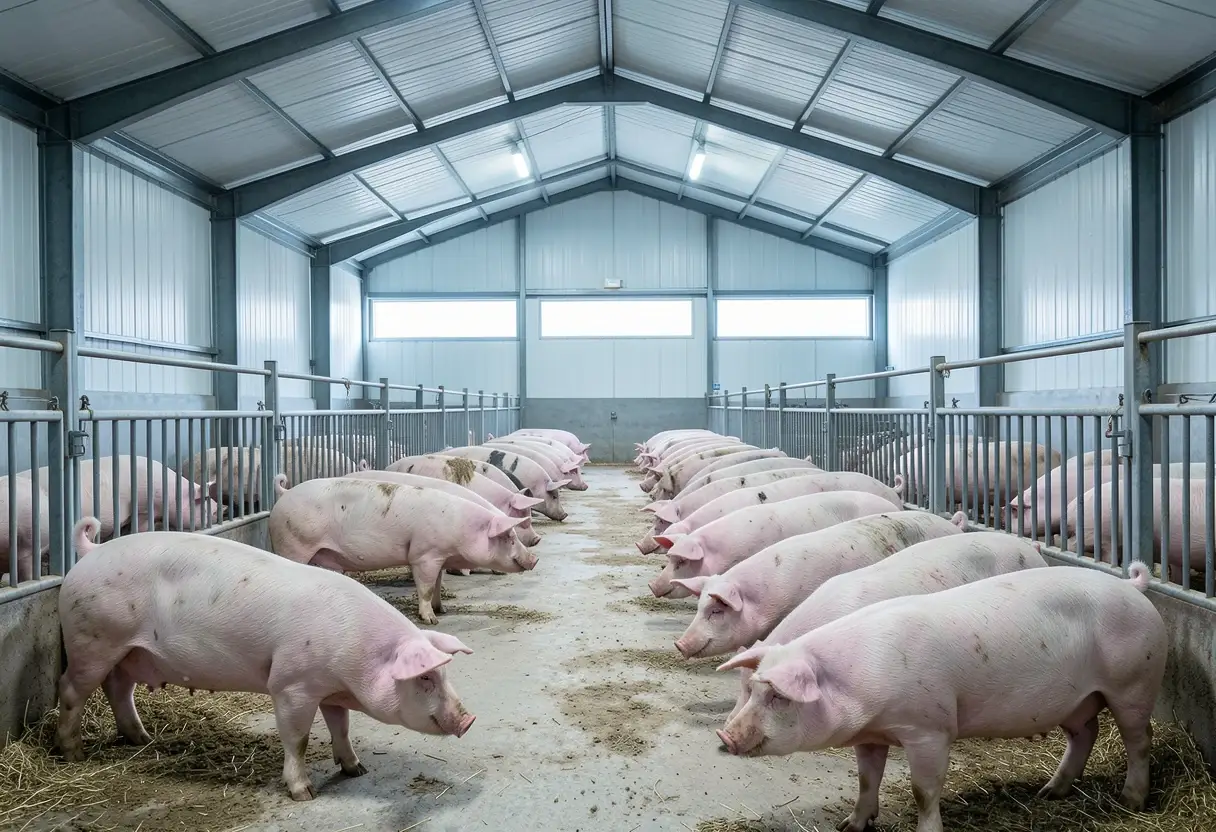
Photo: AI-generated
Food animal production accounted for 70% of North Carolina's record $117 billion in agricultural economic impact in 2024, and NC State University has now secured its first dedicated research funding stream aimed squarely at that sector. Ellen Davis, an animal science alumna who leads commercial animal nutrition research and development at Fortiva, the feed additives division of Land O'Lakes/Purina Animal Nutrition, has established the Food Animal Research Endowment, the first of its kind at the university.
The endowment funds research through the North Carolina Food Animal Initiative (FAI), an interdisciplinary program run jointly by NC State's College of Agriculture and Life Sciences (CALS) and the College of Veterinary Medicine. The initiative targets two outputs: applied research that benefits the livestock, dairy and poultry industries, and workforce development for the food animal sector.
Davis framed the gift in national terms. "I wanted to support the Food Animal Initiative to help NC State be a substantial hub for animal agriculture research and science that will advance and benefit the industry nationally," she said. The takeaway in plain words: private money is now directly funding translational food animal research at a major land-grant institution.
Who is behind the endowment?
Davis grew up on a row crop farm in Halifax County, North Carolina. "My Dad had tobacco, cotton and peanuts as well as pigs to diversify his farm income," she said. "But Dad has a green thumb, and I do not. I knew my direction would be animal agriculture."
She majored in animal science at NC State, where a freshman-year introduction to the university's Swine Educational Unit led to four summers of work on swine nutrition research trials. She earned a master's degree in swine nutrition at Oklahoma State University, studying amino acid nutrition in weaned pigs, then shifted to animal health feed additives during her doctoral program at the University of Arkansas. Her industry career spans start-ups and multinationals, with a focus on animal probiotics and yeast-based additives.
Davis also serves on the North Carolina Agriculture and Life Sciences Research Foundation Board, where she contributes an industry perspective to the college's research priorities and works on a committee focused on the FAI.
What does the money fund?
The endowment supports the FAI's core mission: converting scientific concepts into practical results for producers. Davis said she wants her investment applied to the "heart" of food animal science, including physiology, genomics or nutrition. "It would be a real loss if we could not translate our research to issues or objectives that matter to our industry partners," she said.
Amy Grunden, CALS associate dean for research and director of the North Carolina Agricultural Research Service (NCARS), said Davis brings valuable food animal research and development expertise to the foundation board. "Ellen Davis recognizes that the Food Animal Initiative is building research capacity in a meaningful way to support the food animal industry in the state," Grunden said.
Why does the timing matter?
Grunden argued that technology is reshaping food animal agriculture faster than the industry can validate it, and that CALS must verify and train. "CALS has a true vision of where the food animal industry is now and where it needs to go," she said. "And we've organized the NCALS board and its initiatives to support stakeholder and community needs."
For practicing food animal veterinarians, the endowment signals sustained institutional investment in the applied science base, nutrition, genomics and physiology, that underpins herd-level decision-making. Davis said she also hopes the gift prompts others to invest in CALS and help future-proof the state's food animal industry, a signal that additional private funding for food animal research capacity may follow.
Source: morningagclips.com
Daniel Okafor
Show full bio
News editor covering technology and product news in Small- and large-animal clinical practice at The Vet Scope.