US Hog Herd Shrinks to 74.3 Million as 2027 Losses Loom
USDA's Sept. 1 count of 74.3 million hogs, down 2% year over year, pairs with a forecast $22-per-head loss in 2027 as producers await possible China trade relief.
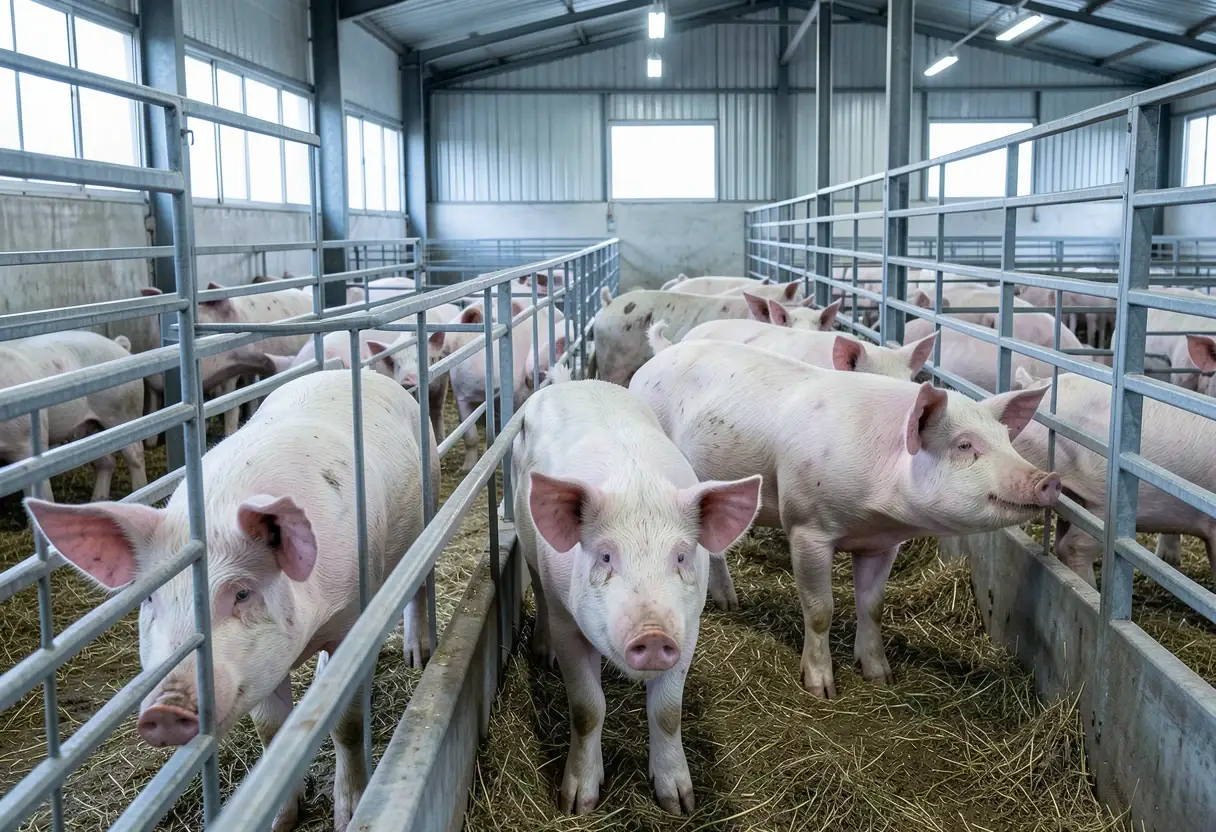
Photo: AI-generated
The U.S. hog and pig inventory stood at 74.3 million head on Sept. 1, down 2% from a year ago, according to the quarterly Hogs and Pigs Report published in late September by the USDA's National Agricultural Statistics Service. The figure is up 1% from June 1 of this year, but the underlying numbers point to a herd that keeps contracting while costs keep climbing.
For practitioners and consultants serving swine clients, the report signals sustained pressure on farrow-to-finish operations, with margins already thin and losses forecast for 2027.
What does the breeding herd tell us?
The kept-for-breeding category contracted to roughly 5.88 million head, down 1% year over year. Lee Schulz, chief economist with EA Risk, noted during a National Pork Board webinar that this is the smallest September breeding herd in the U.S. since 2013.
Average pigs weaned per litter held strong at 11.96 piglets for the June-through-August period. Even so, total pigs weaned between June and August came in at 34.5 million, down 2% from the same period a year earlier. Better litter performance cannot offset a smaller breeding base.
How do the weight classes break down?
All four weight categories in the quarterly report contracted. The details:
- 180 pounds and over: 12.44 million head, down 1.6%, expected to reach harvest floors from September through mid-October.
- 120 to 179 pounds: more than 14.14 million head, down 1.5%, marketed from mid-October through mid-November.
- 50 to 119 pounds: nearly 19.98 million head, down 1.5%, anticipated for slaughter mid-November through December.
- Under 50 pounds: nearly 21.87 million head, down 1.6%, expected to hit the market in January and February.
What is happening to producers' bottom lines?
Schulz's analysis quantified the squeeze. Production costs for hog producers rose 31% from 2020 to 2025, with another 3% increase this year. Next year, farrow-to-finish production costs are forecast to rise another 6%, equating to $91 per carcass hundredweight — the highest cost since the $97 per carcass cwt realized in 2023.
That arithmetic leaves a farrow-to-finish annual average profit of just $2.50 per head for this year. Looking ahead to 2027, Schulz factored in lean hog, corn and soybean meal futures prices and projected potential losses averaging $22 per head.
With input costs expected to stay inflated, producers' bottom lines need relief from somewhere. Export demand is the obvious candidate.
Could China offer a way out?
The U.S. Meat Export Federation (USMEF) sees potential in the U.S.-China trade talks held in conjunction with the summit meeting between President Donald Trump and Chinese President Xi Jinping. No trade deal is final until actual product movement occurs, but the industry group is encouraged.
USMEF President and Chief Executive Officer Dan Halstrom said in a USMEF statement that both U.S. pork and beef — including variety meats — are included on the list of products to be considered for more favorable treatment.
China currently imposes retaliatory duties on U.S. pork and beef, alongside several non-tariff barriers. These include the suspension of several U.S. beef processing and cold-storage facilities, which account for about half of U.S. fed beef capacity, plus what USMEF describes as onerous and inconsistent inspection requirements.
A technical agricultural working group under the U.S.-China Board of Trade is slated to meet before the end of the year.
What comes next?
Two dates now matter for anyone tracking hog markets. The working group meeting could clarify whether export relief is realistic, and the next Hogs and Pigs Report arrives Dec. 23. Both could deliver what the industry would welcome as a welcome year-end surprise: evidence that the cost-price squeeze has found a release valve.
Source: wylr.net
Elena Vasquez
Show full bio
Market editor covering money, funding and market shifts around Small- and large-animal clinical practice at The Vet Scope.
Related articles
When Should Producers Intervene in a Farrowing Sow?
Wisconsin PEDV Pilot May Become a National Swine Health Model
BRD Hits 12.2% of Feedlot Cattle: Five Benchmarks from USDA NAHMS Feedlot 2021
Joplin sale barn reports $50-per-cwt premium for weaned calves
Canada Puts $3.1 Million Into Swine Health Surveillance