Joplin sale barn reports $50-per-cwt premium for weaned calves
Joplin Regional Stockyards owner Jackie Moore says a good 500-pound weaned steer can fetch $250 more than an unweaned calf, while volatile cattle prices complicate the payoff.
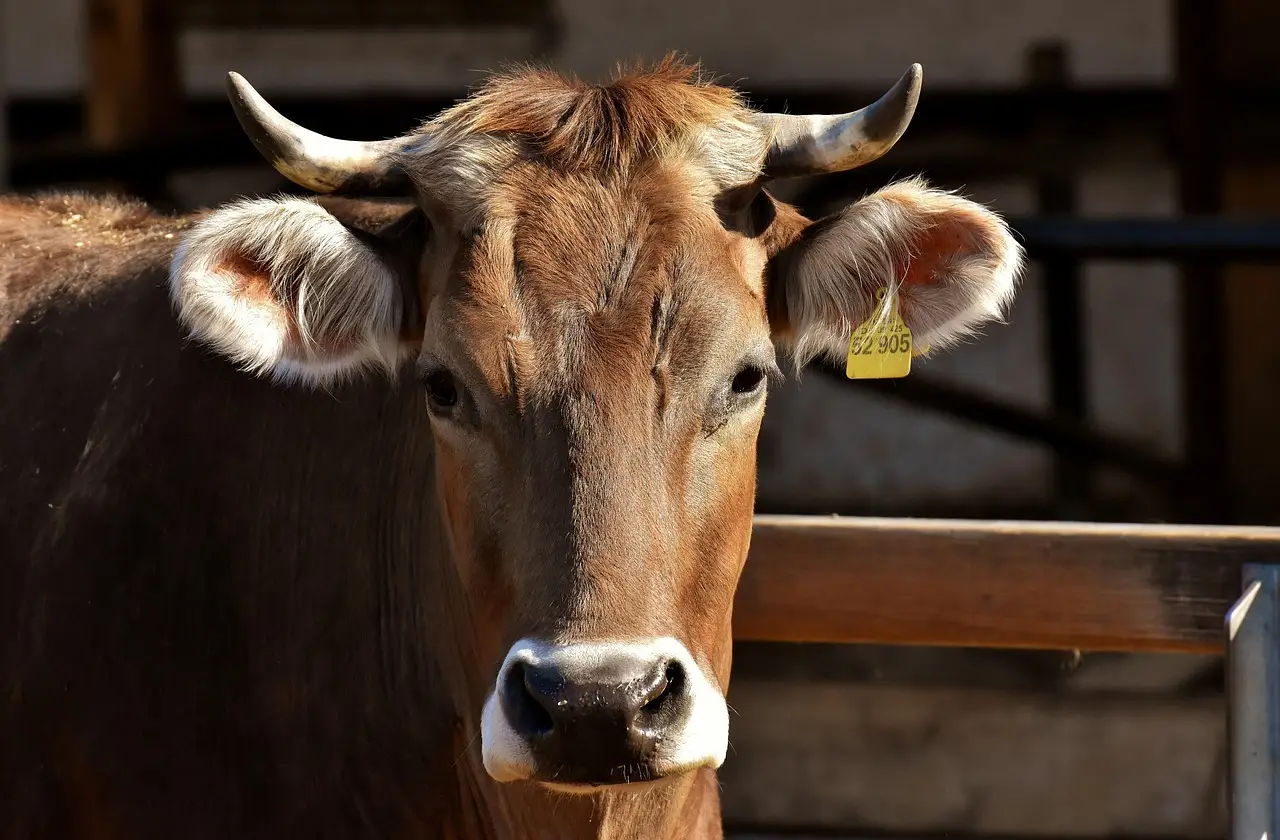
Photo: Alexas_Fotos / pixabay
$50 per hundredweight—or $250 on a 500-pound steer—is the difference Jackie Moore said might separate a weaned calf from an unweaned bull or steer.
In reporting dated Nov. 3, 2026, Moore described his Joplin Regional Stockyards in Missouri as one of the country’s largest sale barns. “I’d say a lot of those calves, that might make $50 a hundred weight difference today,” Moore said.
This is a beef-cattle market report from one Missouri sale barn, not a controlled veterinary study. The source gives no herd count, sample size, health-program protocol, disease outcomes, or untreated comparison group.
Within those limits, the reported premium gives producers a financial reason to examine calf-health spending, but the report does not quantify the return on any specific program.
What does the premium mean at the barn?
The comparison centers on weaning. Moore said a good 500-pound weaned steer might bring $250 more than an unweaned bull or steer calf. Because 500 pounds equals five hundredweight, the stated $50-per-hundredweight difference produces the reported $250 advantage.
That figure applies to the market value of the animals, not to a veterinary fee or guaranteed profit. The article does not establish that every weaned calf commands the premium, nor does it show whether the advantage comes from disease prevention, weight gain, buyer preference, or a combination of those factors.
For producers, the immediate decision is economic: whether an investment in calf health can improve sale value enough to offset its cost. The report offers no cost data against which to calculate that return.
How strong is the evidence for health investment?
Moore’s statement establishes an association between calf-health investment and stronger prices, not a measured treatment effect. He did not identify the program or provide records showing lower illness, mortality, treatment expenses, or improved weight gain in participating herds.
The report names no drug, vaccine, or biologic. It therefore supports no drug- or vaccine-specific recommendation and does not establish a regulatory status under FDA CVM, EMA, or USDA oversight.
At the exam table, the actionable conclusion remains narrow: a veterinarian may help a producer determine whether health spending is changing sale outcomes, but would need herd-specific disease, treatment, and weaning records before changing a prevention plan.
How can volatility erase that premium?
Market movement could quickly change the practical value of a $250 advantage. “It’s difficult,” Moore said. “It looks like you’re making money one day and the next day you give it all back and it just takes one day to do it.”
Moore also said that taking $50 or $100 off a 700-pound steer could amount to $100 per head in two days. The report does not specify whether those reductions apply per hundredweight or to the total price per head, so the stated $100 cannot be reconstructed from the text alone.
He further cited fat cattle trading at $325 where the barn had been getting $330, then referred to the difference on a 1,500-pound steer as substantial. If the $325 and $330 figures both represent prices per hundredweight, their gap equals $75 on a 1,500-pound animal; the report does not explain his separate reference to $100.
These examples matter because a health-linked premium does not function as a fixed margin. A producer can sell a 500-pound weaned steer for $250 more than an unweaned animal and still lose money if the broader market falls.
What did this week’s feeder sale show?
Joplin holds its feeder cattle sale on Monday. In the week covered by the Nov. 3 report, steers were steady to $10 lower, while heavier-weight heifers were $6 to $12 lower. The report does not state the unit for those weekly changes.
Those declines do not negate the calf-health argument, but they place it inside a volatile market. They also show why the $50-per-hundredweight premium should be treated as a variable sale value rather than a guaranteed financial gain.
What changes for veterinary audiences and regulators?
-
Food-animal practice: The $50-per-cwt signal gives beef producers a reason to ask whether calf-health spending changes sale value. A veterinarian would need herd-specific morbidity, treatment, and weaning data before altering a prevention plan; this report supplies none.
-
Companion-animal practice: No dogs, cats, or other companion-animal findings appear. The cattle-sale premium should not be applied to preventive-care decisions in companion-animal clinics.
-
Public health: The report evaluates no zoonotic disease, food-safety outcome, antimicrobial use, or antimicrobial resistance. It supports no public-health conclusion.
-
Regulation: No drug, vaccine, biologic, regulatory action, or agency guidance appears in the report. There is no FDA CVM, EMA, or USDA approval, authorization, or compliance change to communicate.
The next measure of whether calf-health investment continues to pay will be whether the $50-per-hundredweight premium persists through volatile trading and whether producers can identify the health measures behind stronger weaned-calf sale value.
Source: Google News: Livestock health
Grace Kim
Show full bio
Staff writer covering regulation, policy and their impact on Small- and large-animal clinical practice at The Vet Scope.
Related articles
Bavarian Calf Study Maps Antimicrobial Use, Weight Gain and Mortality
Health Records Now Set the Spread in the Feeder Market
First-Calving Body Weight Tracks Through to Milk Yield and Culling
BRD Hits 12.2% of Feedlot Cattle: Five Benchmarks from USDA NAHMS Feedlot 2021
Frontiers study applies loss-envelope framework to dairy mastitis costs