New Mexico confirms two more screwworm cases in Grant County
Two additional New World screwworm cases have been confirmed in Grant County, New Mexico, with surveillance expanded across the southwestern jurisdiction, per Organ Mountain News.
Updated
Photo: AI-generated
New Mexico state authorities have confirmed two additional New World screwworm cases in Grant County, with surveillance expanded across the southwestern jurisdiction, according to Organ Mountain News reporting on the cluster.
The word "more" in the Organ Mountain News headline signals that Grant County already carried documented screwworm cases before the latest two confirmations, though the outlet did not publish a cumulative case count, host species, or confirmation dates in the available dispatch.
New World screwworm, the parasite at the center of the investigation, is the larval stage of the fly Cochliomyia hominivorax. The larvae feed exclusively on the living tissue of warm-blooded mammals, distinguishing NWS infestations from the more common blowfly myiasis that develops on dead tissue. Untreated cases prove fatal in livestock, wildlife, and untreated pets through progressive tissue destruction, secondary bacterial infection, and myiasis-induced toxemia.
Grant County's geography drives the regulatory stakes. The county sits in southwestern New Mexico, sharing its southern boundary with Hidalgo County, which runs along the international line with Sonora, Mexico, where NWS remains endemic in wildlife and livestock populations. The United States declared NWS eradicated in 1966 after a decades-long sterile insect technique campaign run jointly by USDA APHIS and the livestock industry. That status depends on a continuous biological barrier of sterile flies maintained along the Darien Gap in Panama, which interrupts the parasite's northward spread from South America.
What does the surveillance expansion change?
The expanded surveillance perimeter in Grant County widens active case-finding beyond the index premises. The standard NWS response toolkit includes:
- Visual inspection of livestock at auction markets, fairgrounds, and grazing allotments
- Deployment of sentinel fly traps baited with liver or other attractants
- Mandatory reporting of suspected myiasis by accredited veterinarians and livestock owners
- Quarantine and movement restrictions on affected premises until treatment completes
USDA APHIS lists NWS as a foreign animal disease and coordinates the sterile fly program that backs eradication. Any confirmed case triggers a state-federal incident command structure that includes the New Mexico Livestock Board, USDA APHIS Veterinary Services, and producer organizations.
Companion-animal implications
Dogs and cats are susceptible hosts, particularly those with outdoor access, fight wounds, or post-surgical incisions. The clinical clue is a non-healing wound harboring larvae that burrow deeper than typical blowfly maggots. Approved treatments include topical organophosphate formulations labeled for screwworm control and ivermectin administered under veterinary direction, with all confirmed cases reported to state and federal animal health authorities.
Food-animal implications
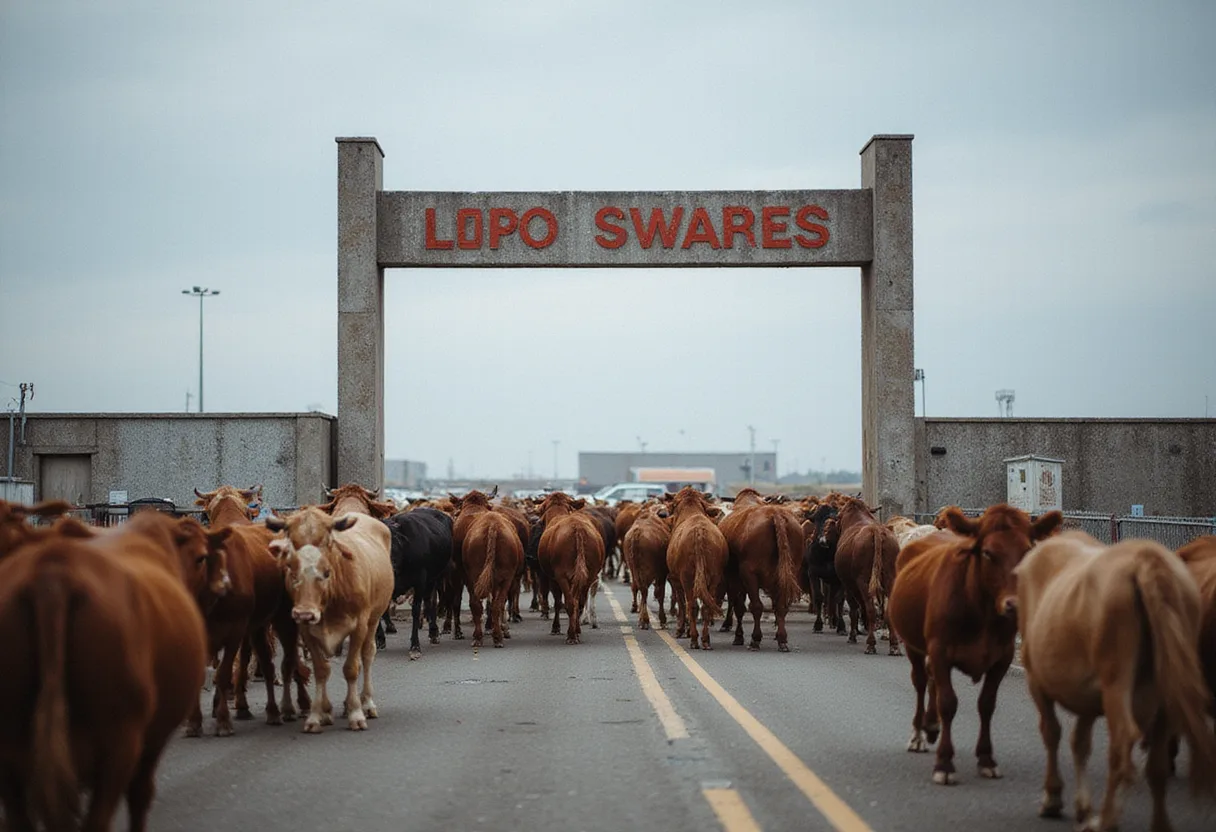
For cattle, sheep, and goat operations in the region, direct costs include animal mortality, condemnation at federally inspected processing plants, and movement restrictions during quarantine. Indirect costs accumulate through trade restrictions on livestock, semen, and embryos from affected states. USDA economic analyses have placed the cost of NWS reintroduction to the U.S. cattle herd at hundreds of millions of dollars annually in lost production and trade access, a figure that underwrites the continuing federal sterile fly investment.
Public-health implications
Human NWS cases are uncommon but occur, particularly in patients with open wounds and limited access to care. State and county health departments receive notification when veterinary case work identifies human exposure risk.
The Organ Mountain News headline indicates state authorities remain in active case-finding mode in Grant County and have not yet declared the cluster contained. Veterinarians, producers, and pet owners in adjacent Sierra, Luna, and Hidalgo counties should report any suspect infestation to the New Mexico Livestock Board without delay.
Source: Google News: Livestock health
Nathan Brooks
Show full bio
Senior reporter covering companies, deals and strategy in Small- and large-animal clinical practice at The Vet Scope.
Related articles
FDA Clears First Generic Drug for Screwworm Myiasis in Pets
US Reopens Another Port to Mexican Cattle as Screwworm Cases Persist Nearby
FDA widens screwworm drug list, adding generic pet options
New World Screwworm Returns to Texas, First Detection Since 1966
New Mexico Confirms Two More New World Screwworm Cases