MSU Extension Adds Dairy Reproduction Specialist Tracy Burnett to Thumb Region
Reproduction specialist Tracy Burnett joins MSU Extension's dairy team in Michigan's Thumb, offering producers precision-technology troubleshooting and reproductive benchmarking support.
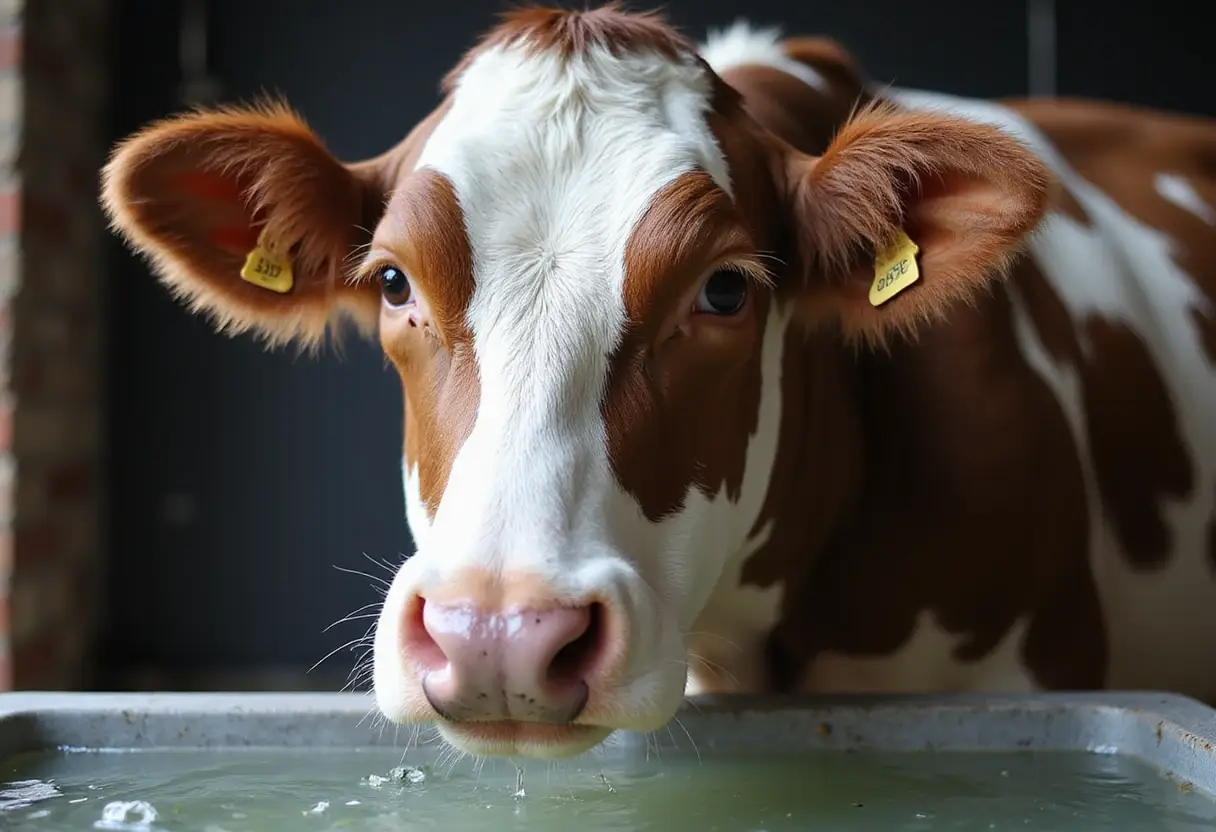
Photo: Portraits of Modern Dairy / unsplash
Michigan State University Extension has added Tracy Burnett to its dairy team as an educator based in Michigan's Thumb region, with offices in Lapeer and Huron counties — and she arrives with a research record built on two of the most practical questions in dairy practice: how to measure chronic stress in cattle and how to get more fertility out of activity-monitor systems.
Burnett's path into the field was announced through the MSU Extension Virtual Coffee Break podcast, where colleague Martin Mangual interviewed her at the start of her new role. Her credentials span three institutions and roughly a decade of farm-based research.
What is Burnett's scientific background?
Burnett grew up in White Rock, British Columbia, a small seaside town on the border with Washington State, and entered agriculture only when a summer job opened at the University of British Columbia's commercially run dairy research farm. She lived on that farm for about 10 years, doing calf feeding, vaccination, and field work while completing her degrees.
Her master's research at UBC assessed chronic stress in dairy cattle by analyzing cortisol in hair — the same forensic technique crime dramas use to detect toxin exposure, applied instead to cows. She linked chronic stress to production and reproductive outcomes, then extended the work through a PhD that examined activity monitors and the intensity of estrous expression.
Her doctoral questions were explicitly applied: Can activity monitors be used to cherry-pick heats during an Ovysynch protocol? Can they form part of a strategy to raise fertility in cows with low estrous expression?
After her PhD, Burnett spent six years at the University of Guelph as a College Research Professor, an applied teaching and research position. Her students were two-year diploma candidates, and 70–85% of them each year were either dairy farmers themselves or had worked on a farm.
How does she teach — and what carries over to Michigan?
Burnett described a why-first, how-second teaching structure: establishing the science behind a practice, then demonstrating it — how to dehorn a calf, how to hoof trim a cow. Mangual noted the parallel with MSU's Ag Tech certificate in dairy management and stressed that workforce development is a major share of the team's educational programming.
Burnett's stated focus for now is building relationships across the Thumb and shaping programs around stated producer needs. She asked producers directly to contact her with opinions on what Extension should offer.
Her priority area is reproductive management, broadly defined:
- Activity monitors and other heat-detection aids
- Compliance with reproductive protocols
- Benchmarking reproductive indices across farms
- The reproductive physiology behind breeding-time injections
She also brings experience in transition cow health, cow comfort, heat stress, and other stressful events.
When should a producer call?
Burnett laid out the concrete triggers: starting a new project and needing resources, interpreting data, troubleshooting a problem, or — her particular interest — troubleshooting technology. She gave the example of a farm running an automated system that is technically working but not delivering the results expected.
"If you're using precision technology, reach out anyway, even if you think that is working, because one thing that I have seen when farmers implement technology is that sometimes you might not be getting all you can get out of it," Burnett said.
Mangual framed the same point from the buyer's side: a salesperson sells a technology on feature A, but it can also do B, C and D — and an Extension review may surface that unused capacity.
Producers can reach Burnett at [email protected], and she encouraged contact even when unsure whether Extension can help.
Source: morningagclips.com
Amara Osei
Show full bio
Correspondent covering companies, deals and strategy in Small- and large-animal clinical practice at The Vet Scope.
Related articles
Michigan directs state grants to expand rural veterinary training
Heat Stress in Dairy Herds: What the Manitoba Co-operator Piece Tells Producers
New Meta-Analysis Targets Water Intake Under Heat Stress in Holsteins
Michigan Gov. Whitmer designates Nov. 3 as One Health Day
OSU Veterinary Medicine Couple Returns to Practice in Rural Oklahoma