New Meta-Analysis Targets Water Intake Under Heat Stress in Holsteins
A systematic review and meta-analysis on heat stress and water intake in Holstein dairy cows publishes in October 2026 in the Journal of Dairy Science, Volume 109, Issue 10.
Updated
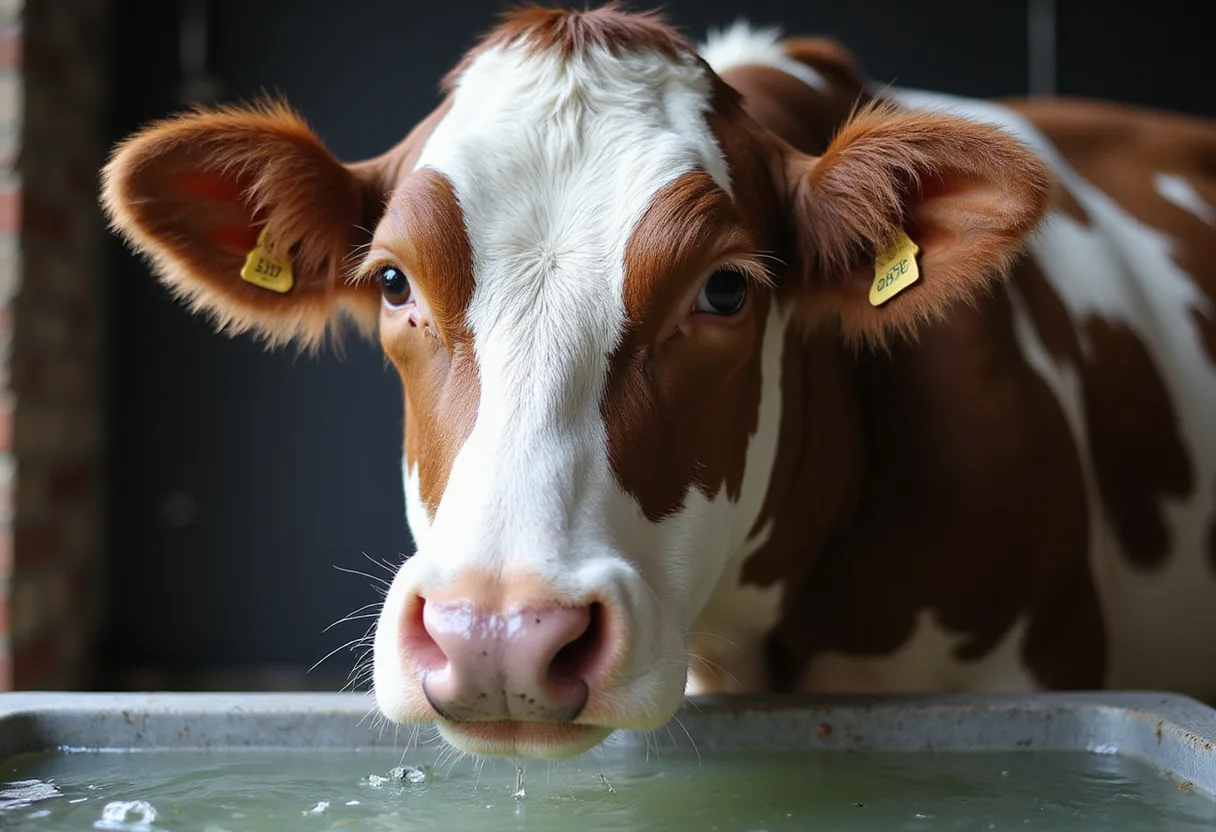
Photo: AI-generated
A systematic review and meta-analysis on heat stress and water intake in Holstein dairy cows will publish in the October 2026 issue of the Journal of Dairy Science, Volume 109, Issue 10. The author team: Alessia Zoroaster, Caterina Marcon, Barbara Contiero, Flaviana Gottardo, Arzu Peker, and Luisa Magrin.
What a systematic review and meta-analysis actually does
A systematic review sets the search rules before any paper is pulled. Authors fix the keywords, the inclusion criteria, and the quality bar in advance. That protocol step removes the bias of remembering only the studies that confirmed a hypothesis.
A meta-analysis then pools those filtered results into one weighted estimate. Confidence intervals attach to each pooled effect. For a clinician or dairy manager, the output is the part that matters: one number, usable at the barn.
Why water intake sits at the center of heat-stress management
Holstein cows carry high metabolic heat load. Milk synthesis generates heat as a byproduct. Evaporative cooling through respiration draws that heat out, and water intake fuels the system. Cut water access, and body temperature climbs regardless of shade or fans.
Producers already know the broad pattern. They don't have a single pooled number that tells them how many liters per cow per day shift for each one-point change in temperature-humidity index (THI). Conflicting single studies currently fill that space, often with widely different estimates.
What to look for in the full text
The October 2026 JDS issue will carry the complete results. Readers should check first for the count of included studies, the geographic spread, and the THI ranges covered. They should also look for subgroup breakdowns by housing system, parity, and lactation stage, because each of those changes the calculation.
The author list points to Mediterranean-climate data based on the surnames visible in the byline. The geographic mix will shape which heat baselines the pooled estimate actually covers. The full text will confirm.
What changes at the exam table or in the barn
The single most useful output from this synthesis would be liters per cow per day per THI point, broken out by parity and lactation stage. That resolution is rare in the current literature. Producers currently extrapolate from individual trials. A pooled estimate flows directly into ration software, barn-design budgets, and emergency heat-event protocols.
The October 2026 release date places the synthesis in front of Northern Hemisphere producers before next summer's heat season. Veterinarians serving Mediterranean and subtropical dairies will see the practical impact first; temperate-climate operations will see it as summer baseline temperatures continue to climb.
Watch for the full text in JDS Volume 109, Issue 10, and for any companion press release the author institutions may issue alongside publication.
Source: Journal of Dairy Science (Elsevier)
Grace Kim
Show full bio
Staff writer covering regulation, policy and their impact on Small- and large-animal clinical practice at The Vet Scope.
Related articles
Clay feed additive failed to rescue milk yield in heat-stressed Holsteins
Heat Stress Reshapes US Dairy Lactation Curves—Regionally
Hybrid Rye Silage Tested Against Barley in Holstein Diets
New invited review reframes herd-level udder health indices
First-Calving Body Weight Tracks Through to Milk Yield and Culling