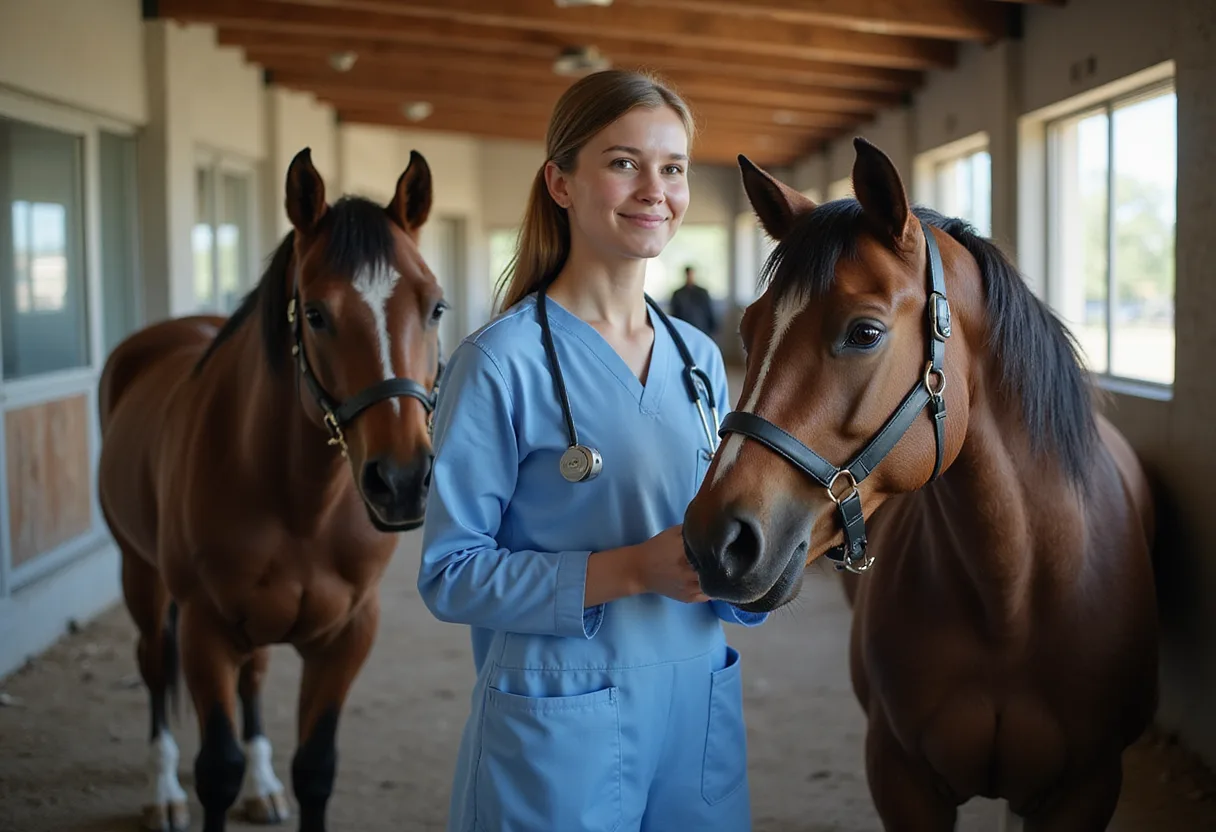
Michigan directs state grants to expand rural veterinary training
Michigan has directed state grant funding toward veterinary training in rural counties, according to a SooLeader.com report. The headline-level announcement does not yet identify the issuing agency, the funding total, or the recipient institutions.
Updated
Michigan's state government has directed grant funding toward expanding veterinary training in rural counties, according to a SooLeader.com report. The headline — "State grants aim to boost veterinary training in rural Michigan" — is the full text published in the version accessed; dollar amounts, awarding agencies, recipient institutions, and implementation timelines were not included.
The SooLeader.com outlet is based in Sault Ste. Marie and covers Michigan's Upper Peninsula and northern Lower Peninsula. The geographic footprint matters. Counties in this stretch of the state combine livestock operations, dairy farms, and small-ruminant producers with long drive times to specialty referral hospitals.
What does the training framing signal?
By describing the intervention as training-focused rather than as a direct service subsidy, the state appears to be addressing the supply side of the rural veterinary pipeline. State-level veterinary training grants in other jurisdictions typically fall into three operational categories:
- Tuition assistance or loan repayment tied to rural practice commitments after graduation
- Stipend support for clinical rotations in food-animal, mixed-animal, or rural settings
- Capital funding for teaching infrastructure at satellite clinics or partner practices
The published headline does not indicate which mechanism Michigan is using.
Why the operational mechanism matters
For a mixed-animal or food-animal associate weighing practice location, the difference is concrete. Loan-repayment programs shift the post-graduation economics of choosing a rural placement. Externship stipends change the clinical exposure that shapes that choice. Capital funding alters which procedures a rural practice can teach and perform in-house.
The SooLeader.com version accessed does not name the issuing agency, the funding pool size, the application window, or the definition of "rural" that will qualify a recipient county.
Those four variables are what a veterinary student or practice owner would need before assessing clinic-level impact. Without them, the announcement functions as a signal of intent rather than a program with measurable deliverables.
Who is likely to issue the follow-up detail?
The Michigan Department of Agriculture and Rural Development, the state's veterinary licensing board, and the state's only veterinary college are the most plausible issuing, accrediting, or implementing bodies. A program-specific press release from any of these offices would resolve the open variables.
What changes at the practice level, if the program delivers
The training-pipeline framing carries an operational test. If graduates entering the program rotate through practices in the same counties already reporting coverage gaps, the grant structurally reshapes rural access. If program graduates continue to cluster in metropolitan or small-animal-exclusive settings, the supply-side intervention will not move rural capacity on its own.
Practice owners in northern Michigan and the Upper Peninsula will look for two specific items in the forthcoming program detail: the duration of any service commitment tied to tuition support, and the geographic radius that counts as a qualifying rural placement.
Loan-repayment structures that allow urban-suburban placement tend to dilute rural impact. Those that lock recipients to designated rural counties tend to deliver measurable coverage change.
The SooLeader.com headline establishes that the state has chosen the training lever. The next release determines whether rural Michigan clinics see a graduate pipeline that actually reaches their counties.
Source: Google News: Veterinary medicine
Amara Osei
Show full bio
Correspondent covering companies, deals and strategy in Small- and large-animal clinical practice at The Vet Scope.
Related articles
LSU program targets rural food animal veterinary shortage
Ohio State Taps Leah Dorman, DVM, for Rural Veterinary Outreach
High School Students Trained to Fill Rural Veterinarian Gaps
Purdue Veterinary College Expands, Targeting Rural Care Gaps
Rural Veterinarian Shortage Strains Farm Animal Care in Countryside Communities