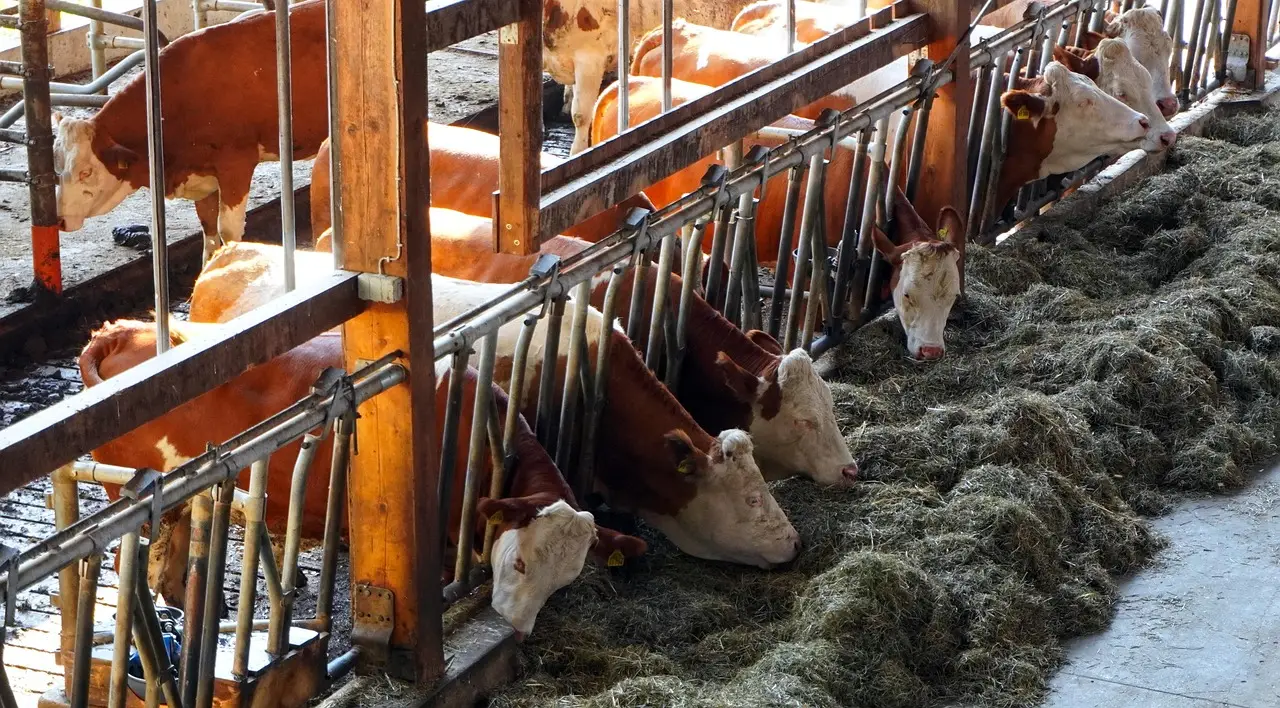
WSU student-built dairy case puts 6,000-cow herd in Diagnostic Challenge
WSU student Jordan Cassidy spent a summer building a 6,000-cow dairy case for the 35-year-old Diagnostic Challenge, where simulated clients push back on every recommendation.
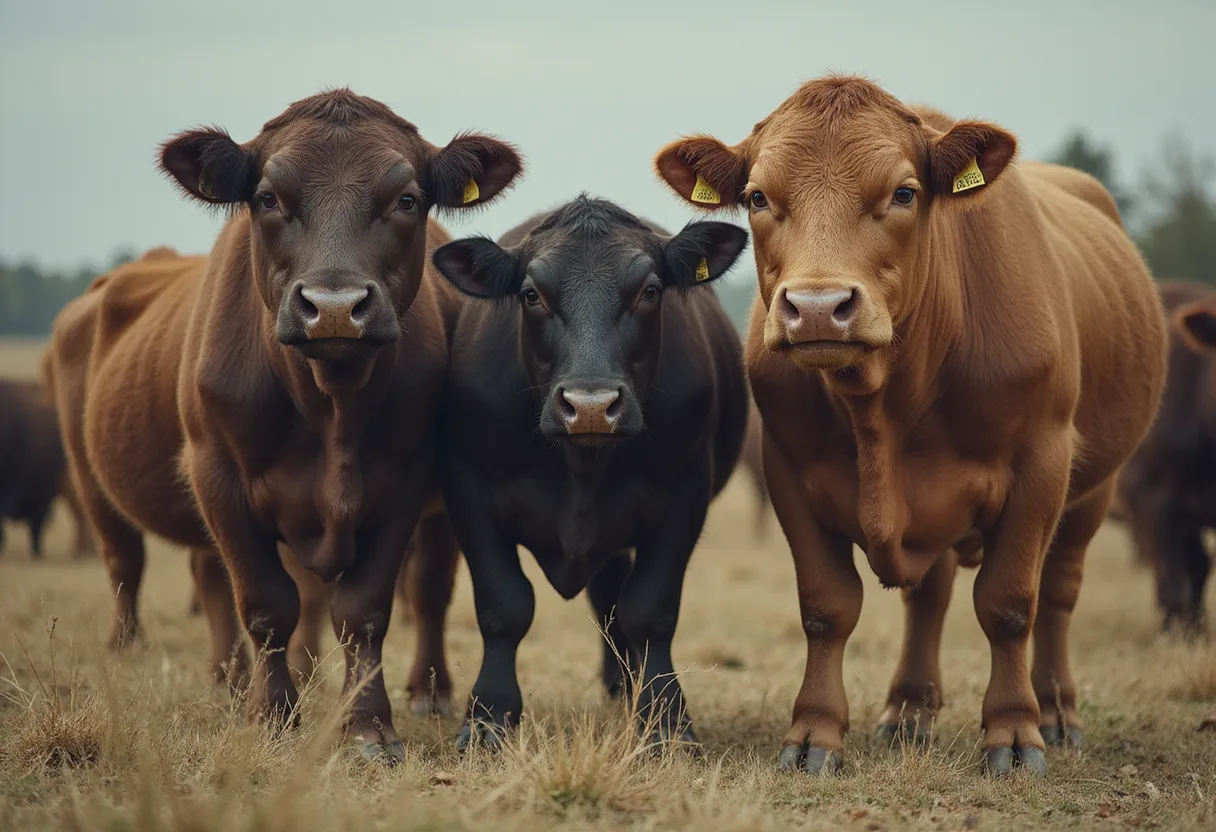
Photo: matthiasboeckel / pixabay
A simulated California dairy of roughly 6,000 mature cows anchors the newest case in Washington State University's Diagnostic Challenge, a 35-year-old training tradition now being refreshed by the students who once solved its cases themselves.
Fourth-year-track student Jordan Cassidy spent her summer building the case, working roughly six hours a week researching disease processes, anticipating how students might approach the problem, and refining details with her advisor, veterinary practitioner and WSU alumna Dr. Stephanie Webb ('19 DVM). The second of two week-long Diagnostic Challenge exercises is running this week on the WSU Pullman campus.
During each challenge, second-year veterinary students work through realistic medical cases alongside volunteer clients and veterinarian facilitators — many of them alumni who return to Pullman every fall to mentor the next cohort.
What does the new case ask students to do?
Cassidy's scenario begins with reproductive problems in the 6,000-cow herd. As students dig in, additional issues surface, mirroring what happens on a real farm call.
"We're trying to give students that realistic idea of you go out for one thing, but you might do three or four things while you're there just because they're like, 'Oh, since you're here, I have a question for you,'" Cassidy said.
The design deliberately resists easy answers. Simulated clients will not simply accept student recommendations — they will demand justification for each proposed approach. That structure builds on the lesson Cassidy drew from her own turn as a participant.
"The biggest takeaway was probably keeping an open mind about your clients," she said. "Whatever they say, whatever's happening, what their plan is, how can we make it work rather than trying to just make it fit the plan you have in your head."
Who writes the cases?
Cassidy belongs to a small group of veterinary students who spend their summers developing Diagnostic Challenge cases. Webb, who practices dairy medicine and has now developed three cases for the program, views case design as a way to hand students practical skills they can carry directly into practice.
"I wanted to give ag animal students a practical case to work for within the DCs, and I want them to have a skill they can then take and bring to their practice when they graduate," Webb said.
Her return to Pullman also serves a workforce purpose. Food-animal medicine needs veterinarians, Webb said, and the Diagnostic Challenge gives students a close look at a field where practitioners can build successful practices while helping maintain a healthy food supply — a food-animal and public-health dimension distinct from the companion-animal casework that fills much of the curriculum.
Why does a 35-year-old program keep evolving?
For Cassidy, who completed her first Diagnostic Challenge before she had finished her veterinary training, the motivation to build a case was direct.
"The actual DC experience was so beneficial, and I felt like it really gave me an opportunity to practice skills that I would need to have as a veterinarian," she said. "I wanted to be able to help continue the program and make it better moving forward."
She admits it is slightly intimidating that students could still be working through her case years from now. Still, she sees the contribution as reciprocal.
"It's really nice knowing I get to give something back to that program and that it will live on and help other students who are in a similar position as me," Cassidy said.
As student-authored cases like hers enter rotation, the program's next 35 years of second-years will increasingly be trained on scenarios designed by the generation just ahead of them.
Source: vetmed.wsu.edu
Amara Osei
Show full bio
Correspondent covering companies, deals and strategy in Small- and large-animal clinical practice at The Vet Scope.
Related articles
Utah State Vet Students Run Diagnostic Drills With Actors and Stuffed Pets
Large Animal Vet Shortage Adds New Burden for Cattle Producers
WSU Veterinary Medicine Dean Dori Borjesson Announces Retirement
Ohio State Taps Leah Dorman, DVM, for Rural Veterinary Outreach
CSU launches Ascend D.V.M. curriculum with 32-student class expansion