Utah State Vet Students Run Diagnostic Drills With Actors and Stuffed Pets
Utah State veterinary medicine students ran a diagnostic challenge using human actors as pet owners and stuffed animals as patients, testing history-taking and clinical reasoning skills.
Updated
Photo: Pexels / pixabay
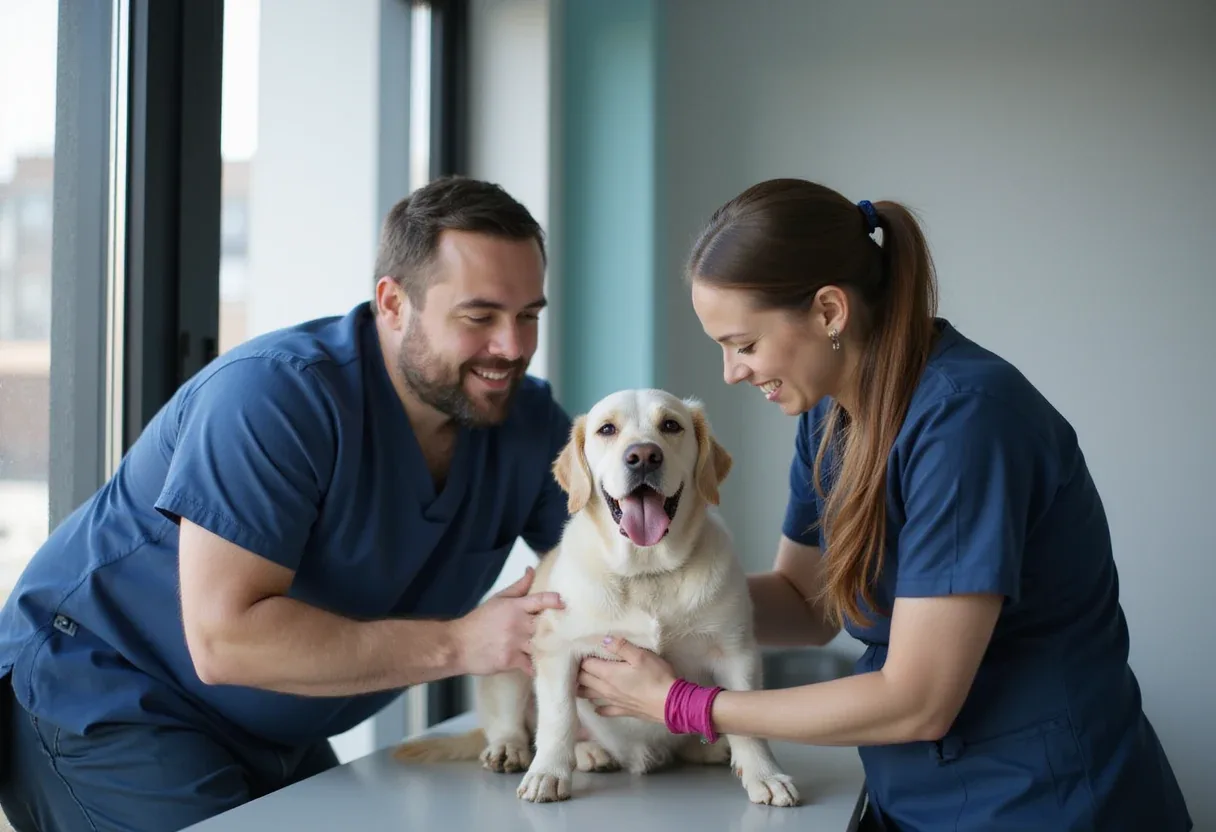
Utah State University veterinary medicine students faced a diagnostic challenge that replaced live patients with two unconventional stand-ins: human actors playing the role of pet owners, and stuffed animals standing in for the animals themselves.
The exercise, reported by Utah State University, asked students to work through a clinical scenario from the first moments of an appointment onward. Actors supplied the history. The stuffed pets supplied the physical presence. The students supplied everything else — the questioning, the reasoning, and the plan.
That structure mirrors a growing shift in veterinary training. Students often master anatomy and procedure before they ever manage the harder part of general practice: extracting an accurate history from an owner, recognizing which details matter, and committing to a diagnostic path under time pressure. Simulation-based formats let students make those decisions, and make mistakes, before the stakes attach to a living animal.
For the students at Utah State, the format stripped the scenario down to its diagnostic core. With no live animal to examine, the exercise concentrated attention on the owner interview — what to ask, in what order, and how to interpret inconsistent or incomplete answers. Actors can hesitate, misremember, volunteer misleading details, or push back on recommendations, which is precisely the behavior a textbook case description cannot reproduce.
The stuffed-pet component serves a different function. It gives the student a physical patient to orient around — a body to position, to approach, to treat as the focal point of the conversation — without introducing the variability, cost, and welfare considerations of live-animal teaching cases. Programs that use this hybrid approach generally treat it as a scaffold: students rehearse the full arc of an appointment in a controlled setting, then carry those habits into live-animal work under supervision.
What the format tests is decision-making under uncertainty. A diagnostic challenge, by design, does not hand students the answer. It hands them a presenting complaint, an owner with a partial account, and a clock. The student has to narrow the differentials, decide what information would change the ranking, and articulate a plan. Those are the same moves that determine outcomes at the exam table in real practice, where the history-taking window is short and the cost of a wrong turn compounds quickly.
Communication carries equal weight. Owners act on instructions they understand and remember. A student who reaches the right diagnosis but explains it in language the actor-owner cannot follow has, in practical terms, failed half the appointment. Exercises built around human actors force that skill into the open, because the actor responds the way a real client would — with questions, confusion, or resistance — rather than with the compliance of a written case study.
The Utah State exercise also reflects economics. Simulation hours are cheaper and more schedulable than live-animal cases. They can be repeated, standardized across a cohort, and scored against a rubric so that instructors can compare students on the same scenario rather than on whatever cases happened to walk through the door that week. Consistency of assessment is a real advantage when a program needs to certify that every graduate has demonstrated a baseline competency in client communication and diagnostic reasoning.
For the profession at large, the relevance is straightforward. Complaints reaching licensing boards and practices frequently trace back to communication failures rather than clinical errors alone. Training formats that treat the owner conversation as a graded clinical skill — not a soft extra — align veterinary education more closely with what new graduates actually encounter in their first year of practice.
Utah State's use of actors and simulated patients positions the exercise as a rehearsal for the full appointment, not just the medicine. As simulation-based assessment becomes more common across veterinary curricula, exercises like this one offer a template for teaching the diagnostic conversation as deliberately as schools teach surgery — with practice, feedback, and a standard to meet before students ever face a client across a real exam table.
Source: Google News: Veterinary diagnostics
Daniel Okafor
Show full bio
News editor covering technology and product news in Small- and large-animal clinical practice at The Vet Scope.
Related articles
Purdue Launches Spatial Computing Hub, Pulls Veterinary Medicine Into the Build
Rowan vet training prioritizes critical thinking for unfamiliar species
Rowan Veterinary Students Turn Summer Research Into Patient Care
RECOVER First-Aid Playbook Targets Client Coaching in Vet Clinics
USU cuts ribbon on Willis veterinary medical education building