RECOVER First-Aid Playbook Targets Client Coaching in Vet Clinics
DVM360 reports on the RECOVER first aid guidelines, framing them as a coaching playbook that veterinary teams can use to instruct pet owners before the patient arrives at the clinic.
Updated
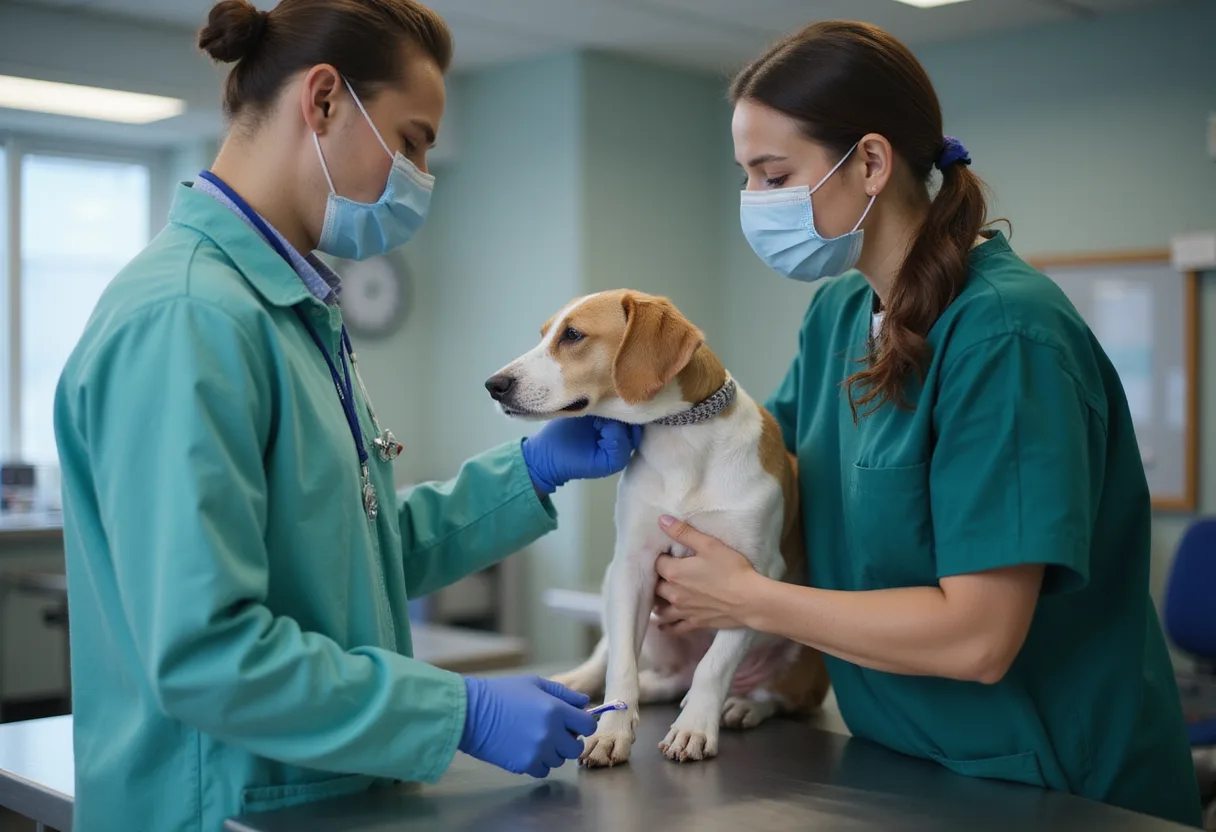
Photo: AI-generated
DVM360, a trade publication read by practicing veterinarians and credentialed technicians in the United States, has published a feature under the headline "RECOVER first aid guidelines give veterinary teams a playbook for coaching clients." The headline casts the RECOVER initiative's first aid guidance as a structured teaching tool for clinical staff who instruct animal owners before they reach a hospital. The phrase "playbook for coaching" frames the deliverable as a verbal-handoff resource rather than as a standalone owner manual.
What the headline sets out
The headline names RECOVER as the source of the document. Veterinary teams appear as the primary audience; animal owners appear as the secondary audience reached through those teams. The wording signals a document built for consultations, telephone triage, and discharge conversations, rather than for direct reading by pet owners without professional guidance.
The DVM360 byline positions the article for practitioners, not for the general public. Readers familiar with RECOVER's prior work will read the headline as a continuation of the initiative's resuscitation efforts, now extended into the pre-hospital window where pet owners most often act.
Why the framing matters at the exam table
Veterinary practices field first-aid questions in three recurring venues: by telephone, at intake, and during discharge. Answers are often improvised, drawn from individual experience rather than from a shared reference. A playbook issued through RECOVER and routed through veterinary teams would centralize that advice, reducing variability between clinicians and between clinics within the same group.
Practitioners also face a documentation question after such conversations. Coaching notes placed in the medical record carry medico-legal weight. A peer-reviewed document behind those notes, as the headline implies, gives clinicians a citation anchor that an improvised script cannot provide, a distinction that matters in malpractice review and in client disputes.
Companion-animal, food-animal, and public-health implications
The headline names veterinary teams without specifying species, which leaves the companion-animal clinic as the implied setting. No explicit signal points to food-animal application, equine practice, or shelter medicine. Public-health implications, including zoonotic first aid, are not addressed by the title or the available metadata.
Practitioners in mixed-animal or production settings who wish to assess species-specific value will need the full DVM360 article. The source data does not include the underlying body copy, and any inference beyond the headline risks introducing detail the source does not support.
Regulatory framing by agency
The headline does not mention the FDA Center for Veterinary Medicine, the European Medicines Agency, or the USDA. The absence of any agency signal positions the playbook as professional guidance rather than as a regulated therapeutic recommendation. Veterinary teams will treat it as a teaching reference, not as a label-compliant intervention.
Editorial context
DVM360 is a recognized trade outlet for the veterinary profession, with editorial reach across companion-animal practice, emergency medicine, and practice management. RECOVER, named in the headline, has historically produced peer-reviewed clinical guidelines on veterinary resuscitation. The feature appears to extend that body of work into client-facing territory.
Readers evaluating the playbook for adoption should treat the headline as a signal of intent rather than a summary of content. Study design, regulatory status, sample size, and intervention specifics are absent from the available metadata. The full article, when reviewed, will determine whether the playbook serves as a clinical reference, a coaching aid, or both.
Forward line
The next question for practitioners is distribution: whether the document will be released as a downloadable file, embedded into practice management software, or delivered through RECOVER's existing certification network. Watch for DVM360 follow-up coverage and for RECOVER's own publication channels to confirm format, scope, and recommended clinical settings.
Takeaway for the clinic: A RECOVER-anchored playbook gives staff a shared script for the minutes before a patient arrives, which is the only window the team cannot control without coaching the owner.
Source: Google News: Veterinary medicine
Daniel Okafor
Show full bio
News editor covering technology and product news in Small- and large-animal clinical practice at The Vet Scope.
Related articles
DVM 360 Revisits the Physical Toll of Veterinary Practice
Three Pressures, One Poll: dvm360 Survey Names Burnout, Pay, Corporate Ownership
DVM 360 asks whether pain is 'just part of the job' for veterinarians
Utah State Vet Students Run Diagnostic Drills With Actors and Stuffed Pets
Support Is Not Treatment: Vets Need a Shared Supplement Language