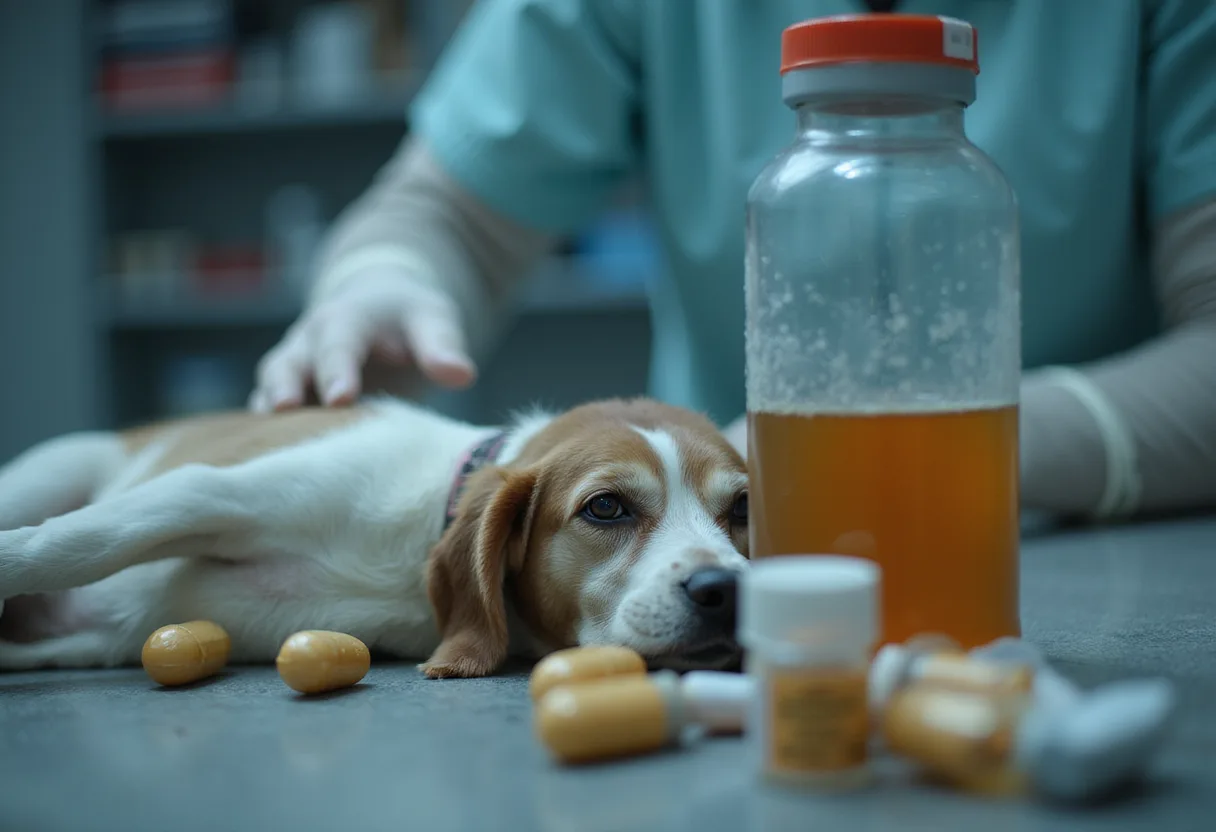
U.K. Discarded-Drug Poisonings in Dogs Climb 87% Since 2021
Discarded-drug poisonings in U.K. dogs have risen 87% since 2021, according to People.com. The trend shifts a familiar urban clinical risk into a documented multi-year trajectory for veterinary teams.
Updated
Photo: Thomas Rowlandson / The Met · CC0
Discarded-drug poisonings in dogs across the United Kingdom have climbed 87% since 2021, according to People.com, which described the trend as a record pace of canine exposure incidents tied to substances left in public spaces.
What does the headline figure cover?
People.com's report anchors the 87% increase to dogs ingesting drugs discarded in streets, parks, and at the curbside. The outlet did not publish the underlying case registry in the headline summary, leaving the species breakdown, regional distribution across the four U.K. nations, and the split between prescription and recreational substances unspecified.
For practicing veterinarians, the headline reframes a familiar clinical risk as a documented trajectory. Drug toxicoses in companion practice have long included presentations involving substances left in public spaces — a category that historically spiked around festival seasons and urban event weekends. A multi-year 87% rise suggests the exposure pressure has broadened beyond those episodic peaks.
What changes at the exam table?
Clinicians presented with an ataxic, obtunded, or mydriatic dog from an urban walk in 2026 should weight drug toxicosis higher in the differential list than they did in 2021. Standard triage remains unchanged: emesis induction within the two-hour window for oral exposures in asymptomatic patients, naloxone for opioid-suspected presentations, and active cooling for sympathomimetic cases. The shift sits in pre-test probability, not in protocol.
Practice managers should review emergency drug stock accordingly. Naloxone, previously an optional shelf item in suburban small-animal hospitals, has moved toward baseline supply in urban U.K. clinics. Activated charcoal, intravenous lipid emulsion, and active cooling measures sit alongside that review.
What remains unanswered?
Three reader questions persist:
- Does the 87% figure derive from Veterinary Poisons Information Service call data, insurance-claim logs, or a press-release summary?
- Which drug classes drive the increase — opioids, benzodiazepines, stimulants, or a combination?
- Has the rise translated into measurable mortality, or does it reflect increased owner awareness and faster presentation?
The Veterinary Poisons Information Service, the U.K.'s primary animal-toxicology call line, has not been named in the headline material as the data source, and practitioners tracking regional logs will need to verify alignment with their own caseloads.
What is the practice-level impact?
For U.S. and Canadian readers, the U.K. trend functions as a sentinel. ASPCA Animal Poison Control Center call volume on the same exposure category warrants a parallel year-on-year audit. Regulatory context differs by jurisdiction: opioids implicated in canine exposures carry DEA Schedule II through V status in the United States, and benzodiazepines sit in Schedule IV, while cannabis-derived exposures carry varying state-level regulatory status across U.S. veterinary practice.
For food-animal and public-health readers, the canine figures function as a sentinel as well: the same discarded substances pass through the hands of children, wildlife, and municipal wastewater systems. Local-authority drug-disposal programs and veterinary partnerships on owner education become evidence-based interventions rather than goodwill gestures.
Forward outlook
The next twelve months will determine whether the 87% climb plateaus or continues. Veterinary surveillance networks will need to formalize the discarded-drug exposure category in annual reporting if the headline figure is to translate from press summary to clinical action plan.
Source: Google News: Veterinary drugs
Nathan Brooks
Show full bio
Senior reporter covering companies, deals and strategy in Small- and large-animal clinical practice at The Vet Scope.
Related articles
Staten Island Report Links Veterinary Drug to Overdose Deaths
CDC warns 'rhino tranq' is spreading in illicit fentanyl supply
Texas A&M Reports Hemoperfusion for Dog After Oclacitinib Overdose
CDC Warns Veterinary Tranquilizer Is Spreading in Illicit Fentanyl
Two Charged After Drug Theft from Farmington Veterinary Clinic