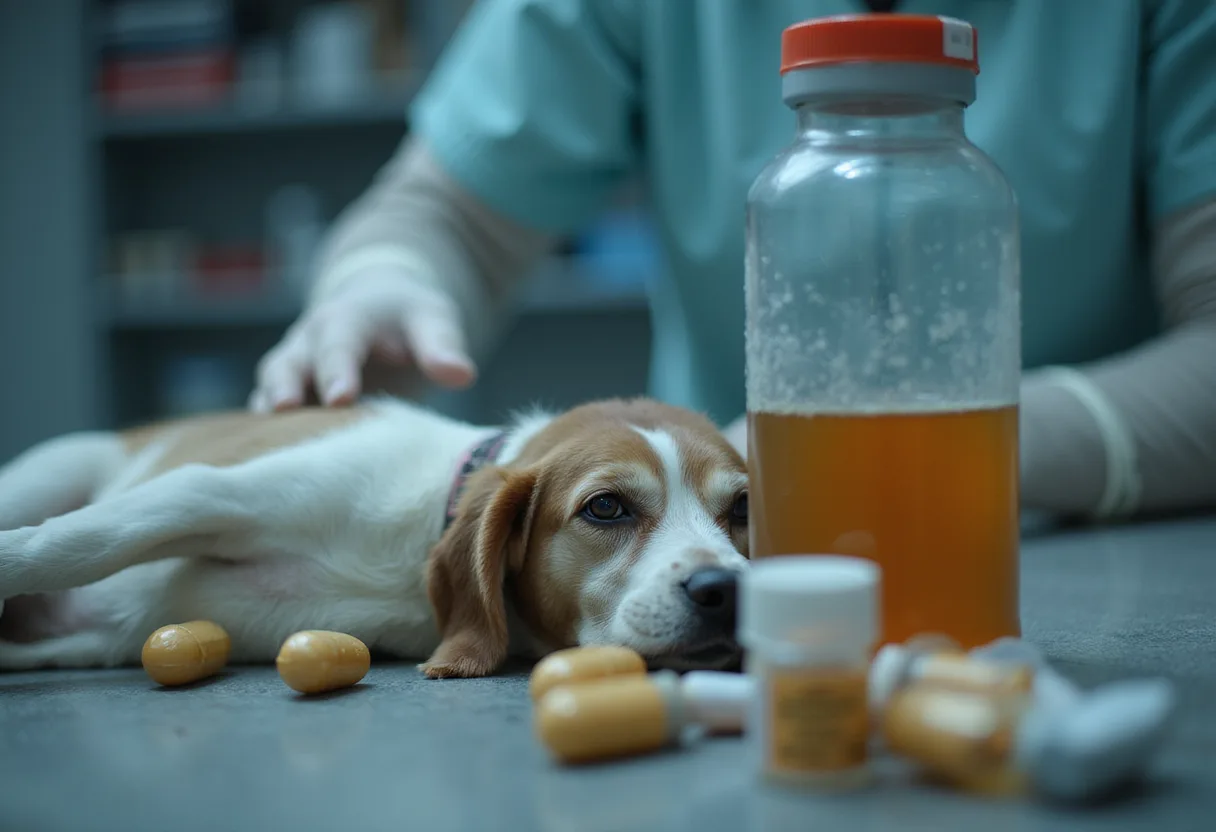
Texas A&M Reports Hemoperfusion for Dog After Oclacitinib Overdose
Texas A&M clinicians applied hemoperfusion to a dog after oclacitinib overdose, according to a DVM 360 report. The single-patient case adds extracorporeal clearance to documented options for severe Janus kinase inhibitor toxicity in small animals.
Updated
Photo: AI-generated
What happened
Texas A&M clinicians applied hemoperfusion to a dog after an oclacitinib overdose, according to a brief report carried by DVM 360. The case is a single-patient documentation of an extracorporeal clearance technique rarely described in the small-animal poisoning literature. The published brief did not include the dog's signalment, the dose ingested, or the elapsed time from exposure to treatment.
The takeaway: one dog, one technique, one published entry.
Why oclacitinib toxicity matters
Oclacitinib, marketed as Apoquel, is a Janus kinase inhibitor the FDA Center for Veterinary Medicine approved for control of pruritus associated with allergic and atopic dermatitis in dogs. The drug carries a labeled adverse-event profile that includes vomiting, diarrhea, and lethargy. Overdose presentations vary by dose and can produce more pronounced gastrointestinal, central nervous system, and hematologic effects. The product label directs clinicians toward gastrointestinal decontamination and supportive care as the standard response.
The takeaway: labeled guidance runs through decontamination, not extracorporeal clearance.
How hemoperfusion works
Hemoperfusion operates on a different principle than activated charcoal or emesis. The technique routes blood through a sorbent cartridge that captures lipophilic compounds, then returns the filtered blood to the patient. Human toxicology has used hemoperfusion for decades for theophylline, certain barbiturates, and mushroom toxins. Veterinary application has remained narrow, anchored in academic referral hospitals with the equipment, trained staff, and continuous monitoring required to manage an extracorporeal circuit safely.
The takeaway: hemoperfusion is a referral-center tool, not a first-line decontamination method.
What the case changes for practitioners
Three points are worth holding. First, the case documents hemoperfusion as a plausible intervention in oclacitinib overdose, not as a routine one. Second, the window for effective intervention narrows once gastrointestinal absorption is complete, so rapid referral determines whether the option exists. Third, the technique requires specialized infrastructure that limits delivery to referral centers with hemodialysis-grade hardware and trained personnel.
The takeaway: early referral is the lever the primary clinician controls.
Regulatory and prescribing context
The regulatory frame is straightforward. Oclacitinib remains a prescription product dispensed under veterinary supervision, with the FDA CVM-approved label as the standing reference for labeled uses and overdose management. Hemoperfusion use in this case falls outside the label and represents a clinical-judgment decision by the treating team. The documentation adds to the published experience but does not alter regulatory status or label guidance.
The companion-animal implications are direct. Practices prescribing oclacitinib should counsel owners on safe storage and accurate dosing, particularly in households with more than one dog where accidental ingestion of an entire blister pack is plausible. Emergency protocols that include the contact details of a hemoperfusion-capable referral hospital are a low-cost preparation for a rare but consequential event.
The takeaway: the prescription carries storage and dose-compliance obligations beyond the pill itself.
What the case does not yet prove
What this single case does not answer is whether hemoperfusion meaningfully improves outcomes compared with aggressive supportive care. Single-patient reports establish plausibility; population-level inference requires case series, controlled comparisons, or pharmacokinetic modeling. Until that evidence arrives, hemoperfusion remains a referral-center option rather than a standard recommendation in the oclacitinib overdose protocol.
The takeaway: one case opens a question. Replication closes it.
Looking forward
The next question is procedural. As more referral hospitals publish their extracorporeal experience, the veterinary emergency community will need a shared decision framework for when to initiate hemoperfusion versus continue supportive care. The Texas A&M report is a step toward that framework, and the next steps are replication, outcome tracking, and protocol standardization across academic referral centers.
Source: Google News: Veterinary medicine
Elena Vasquez
Show full bio
Market editor covering money, funding and market shifts around Small- and large-animal clinical practice at The Vet Scope.
Related articles
FDA Clears Path for CannEpil® as Minor Use in Canine Bone Cancer Pain
CDC Warns Veterinary Tranquilizer Is Spreading in Illicit Fentanyl
Thalidomide evaluated as rescue therapy in canine multiple myeloma study
FDA Issues First-Ever Emergency Use Authorization for Screwworm Drug in Dogs
Staten Island Report Links Veterinary Drug to Overdose Deaths