Smart Ear Tags Help Detect Heat, Calving, and Health Issues in Cattle
Smart ear tags now let cattle producers detect estrus, calving events, and emerging health problems in real time, according to reporting from DTN Progressive Farmer.
Updated
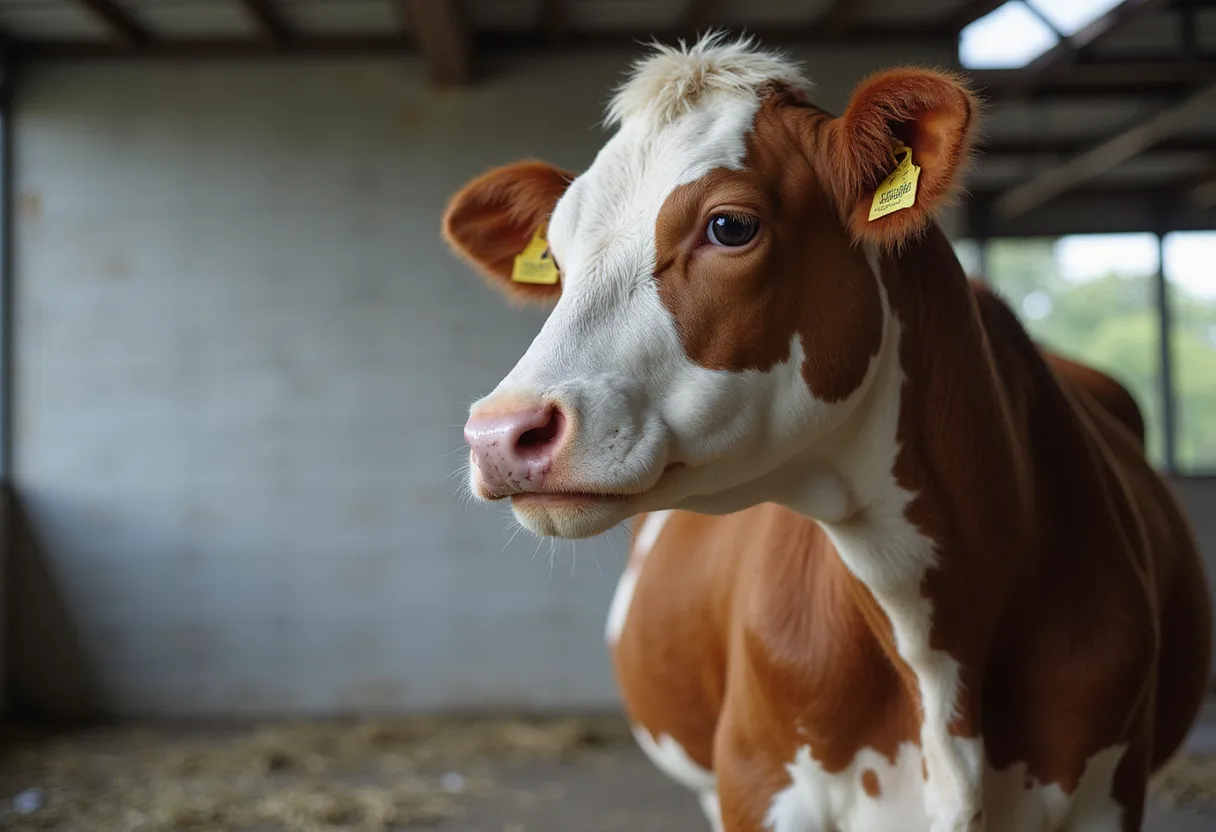
Photo: AI-generated
Smart ear tags now let cattle producers detect estrus, calving, and emerging health problems in real time, according to a report published by DTN Progressive Farmer.
The development turns what was historically a passive identification device into an active monitoring tool. Sensors housed in the tag capture motion, temperature, and behavioral data, then transmit those readings over low-power wireless networks. Software compares each animal's baseline against the herd and flags deviations that warrant a producer's attention.
What do smart ear tags detect?
The technology targets three categories of production loss that cattle operations have historically absorbed through labor-intensive observation:
- Estrus (heat) detection — elevated mounting activity and movement help identify cows in standing or near-standing heat, tightening artificial-insemination timing and shortening the calving-to-conception interval.
- Calving alerts — reduced movement, restlessness, and posture changes signal the onset of labor, allowing producers to check animals overnight and intervene earlier on difficult births.
- Health anomaly flagging — drops in rumination time, prolonged inactivity, or sustained temperature shifts suggest respiratory disease, mastitis, or metabolic disorders before clinical signs become visible.
Why do producers need continuous monitoring?
Each application addresses a measurable cost center on a cow-calf operation. Missed heats extend days open, raise semen and labor costs, and force producers to retain or purchase additional replacement heifers. Unattended calvings produce stillbirths, postpartum complications, and lost future productivity from the dam. Late disease identification drives up treatment costs, depresses average daily gain in the feedlot, and pulls carcass quality grades down.
By shifting detection earlier in each of these windows, the technology aims to recover production losses without expanding labor hours. Alerts surface on a phone or computer, replacing some of the visual pen-checks that previously required dawn, midday, and dusk walks through the herd.
What should producers weigh before adopting?
The technology raises operational rather than scientific questions. Cellular or LoRaWAN coverage across grazing acreage determines whether tags connect reliably. Battery life, monthly data-plan fees, and tag retention under chute handling all affect total cost of ownership. Software usability shapes return on investment as much as hardware quality — a clean dashboard reduces labor; raw accelerometer output does not.
Producers often begin deployment with first-calf heifers and high-value animals, where marginal return on detection tends to run highest, before extending coverage across the breeding herd.
Where is the technology heading?
The next phase of development will likely pair ear-mounted sensors with in-bolus rumen monitors and gate-side readers, building a richer behavioral and metabolic record for each animal. Operations evaluating systems today should weigh tag readability under chute lights, replacement-part availability, and the ability to add sensors without replacing the base unit.
As more ranches accumulate per-animal longitudinal data, expect the conversation to move beyond single-event alerts — heat, calving, sickness — toward continuous health, welfare, and reproductive benchmarking across the herd.
Source: Google News: Livestock health
Elena Vasquez
Show full bio
Market editor covering money, funding and market shifts around Small- and large-animal clinical practice at The Vet Scope.
Related articles
Smart Ranch Technology Cuts Costs and Improves Cattle Health
Dairy cow behavior decoded from electronic feeder data
Dairy Science study pairs automated BCS with lactation data to lift revenue
Large Animal Vet Shortage Adds New Burden for Cattle Producers
Nose-flap weaning cuts stress in beef cows, Calgary study finds