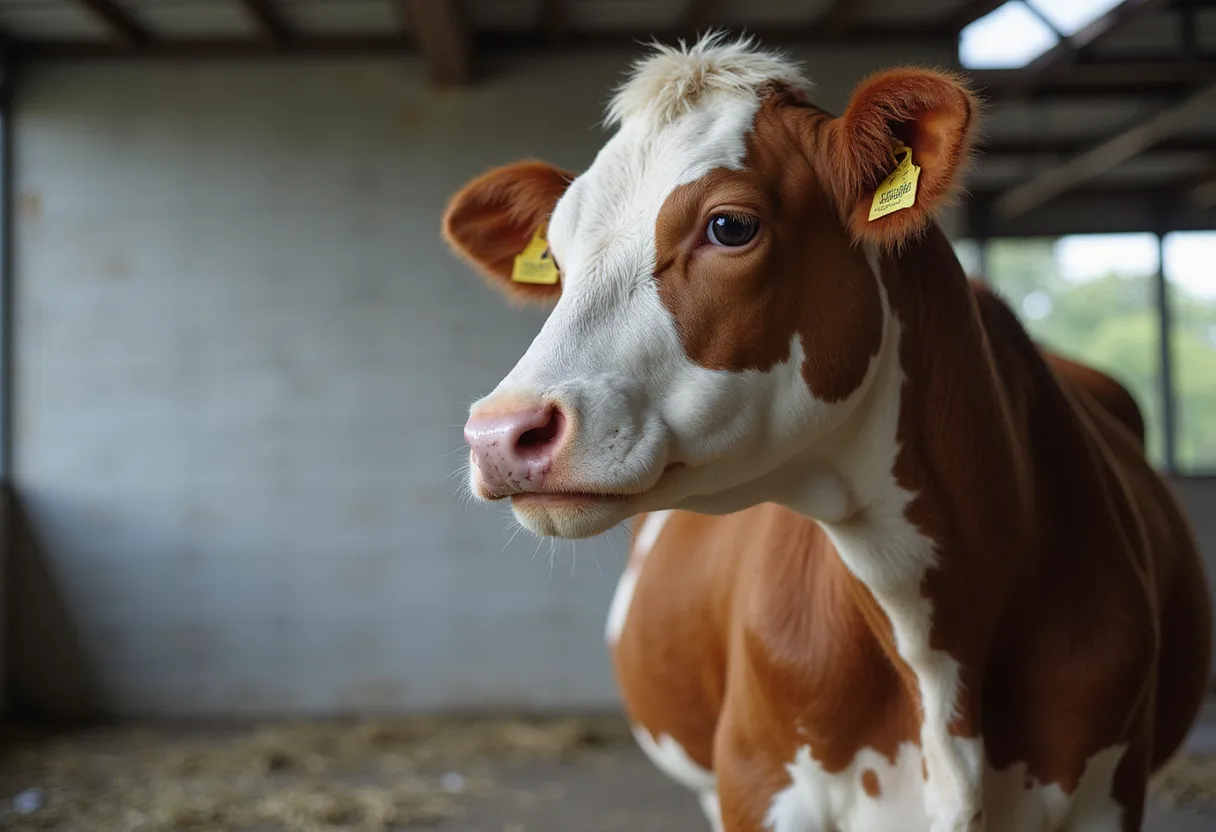
Dairy cow behavior decoded from electronic feeder data
A 9 October 2026 Journal of Dairy Science study shows routine electronic feeder and drinker records can reveal individual behavioral profiles in dairy cows.
Updated
Photo: AI-generated
A study published online 9 October 2026 in the Journal of Dairy Science demonstrates that electronic feeder and drinker data can be used to decode individual behavioral profiles in dairy cows — without adding a single sensor to the animal.
The paper, authored by Kehan Sheng, Borbala Foris, Daniel M. Weary and Marina A.G. von Keyserlingk of the University of British Columbia's animal welfare program, draws on records that most modern dairy barns already generate continuously: every visit a cow makes to an electronic feeding station, and every visit to an automated water trough.
That starting point matters for practice economics. Wearable sensors and camera systems carry acquisition and maintenance costs that many herds cannot justify. Feeder and drinker systems, by contrast, are already installed in herds using individual feed monitoring for ration management. The study asks what those existing data streams reveal about each cow as an individual.
What did the researchers actually do?
The team analyzed automatically recorded feeding and drinking behavior at the level of the individual cow. Their goal was to characterize behavioral profiles — consistent, measurable patterns in how each animal allocates time at the feeder and drinker — rather than average herd-level summaries.
This marks a methodological shift. Traditional behavioral research on dairy cattle reports group means, which can obscure the variation between cows that matters most for detecting illness, estrus or welfare problems early. Profiling individuals from routine records moves the analysis from the herd spreadsheet toward the individual animal.
Why do individual profiles matter at the barn level?
For dairy practitioners and herd managers, the practical value of individual behavioral profiles lies in deviation detection. A cow whose feeder and drinker visit pattern departs from her own established baseline is often the first — and earliest — indicator of disease, lameness or other welfare compromise, frequently before clinical signs are visible at the pen check.
The approach also carries food-animal and economic implications. Early identification of a sick or struggling cow supports targeted treatment, reduces unnecessary whole-group interventions, and aligns with mounting regulatory and retailer pressure to document individual animal welfare in dairy production.
The authors' broader research program has consistently argued that precision livestock farming tools are most useful when they work from each animal's own baseline rather than fixed population thresholds. This study extends that argument to data the farm already owns.
What changes for the herd?
The findings suggest a workflow change rather than a capital one. Herds already running electronic feeders can treat those logs as a behavioral monitoring resource, pairing them with existing herd-management software. Practices advising those herds may find the data useful context when investigating individual cow health events.
The study does not claim the method replaces direct observation or clinical examination. It positions automated feeder and drinker records as a complementary layer of individual-level information — one that runs 24 hours a day and requires no additional handling of the cow.
As precision dairy farming expands, work like this points toward a near term in which the most valuable sensor in the barn is the one the farmer bought for something else.
Source: Journal of Dairy Science (Elsevier)
Amara Osei
Show full bio
Correspondent covering companies, deals and strategy in Small- and large-animal clinical practice at The Vet Scope.
Related articles
Smart Ranch Technology Cuts Costs and Improves Cattle Health
Smart Ear Tags Help Detect Heat, Calving, and Health Issues in Cattle
Dairy Science study pairs automated BCS with lactation data to lift revenue
Holstein calf resilience traits tied to milk intake variability in new GWAS
First-Calving Body Weight Tracks Through to Milk Yield and Culling