Shoppers Will Pay $4.25 More Per Pound for Pig Health Gains
A Michigan State study of 4,004 U.S. pork shoppers found premiums up to $4.25 per pound for welfare gains from precision livestock farming, with physical health valued most.
Photo: AI-generated
U.S. pork shoppers would pay up to $4.25 more per pound for pork carrying a label signifying a high improvement in pig physical health, according to a Michigan State University study of 4,004 consumers. The figure anchors new research from Babatope Akinyemi and Janice Siegford of Michigan State University Extension, published from East Lansing, that puts dollar values on what precision livestock farming (PLF) must deliver before the public helps cover its cost.
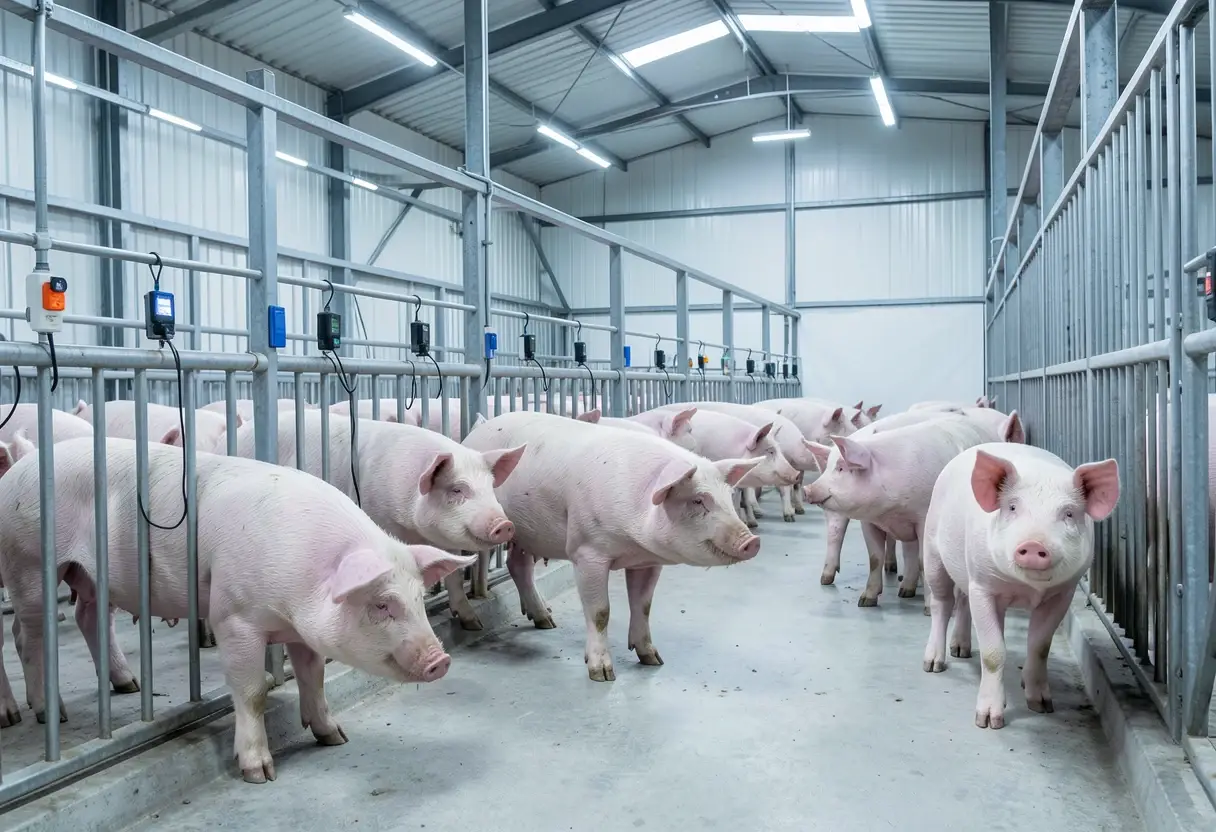
PLF uses cameras and sensors to flag a pig that is sick, hurt or stressed long before a person might notice. Early action can mean healthier, calmer pigs. But buying and running these tools is not cheap. The study asks a blunt commercial question: if farmers invest in PLF to improve welfare, will shoppers pay for it, and does the size of the improvement matter?
How did the study work?
Each of the 4,004 shoppers made a series of buying choices between two packages of fresh pork loin, or chose to buy neither. Each package carried a one-to-three-star label showing how much PLF had improved three areas of pig welfare:
- Physical health: good food, a clean pen, daily care and quick veterinary treatment
- Mental health: less fear, stress and suffering, and more positive feelings
- Natural behavior: space and chances to explore, root, play and rest
Each area could show no improvement, or a low, moderate or great improvement. Packages also differed in price, U.S. origin and a carbon-neutral label. From those choices, the researchers estimated how many extra dollars per pound shoppers would pay for each level of improvement.
What did shoppers value?
The pattern was clear: the more PLF improved the pigs' lives, the more shoppers would pay.
For physical health, shoppers would pay about $1.09 more per pound for a low improvement, rising to $2.57 for moderate and $4.25 for high improvement. Mental health premiums ran $1.27, $2.93 and $3.26 across the same three levels. Natural behavior drew $0.10, $1.85 and $2.62.
One result stands apart. Shoppers did not reward a low improvement in natural behavior. The $0.10 premium was so small the researchers cannot say it differs from zero. Moderate and high gains in natural behavior did earn solid premiums. The authors write that shoppers want a real change in how pigs can move, explore and play — in their eyes, a small change may not be worth paying for.
The high-improvement physical health label earned the largest welfare premium of all at $4.25 per pound, followed by mental health at $3.26 and natural behavior at $2.62. These premiums are large relative to the prices used in the study, which ranged from $3.10 to $13.30 per pound.
What are the caveats?
The authors flag the limits directly. These are survey results, and shoppers often say they will pay more than they actually spend in the store. Even so, they argue, the ranking of what people value is useful for planning.
What does this change for producers and technology firms?
The results offer concrete guidance on where PLF investment pays back:
- Aim for big gains. High improvements earned about four times the premium of low improvements for physical health.
- Start with physical health. Tools that catch illness, injury and lameness early may offer the best payoff.
- Do not skip mental health. Even low and moderate gains in mental health earned premiums higher than the same gains in physical health.
- Go big on natural behavior. Only moderate and high gains were rewarded.
Shoppers in the study did not treat all welfare gains the same. They paid more for bigger improvements and valued strong gains in physical health most. For PLF to pay off, the authors conclude, it should deliver changes large enough for shoppers to notice and value — a benchmark technology developers and swine producers can carry directly into product roadmaps and barn-level investment decisions.
Source: morningagclips.com
Nathan Brooks
Show full bio
Senior reporter covering companies, deals and strategy in Small- and large-animal clinical practice at The Vet Scope.