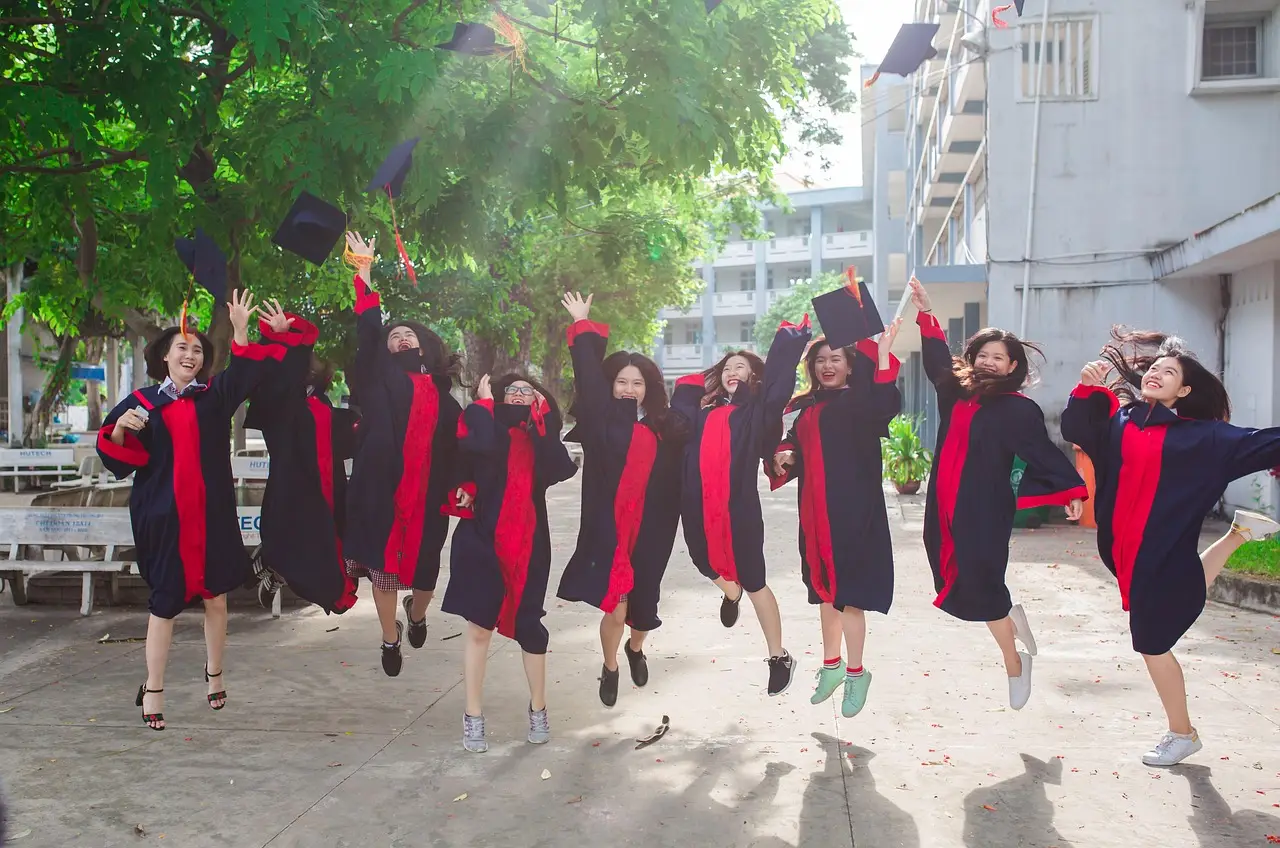
WCVM recognizes 24 graduates and 5 clinical interns in mid-November
Six PhDs, nine thesis-based MScs and nine project-based MScs lead WCVM’s Fall Convocation class, joined by five small-animal interns across companion-animal, food-animal and biomedical research.
Photo: ptksgc / pixabay
By Elena Vasquez
Twenty-four graduate students and five clinical interns based at the Western College of Veterinary Medicine (WCVM) will celebrate completion of their programs at the University of Saskatchewan’s (USask) Fall Convocation ceremony in mid-November. The graduates include six students receiving Doctor of Philosophy degrees, nine earning thesis-based Master of Science degrees and nine completing project-based MSc programs. Two interns completed one-year small-animal rotating internships, and three completed small-animal specialty internships; all five will receive graduate certificates.
What does this graduating class represent?\n
WCVM Today maps completed training across companion animals, cattle, sheep, pigs, horses, honey bees, zebrafish, crayfish and bison, naming supervisors and projects. The notice provides no sample sizes, study designs, results, effect estimates or recommendations.
Takeaway: Completed training is the firm result; clinical benefit is not yet established.
Which companion-animal questions are moving forward?\n
Department of Small Animal Clinical Sciences
- Shabnam Abdi, PhD program; supervisor: Dr. Behzad Toosi. Dissertation title: “Functional and mechanistic characterization of EphA2 in human and canine melanoma.”
- Nima Khalilitanha, MSc program; supervisors: Drs. Gillian Muir and Behzad Toosi. Thesis title: “Acute intermittent hypoxia and neuroplasticity in a murine model of spinal cord injury.” Thesis under embargo.
- Kazuki Mizuta, combined residency-MSc program in medical oncology; supervisors: Dr. Valerie MacDonald and Arata Matsuyama. Thesis title: “Immune microenvironmental determinants of recurrence and metastatic heterogeneity in canine sarcomas.” Thesis under embargo.
- Tanarut Laudhittirut completed a combined residency-MSc in internal medicine under Dr. Anthony Carr; Carling McCrea in anesthesia and analgesia under Dr. Shannon Beazley; Kayla Ross in medical imaging under Dr. Sally Sukut; and Liang Jun Tseng in medical oncology under Dr. Valerie MacDonald.
The residency options concentrate on internal medicine, anesthesia and analgesia, imaging and oncology, areas that shape referral, perioperative and diagnostic decisions. Abdi’s melanoma work and Mizuta’s sarcoma work may inform comparative oncology; Khalilitanha’s murine work addresses neuroplasticity mechanisms. No protocol change is supported yet.
Takeaway: New expertise is arriving; evidence remains pending.
What could food-animal practice use?\n
Department of Large Animal Clinical Sciences
- Natalia Dee, MSc program; supervisor: Dr. Diego Moya. Thesis title: “Evaluation of the effect of extended-term delivery of local anesthetic on mitigating the pain caused by band castration in beef cattle.”
- Josefina Ghersa, MSc program; supervisor: Dr. Claire Card. Thesis title: “Extracellular vesicles during equine pregnancy recognition.”
- Stephani McLean, MSc program in field epidemiology; supervisor: Dr. Tasha Epp.
- Suren Muthukumara, MSc program; supervisor: Dr. Fabienne Uehlinger. Thesis title: “Elucidating different clostridium perfringens type D vaccine protocols in ewes and lambs.”
- Lorena Santos Bernal, combined residency-MSc program; supervisor: Dr. Fabienne Uehlinger. Project focus: “Antimicrobial prescription practices to equine patients at the Western College of Veterinary Medicine (2019-23).”
- José Silva Duarte, MSc program; supervisor: Dr. Matheus Costa. Thesis title: “Effects of different zinc and copper source combinations on their metabolism, mitochondrial energy metabolism, oxidative balance, and antioxidant system in post-weaned piglets.”
Potential herd applications include castration pain, pregnancy recognition, vaccination, antimicrobial use and postweaning nutrition. The source names no anesthetic drug or dose, vaccine product or schedule, mineral formulation or prescribing rate, and reports no FDA CVM, EMA or USDA action. No regulatory status changes can be inferred.
Takeaway: This is a research pipeline, not new herd guidance.
Where do public-health and laboratory studies sit?\n
Department of Veterinary Pathology
- Thanuri Edirithilake, MSc program; supervisor: Dr. Sarah Wood. Thesis title: “Decoding European foulbrood in honey bee apiaries: detection, strain dynamics and an alternative treatment.”
- Tara Funk, PhD program; supervisors: Drs. Bruce Wobeser and Cheryl Waldner. Dissertation title: “Investigating the potential of recombinase polymerase amplification to inform antimicrobial treatment strategies in feedlot cattle relative to traditional and experimental laboratory methods: targeted detection of bacteria and antimicrobial resistance determinants associated with bovine respiratory disease”.
- Hemlata Gautam, MSc program in anatomic pathology; supervisor: Dr. Ahmad Al-Dissi.
- Savannah Goldstein, MSc program in anatomic pathology; supervisor: Dr. Susan Detmer.
Department of Veterinary Microbiology
- Darien Deschner, PhD program; supervisor: Dr. Janet Hill. Dissertation title: “Genomic and phenotypic characterization of the opportunistic bacterial bovine pathogen Mannheimia haemolytica.”
- Sophie Hennig, MSc program; supervisor: Dr. Janet Hill. Thesis title: “Expression levels of maltose and maltooligosaccharide transporters in Gardnerella species.”
Department of Veterinary Biomedical Sciences
- Chinelo Uju, PhD program; supervisor: Dr. Suraj Unniappan. Dissertation title: “Brain-derived neurotrophic factor: a novel, positive regulator of zebrafish reproduction.” Dissertation under embargo.
- Gabrielle Achtymichuk, PhD program; supervisor: Dr. Maud Ferrari. Dissertation title: “Impact of ecological factors on crayfish (Faxonius virilis) risk assessment.”
- Tat Cham, PhD program; supervisors: Drs. Ali Honoramooz and Ahmad Al-Dissi. Dissertation title: “Toxicopathological assessment of testis formation using a novel testis organoid system.”
- Bukola Alaba, MSc program; supervisors: Drs. Suraj Unniappan and James Carmalt. Thesis title: “Immunohistochemical assessment of age- and disease-related changes in the equine temporomandibular joint (TMJ).” Thesis under embargo.
- Sergio Pezo Alencastre, MSc program; supervisors: Drs. Jaswant Singh and Gregg Adams. Thesis title: “Development of field techniques for collection and disinfection of bison semen.” Thesis under embargo.
Potential public-health implications center on antimicrobial-resistance detection in feedlot cattle, bovine respiratory disease, a bovine bacterial pathogen, honey-bee disease and bison semen handling. The notice supplies no findings or control thresholds. The remaining laboratory and biomedical work concerns Gardnerella transporters, zebrafish reproduction, crayfish ecological risk, testis development and equine temporomandibular joint changes.
Takeaway: Laboratory methods may improve surveillance once their utility is established.
Where do the internships fit?\n
Victoria de Araujo and Tauana Speroto completed small-animal rotating internships. Minae Kawasaki, Paula Lima Sant' Anna and Thamires Marques completed small-animal specialty internships. All five receive graduate certificates; the source does not identify their specialties or next positions.
Takeaway: Five interns complete certified training; their next practice positions remain unstated.
As the five embargoed works and other completed projects become available, their results will clarify whether any findings can support practice, public-health surveillance or further research.
Source: Google News: Veterinary medicine
Elena Vasquez
Show full bio
Market editor covering money, funding and market shifts around Small- and large-animal clinical practice at The Vet Scope.
Related articles
UC Davis revives small animal rotating internship after 45 years
WSU Veterinary Medicine Dean Dori Borjesson Announces Retirement
University of Maryland-Eastern Shore to Open Veterinary School in 2027
UMES Veterinary School Nears First Applicant Pool for Summer Start
CSU Opens Expanded Primary Care Suite for Veterinary Training