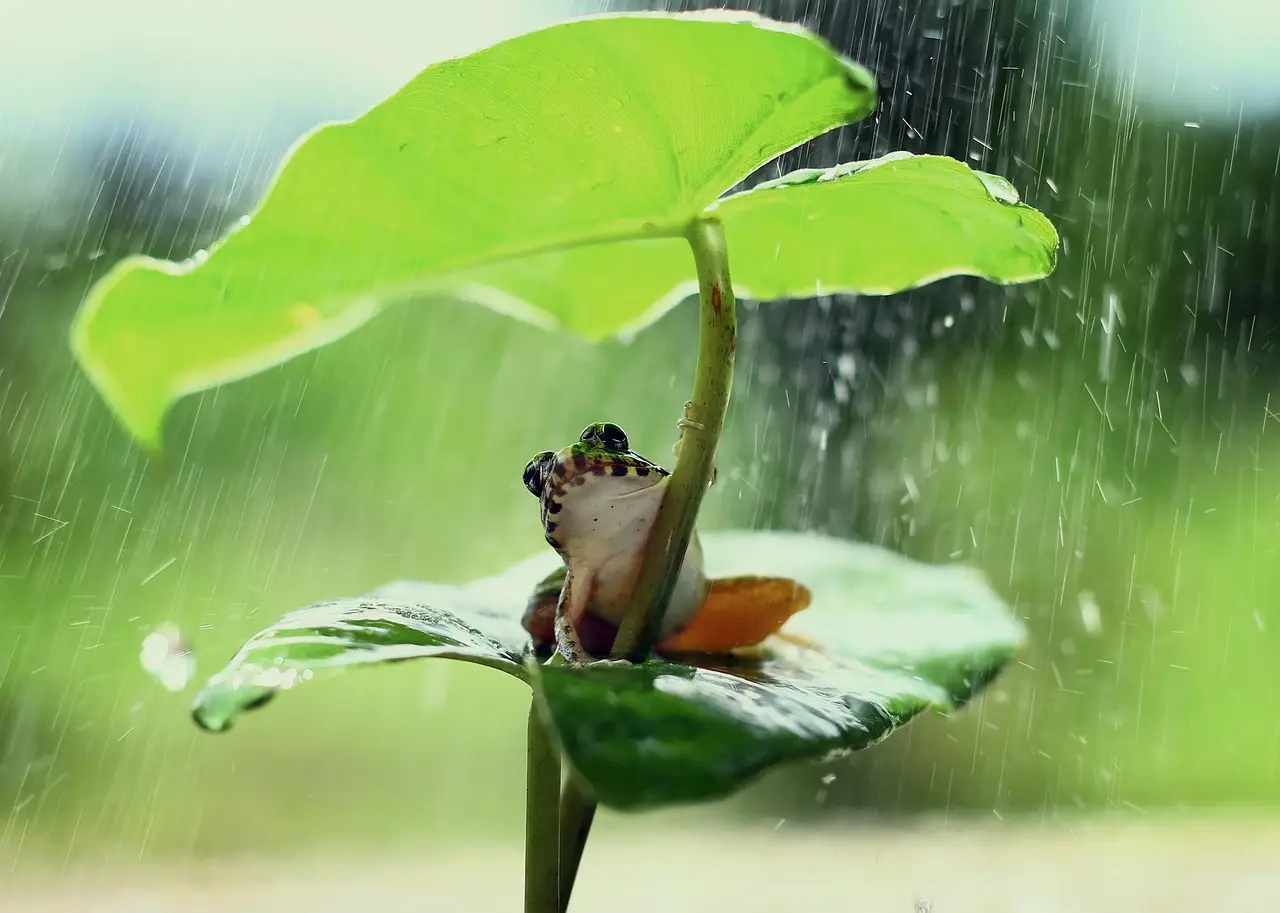
Museum Frogs Solve a 50-Year Amphibian Decline Cold Case in Brazil
Smithsonian-led testing of 370 museum frogs shows chytrid fungus invaded Brazil's Atlantic Forest just as populations collapsed between 1979 and 1982 — and most species have since rebounded.
Photo: 17128499 / pixabay
None of the frogs preserved before 1979 from Brazil's Boracéia Biological Station carried chytrid fungus. More than half of the specimens collected in the 1980s tested positive for it. That single shift, published November 3, 2026, in Molecular Ecology, closes in on a nearly 50-year-old mystery: why frogs began vanishing from Brazil's Atlantic Forest in the late 1970s.
The study, led by Jack Boyette — a graduate fellow at the Smithsonian's Center for Conservation Genomics and a doctoral candidate at Pennsylvania State University — analyzed more than 370 preserved amphibians representing 17 species. All came from the Smithsonian's National Museum of Natural History, collected by William Ronald Heyer, a former curator of amphibians and reptiles who ran five expeditions to Boracéia: two in the 1970s, before the population crashes, and three in the 1980s, after them.
"After almost 50 years, we still aren't confident what caused many historical amphibian die-offs, making these declines some of the most enduring cold cases in wildlife epidemiology," Boyette said.
What pathogen does the evidence implicate?
The suspected killer is chytridiomycosis, or chytrid, caused by the microscopic fungus Batrachochytrium dendrobatidis. Scientists believe the pathogen originated in Asia and spread worldwide during the 1970s and 1980s. It was not formally identified and described until 1999 — long after amphibian declines had begun, which is precisely why attribution has been so hard. Populations collapsed before anyone knew the fungus existed.
At Boracéia, amphibian numbers fell sharply between 1979 and 1982. Earlier hypotheses pointed to climate change or extreme weather. The museum data argue otherwise.
"While environmental factors could have played a role, our findings most directly implicate the chytrid fungus, revealing that regional invasion of the pathogen coincided with these unexplained amphibian disappearances," Boyette said.
Why did the hardest-hit species test negative?
The results contain a counterintuitive pattern. Species that suffered the steepest declines showed no detectable infection in preserved specimens. Species that remained stable frequently carried the fungus.
The researchers read this as a signal of differential susceptibility, not a contradiction. Tolerant species survived infection long enough to be collected. Highly susceptible frogs may have died before anyone could preserve them.
"The species that didn't decline may have naturally tolerated the fungus, allowing them to become infected without suffering mass mortality," Boyette said. "By contrast, the species that declined most dramatically may have been so susceptible that infected frogs died before Heyer could collect them."
The distinction matters for any practitioner or wildlife manager screening populations: infection and mortality are not the same thing. A species can carry a dangerous pathogen without catastrophic losses if its members tolerate it.
Have the frogs recovered?
Largely, yes. Working with researchers from the University of São Paulo, the team made six visits to Boracéia between 2022 and 2024. Of the 17 species in Heyer's historical collection, they found 12. Five were not located, and their status — including possible local extinction — remains uncertain.
Chytrid is still present in local frogs. The infection pattern suggests that species once devastated by the disease have developed greater tolerance over successive generations, which helps explain why many populations rebounded despite ongoing exposure.
What does this mean for museums and future outbreaks?
For Michael Campana, a genomicist at NZCBI, the study demonstrates the scientific value of natural history collections. Specimens preserved decades ago hold biological evidence no collector could have recognized at the time.
"Museum collectors could not have anticipated how important their collections would be to our modern conservation challenges, but without them, we would never be able to detect pathogens that went unnoticed for decades and reconstruct disease outbreaks that would otherwise remain a mystery," Campana said.
The researchers caution that their findings apply to Boracéia specifically and cannot automatically explain amphibian disappearances elsewhere in the Atlantic Forest. The work continues on two fronts: DNA extracted from museum specimens to identify the genetic mechanisms behind species' differing responses to chytrid, and ancient environmental DNA to fill gaps where no specimens were ever collected.
Those analyses carry practical weight for the next threat already on the radar — B. salamandrivorans, a fungal pathogen endangering salamanders in Europe and a potential danger to North American species. Reconstructing how chytrid emerged, spread and spared some species while destroying others may let scientists recognize the next fungal epidemic before it spreads this far.
Original: nationalzoo.si.edu
Grace Kim
Show full bio
Staff writer covering regulation, policy and their impact on Small- and large-animal clinical practice at The Vet Scope.
Related articles
Two More Zoonotic Disease Cases Confirmed at Glacier National Park
Two More Zoonotic Disease Cases Detected in Glacier National Park
Rare zoonotic disease confirmed in beaver near East Glacier
Down To Earth: Zoonoses Strategy Must Extend Past Biology
Climate Shifts Reshape Arenavirus Hemorrhagic Fever Risk in South America