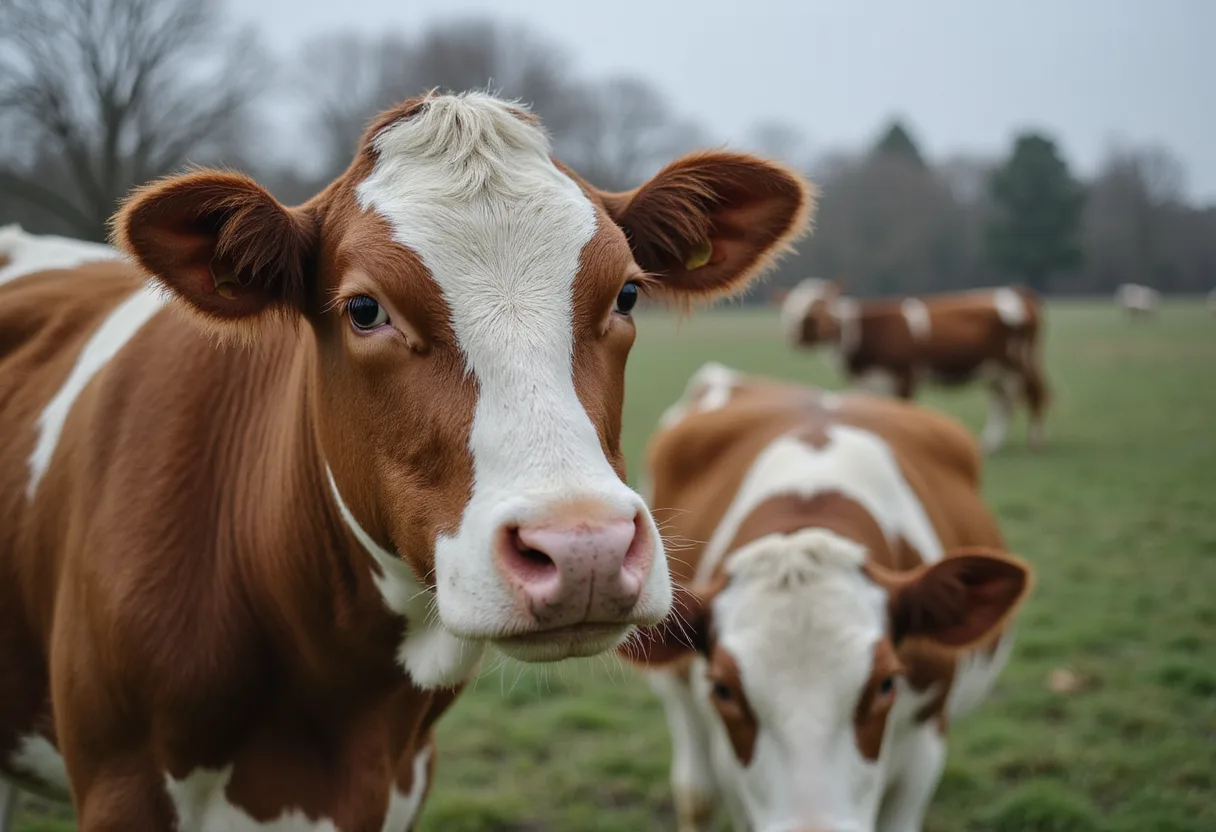
FAO urges stronger One Health push for grassland livestock
FAO issues call for stronger One Health action to advance sustainable grassland livestock systems, asking member states to integrate veterinary, public-health, and environmental policy on rangeland.
Updated
By Elena Vasquez
The Food and Agriculture Organization has issued a call for stronger One Health action to advance sustainable grassland livestock systems. The Rome-based United Nations agency published the appeal through its news service, framing integrated animal, environmental, and human-health policy as the lever for keeping pastoral production viable across rangeland regions.
Grassland livestock systems encompass cattle, sheep, goats, buffalo, yak, and camelids raised on communal pasture and rangeland, with the heaviest concentration in regions where mixed crop-livestock and purely nomadic herding dominate the local economy. These systems supply meat, milk, fiber, and draft power to communities whose protein alternatives are few. They also sit squarely on the boundary between human health, animal health, and the ecosystems that link both. Veterinary, medical, and rangeland-management agencies all touch the same herd in a single grazing season.
Why the call matters
The agency frames grassland livestock as simultaneously vulnerable and indispensable. Vulnerable because rangeland pathogens cross readily among wildlife, livestock, and people, and because climate stress compresses feed and water availability. Indispensable because pastoral production fills a food-security role that few alternatives can match. The appeal reads against a backdrop of fragmented national veterinary and public-health responses that have struggled to coordinate across borders and across ministries.
What changes in the barn
For rangeland practitioners the practical shift is documentation. Integrated herd-health plans record movement patterns, shared water sources, and wildlife contact at the herd level. Vaccination timing for endemic and zoonotic disease — brucellosis, anthrax, clostridial disease, and rabies in dog-mediated livestock contact — carries more weight when the same pathogens circulate in the surrounding landscape. Herders, their animals, and their working dogs form one epidemiologic surface, and herd-health plans increasingly reflect that.
For mixed-practice veterinarians who also see companion animals, the direct effect on dogs and cats is limited. Indirect effects run through antimicrobial-resistance pressure and the small but real zoonotic-disease agenda. National regulators, not the FAO appeal, mediate any prescribing or reporting change at the clinic level.
Public-health angle
Grassland surveillance shapes the human-animal disease early-warning system directly. Pastoral veterinarians serve as first-line reporters for events that escalate beyond livestock into human populations. The FAO call asks member states to formalize that reporting chain across ministries of agriculture, health, and environment. Antibiotic-use documentation on rangeland operations becomes a public-health input rather than a clinical-only record.
What the call does not yet specify
The communication does not state funding levels, country-by-country timelines, or regulatory milestones. Practitioners monitoring follow-up will look to FAO, the World Organisation for Animal Health (WOAH, founded as OIE), and regional bodies for the operational steps that follow the policy framing. The take-away is that grassland systems need coordinated action across veterinary, medical, and environmental sectors; the FAO call signals that, but does not yet operationalize it.
The next move rests with member-state responses and the joint technical guidance that FAO and WOAH typically publish after calls of this kind.
Source: Google News: Livestock health
Elena Vasquez
Show full bio
Market editor covering money, funding and market shifts around Small- and large-animal clinical practice at The Vet Scope.
Related articles
Resilience vs contribution: Livestock's dual climate reckoning
Global leaders commit to stronger animal health preparedness
FAO Opens One Health, Sustainable Livestock Knowledge Hub
Livestock Health Demand Pushes Vaccine Production Toward Africa
Too Few Vets, Too Many Animals: The Farm Veterinarian Shortage