FAO Backs South Africa's Push to Empower Veterinary Paraprofessionals
South Africa's rural livestock strategy leans on veterinary paraprofessionals, with the FAO framing the workforce move as a scope-of-practice reform rather than a headcount expansion.
Updated
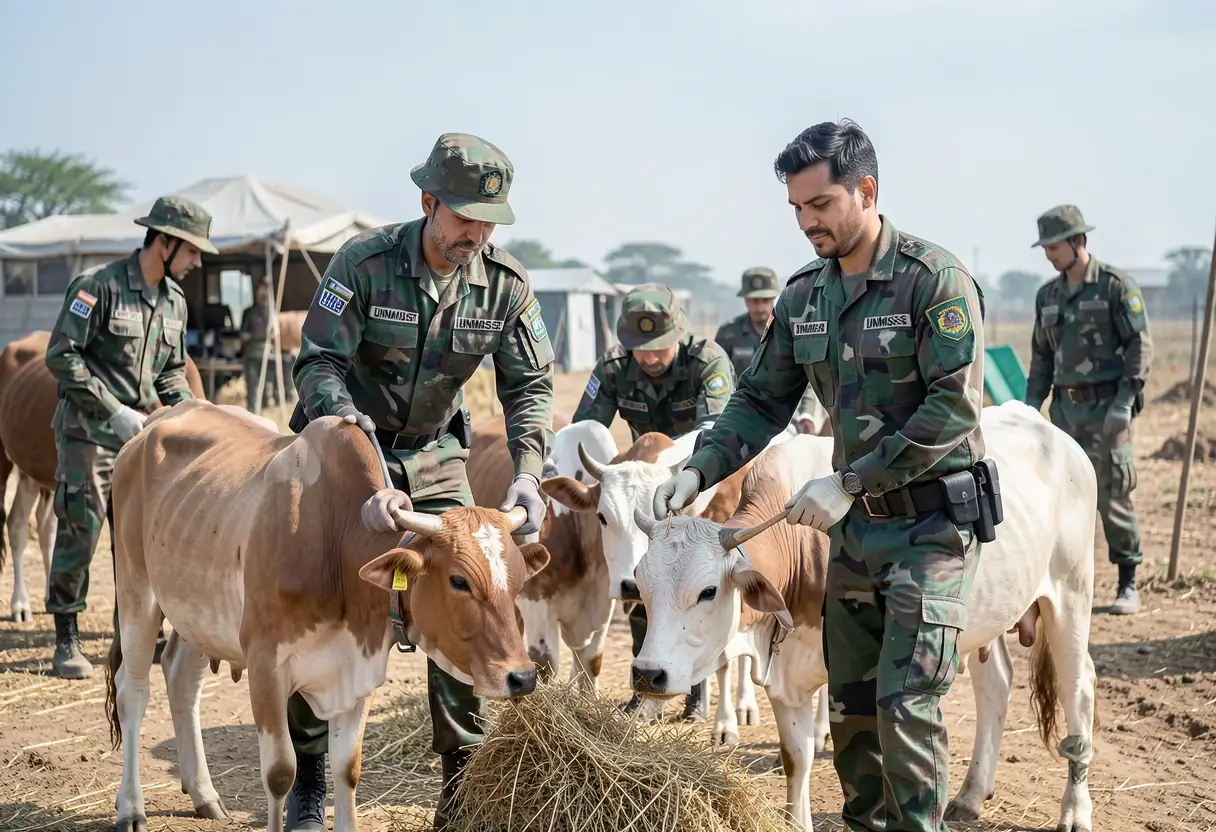
Photo: AI-generated
The Food and Agriculture Organization of the United Nations has featured South Africa's plan to expand the role of veterinary paraprofessionals in delivering rural livestock health services.
The FAO news item, titled "South Africa strengthens rural livestock health by empowering veterinary paraprofessionals," frames the move as a deliberate workforce strategy rather than a research finding. For practitioners reading from the exam table or the kraal, the operative word is empowering, which signals scope-of-practice change rather than mere training.
Why a paraprofessional push?
South Africa's rural livestock sector spans geography that veterinarians alone cannot cover. Private clinics concentrate in towns, commercial farms, and peri-urban production zones. Remote communal farming areas, where livestock remain a primary economic asset, depend on animal health technicians, veterinary nurses, and community-based animal health workers for routine preventive care.
The country's paraprofessional pipeline already includes categories such as animal health technicians, registered veterinary nurses, and laboratory technologists, with varying levels of integration into formal service delivery. The empowerment strategy builds on that existing cadre rather than creating one from scratch.
The FAO's framing positions these workers as the front-line workforce for vaccination campaigns, parasite control, basic clinical interventions, and disease surveillance. The strategic logic mirrors task-shifting frameworks the organization has promoted in regions facing comparable rural service gaps. Practitioners should read this as workforce redistribution rather than workforce invention. Veterinary councils in Botswana, Namibia, and Zimbabwe have walked similar paths, offering regional reference points for scope reform.
What changes in the field?
Scope of practice. That is the operative question for practitioners. Formal recognition typically redefines what paraprofessionals may do under veterinary supervision, what they may do independently, and what remains restricted to licensed veterinarians. South Africa's move toward that formalization is the regulatory hinge.
Coverage changes everything. Where a veterinarian may visit a district weekly, trained paraprofessionals can deliver daily preventive services, flag outbreaks earlier, and shorten the response window when notifiable disease appears. Vaccination coverage for foot-and-mouth disease, brucellosis, and other controlled diseases rises when the workforce reaches the animals that need it. The takeaway: scope reform, not headcount, drives the field-level change.
Who holds the regulatory reins?
Veterinary paraprofessional recognition sits inside each country's veterinary statutory framework. The South African Veterinary Council, which governs professional registration and scope of practice, sets the boundary conditions for any expansion of paraprofessional authority. FAO endorsement does not alter those rules directly. It signals international alignment.
For companion-animal practice, the move carries limited direct impact. For food-animal practitioners in rural districts, it changes the staffing math and the referral pathways. For public health, the surveillance dimension links rural livestock disease intelligence to national reporting systems that track zoonotic risk. Veterinary education may also adjust, as training programs for paraprofessionals require curriculum standards and competency frameworks distinct from the DVM track. The takeaway: regulatory authority remains domestic; FAO support is political weight.
What comes next?
The FAO's continued promotion of paraprofessional empowerment reflects a global shortage of veterinarians relative to livestock-dependent rural populations. South Africa's initiative joins a growing list of countries formalizing mid-tier animal health cadres, including Ethiopia, Kenya, and several west African states.
The practical test ahead is whether formal recognition translates into measurable coverage gains for rural livestock keepers and faster detection of transboundary animal disease. Coverage, not the announcement, will determine whether the strategy holds at the kraal.
Source: Google News: Livestock health
Elena Vasquez
Show full bio
Market editor covering money, funding and market shifts around Small- and large-animal clinical practice at The Vet Scope.
Related articles
780 Veterinary Experts Deployed to Nigeria's Rural Livestock Areas
L-PRES deploys 760 veterinary experts to Kwara for livestock push
Indian UNMISS peacekeepers run veterinary clinics in Jonglei State
Ghana Inducts Newly Trained Veterinary Surgeons Into Practice
Livestock Health Demand Pushes Vaccine Production Toward Africa