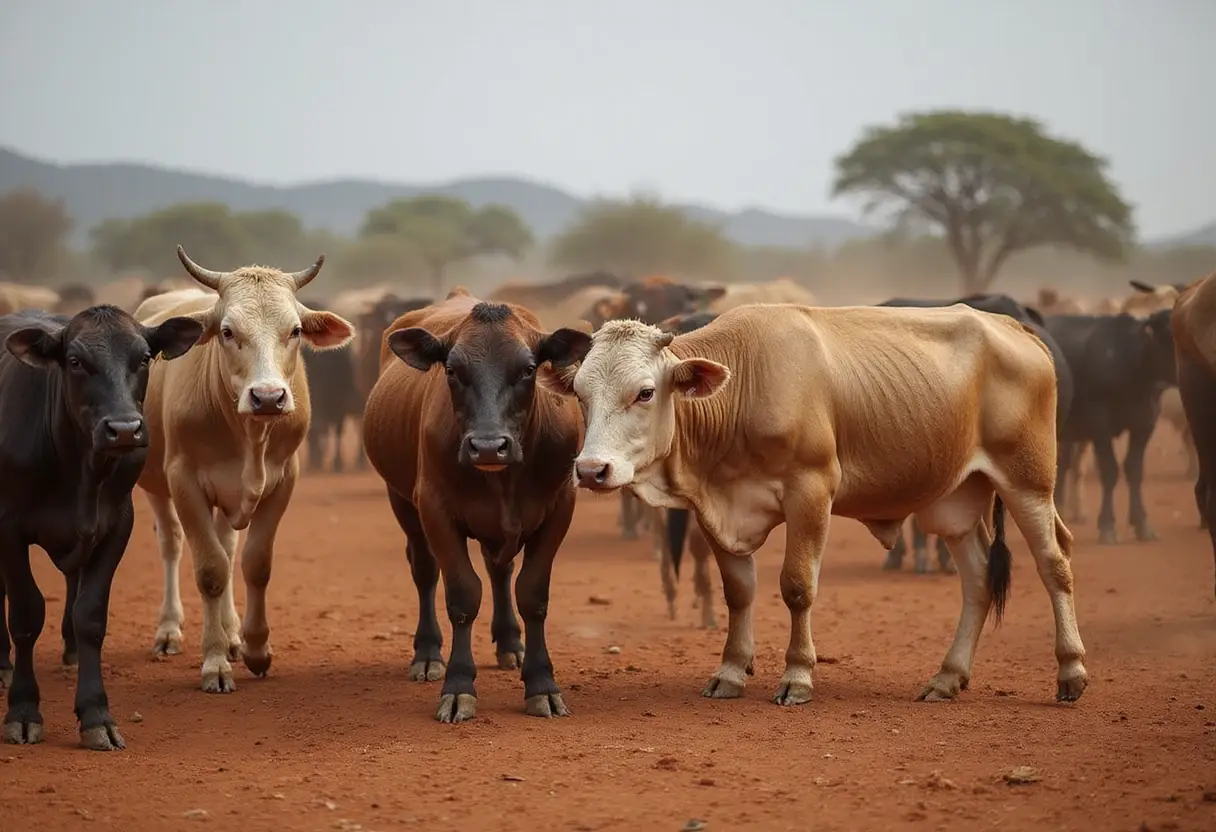
Zimbabwe Government Builds Three New Cattle Dip Tanks in Umzingwane
Zimbabwe's government has built three new cattle dip tanks in Umzingwane, Matabeleland South, strengthening tick-borne disease control for communal herd owners.
Updated
Photo: 12019 / pixabay
The Zimbabwean government has constructed three new dip tanks in Umzingwane district, Matabeleland South province, a move the state-owned Herald describes as a "lifetime boost" for local cattle producers.
Dip tanks remain the frontline tool against tick-borne disease in Zimbabwe's communal farming areas. For rural households that depend on cattle for draft power, milk, income and savings, access to a functioning dip tank determines whether a herd survives the tick season or succumbs to diseases such as January disease (theileriosis), heartwater and redwater.
Why three dip tanks matter
Each dip tank can serve cattle from surrounding villages, reducing the distance farmers must walk animals for routine acaricide treatment. Where tanks are absent or dilapidated, coverage drops and tick populations rebound across whole grazing areas, not just individual herds.
The Herald's report frames the Umzingwane construction as a deliberate government intervention rather than a donor project, signaling state prioritization of livestock infrastructure in a province where cattle keepers have long cited dipping chemicals and broken facilities among their chief constraints.
What changes at the kraal
For veterinary extension officers and dip-committee coordinators in Matabeleland South, the practical implications of new tank construction are concrete:
- Reduced travel time for routine weekly dipping, which improves compliance with recommended dipping intervals.
- Lower risk of localized tick-borne disease outbreaks in villages previously outside effective dip coverage.
- A platform for coordinated acaricide rotation, the standard measure against tick resistance to chemicals.
- A community asset that requires a functioning water source, chemical supply chain and management committee to deliver its full value.
The wider lens
Tick-borne disease losses weigh heavily on Zimbabwe's national herd, which government and industry figures have tracked for years as a food-security and rural-livelihood indicator. Infrastructure investment of this kind addresses the delivery gap that vaccines and acaricides cannot close on their own: a chemical is only effective if farmers can physically access a dip point on schedule.
The Herald did not specify completion dates, construction costs, tank capacities or the specific wards receiving the facilities, details that will determine how many households the three tanks ultimately reach.
Sustained chemical supply, water reticulation and dip-committee training will decide whether the Umzingwane tanks deliver the lifetime benefit the government promises, or join the ranks of underused infrastructure awaiting operational support.
Source: Google News: Livestock health
Nathan Brooks
Show full bio
Senior reporter covering companies, deals and strategy in Small- and large-animal clinical practice at The Vet Scope.
Related articles
Zimbabwe rehabilitates 418 dip tanks to shore up cattle tick control
Namibia Eases Foot-and-Mouth Disease Movement Restrictions
Indian UNMISS peacekeepers run veterinary clinics in Jonglei State
Taita Taveta intensifies livestock disease control push
Uganda Warns Against Housing Livestock in Markets Over Disease Risk