Vaccines as a Route to Cutting Livestock Antimicrobial Use
A Frontiers editorial collects research on livestock vaccine strategies as a practical lever for reducing antimicrobial use and slowing resistance in food animals.
Updated
Photo: Alexander Gardner / The Met · CC0
A new editorial published in Frontiers, titled "Advancing livestock health: innovative vaccine strategies to combat antimicrobial resistance," argues that vaccination belongs at the center of efforts to reduce antimicrobial use in food-producing animals. The piece is an editor-led collection, not a single trial, so it carries no new dataset of its own. Its weight comes from what it assembles: research articles and reviews on how immunization can prevent the infections that drive antibiotic consumption on farms.
The logic is mechanical, and the editorial keeps it that way. Antimicrobial resistance grows wherever antimicrobials are used, and livestock have long accounted for a large share of global antimicrobial consumption. Prevent the disease, and you remove the reason to treat it. Vaccines do the preventing. That is the whole proposition, and it is one regulators and veterinarians can act on without waiting for new drugs.
What does the editorial actually cover?
The collection spans vaccine strategies across livestock species, and its scope is the story. Rather than one pathogen or one vaccine platform, the editorial draws together work on how existing and experimental immunization approaches can displace antimicrobial treatment in production settings. Readers should treat it as a map of current research directions, not as a verdict on any licensed product.
A few cautions follow from that design. An editorial of this type:
- synthesizes submitted and curated research articles rather than running a controlled comparison;
- reports no single sample size, because each included study carries its own;
- makes no regulatory claim — no vaccine here receives FDA CVM, USDA or EMA status it did not already hold.
Any practice-level conclusion drawn from it should trace back to the individual studies it cites, where species, sample sizes and study designs are stated.
Why does this matter at the barn level?
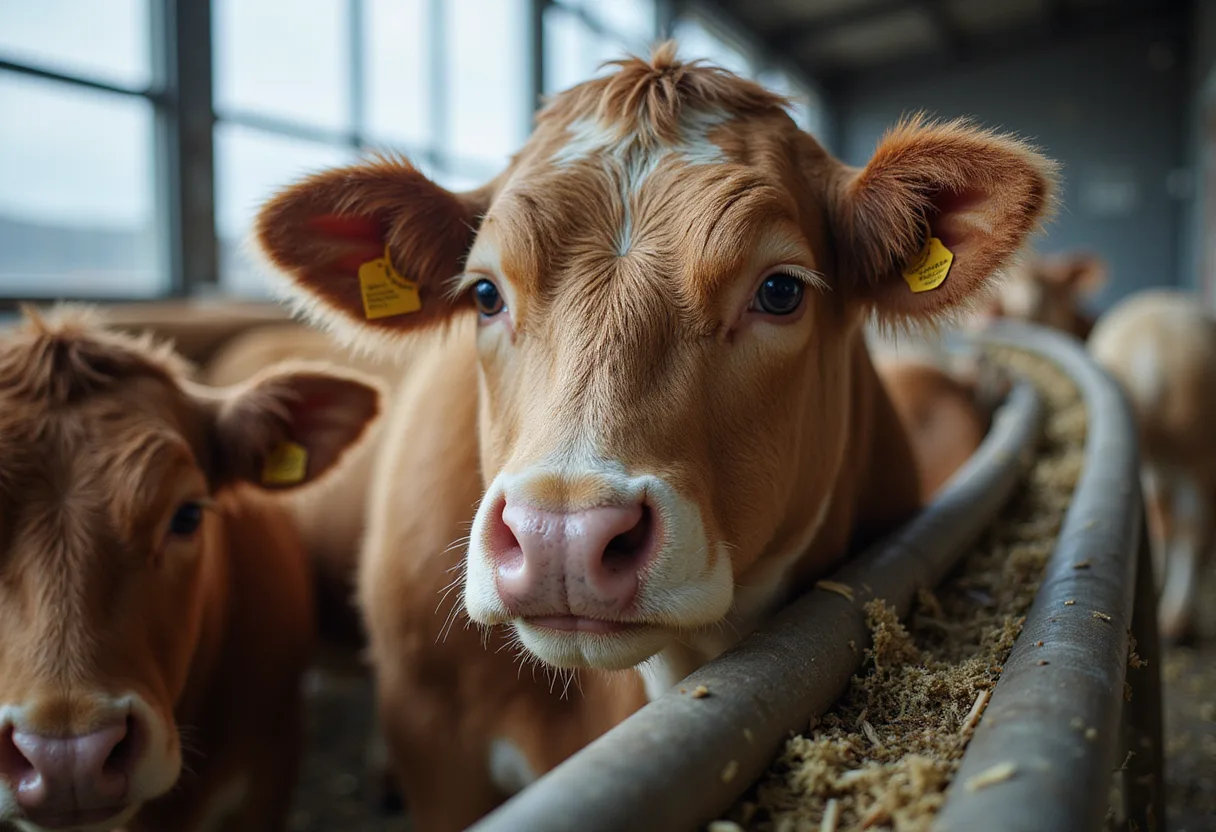
For food-animal practitioners, the editorial's framing translates directly into herd decisions. Every vaccination protocol that prevents a bacterial disease reduces the treatment courses a herd needs. Fewer courses mean less selection pressure for resistance and, in many systems, measurable savings in drug expenditure and labor. The editorial positions this as a strategy available now, using tools largely already in the veterinary toolkit.
The public-health dimension runs in parallel. Resistance genes selected in livestock do not stay on the farm; they move through the food chain and through environmental pathways. Cutting antimicrobial use in production animals therefore serves two audiences at once — the producer managing animal health and the clinician managing resistant infections in humans. The editorial's title makes that dual purpose explicit: livestock health and antimicrobial resistance are one problem, viewed from two sides.
Companion-animal practice sits outside this collection's scope, though the underlying principle — prevention displacing treatment — transfers.
What should readers watch for next?
The editorial is an argument for direction, and directions get tested by data. The studies gathered under it will need to show, species by species and pathogen by pathogen, that specific vaccine strategies deliver measurable reductions in antimicrobial use under field conditions. The collection's value will grow as those results accumulate, giving practitioners and regulators a firmer basis for building immunization into antimicrobial-stewardship plans for livestock.
Source: Google News: Livestock health
Grace Kim
Show full bio
Staff writer covering regulation, policy and their impact on Small- and large-animal clinical practice at The Vet Scope.
Related articles
Frontiers Editorial Maps Ethnomedicine Route to Livestock Disease Control
FAO Puts a Price on Antimicrobial Choices in Livestock
Nigerian report reignites livestock antimicrobial resistance debate
Scottish AMU Pilot Signals On-Farm Antibiotic Reductions
UK Government Confirms Work on Livestock Vaccine Strategy