PET/CT Cases Show When to Treat — and When Not To
Two canine PET/CT cases — an incidental mast cell tumor caught early and a liver lesion that avoided surgery — show why advanced imaging changes decisions, not just diagnoses.
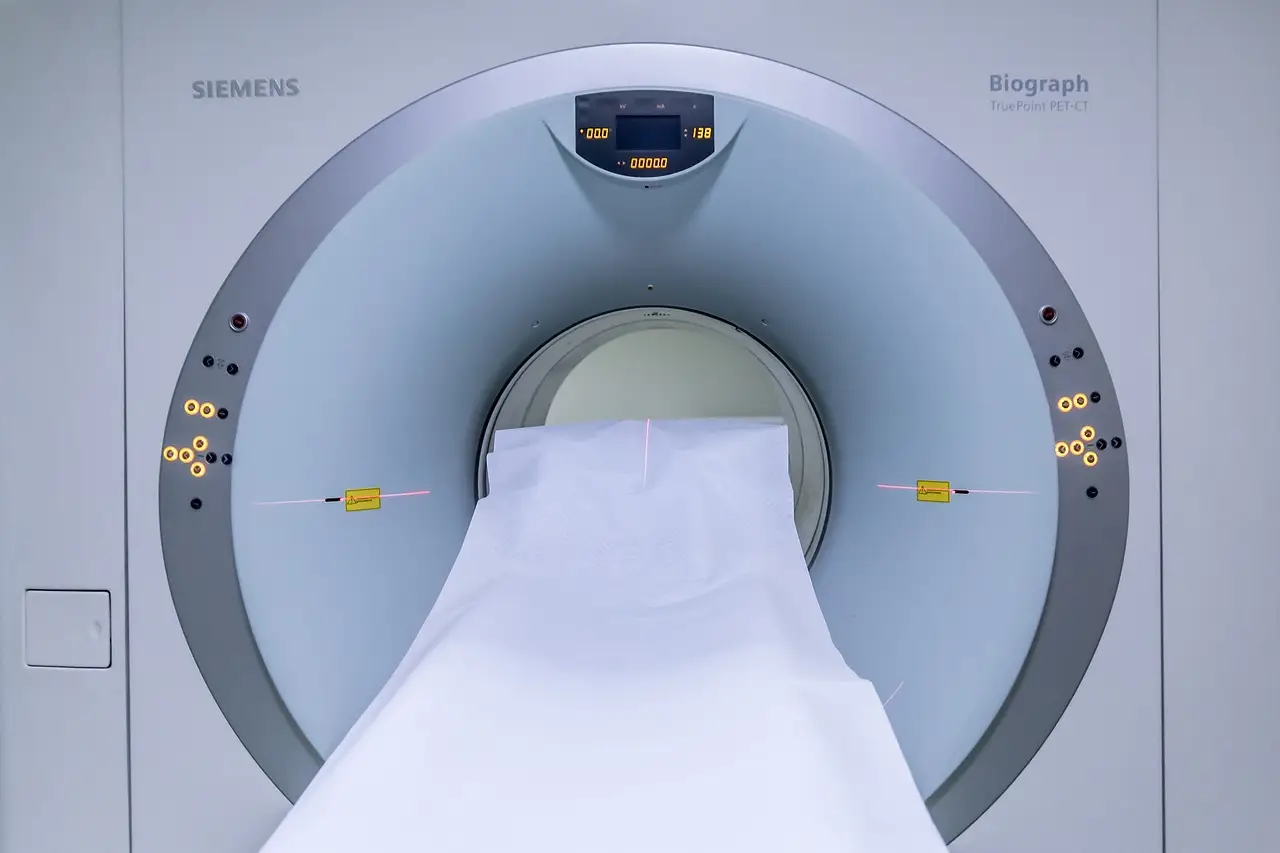
Photo: jarmoluk / pixabay
Roughly one in four dogs will develop cancer during its lifetime, according to the American Veterinary Medical Association — a figure that frames why earlier, more precise diagnosis keeps climbing the profession's priority list. In a recent commentary, Peter S. Chapman, BVetMed, DECVIM-CA, DACVIM, MRCVS, medical director at Red Bank Veterinary Hospital in Tinton Falls, N.J., laid out how PET/CT and AI are reshaping small animal practice while clinical judgment stays firmly in human hands.
Chapman's central question for any new technology is blunt: not "What can this test show us?" but "Will this information meaningfully change what we do for the patient?"
What did PET/CT change at Red Bank?
Two canine cases at the NVA-affiliated hospital illustrate both directions an advanced imaging answer can push a plan.
In the first, a dog underwent PET/CT for an unrelated reason. The scan identified a small, previously unrecognized subcutaneous lesion. Excisional biopsy confirmed a mast cell tumor. Because the team found it before progression or clinical signs, the dog received timely treatment Chapman described as likely curative.
In the second, a dog with an atypical cystic liver lesion underwent PET/CT to characterize the mass. The absence of radiopharmaceutical uptake suggested a low likelihood of aggressive disease. That finding allowed the patient to skip a high-risk liver biopsy and surgery. Subsequent ultrasound examinations have shown the lesion remaining stable, supporting the call.
"In one case, technology prompted us to intervene," Chapman wrote. "In the other, it helped support our decision not to."
How does the modality work?
PET/CT pairs two information streams. CT delivers detailed anatomical imaging — location, size, and characteristics of an abnormality. PET detects metabolic activity through a radiopharmaceutical tracer. Together, clinicians see both structure and biological behavior in one study.
Oncology remains its best-known application, particularly lesion detection and staging. Chapman also cites indications beyond cancer, including workup of fever of unknown origin and unexplained lameness.
The limits matter at the exam table. An imaging finding alone rarely establishes a diagnosis without additional testing, and incidental findings can cascade into unnecessary diagnostics.
What should teams ask before ordering?
Better diagnostics feed better client conversations, but Chapman argues teams should screen every advanced test against four questions:
- Will the results meaningfully alter the treatment plan?
- Could the test clarify prognosis or quality of life?
- Does the anticipated benefit justify financial cost, anesthesia, travel, or other burden?
- How will the results — and their limitations — be explained to the client?
Two pets with the same diagnosis may warrant different plans once age, temperament, anticipated quality of life, and treatment burden enter the equation. The most technologically advanced option is not always the best one, he writes; technology should support shared decision-making, not dictate it.
How prepared is the workforce for AI?
AI already appears in diagnostic support, medical documentation, client communication, and administrative tasks. When it cuts time spent organizing records, it creates time for patients and owners. But Chapman is explicit that AI provides information and assistance, not final answers — outputs may be incomplete, biased, or incorrect, and practices need policies covering data privacy, appropriate use, human oversight, and verification.
The training gap is measurable. A 2026 JAVMA study of 673 veterinary workers (Ofer, Pearl, Singh, and Appleby, published June 1, 2026) found 72.3 percent believed AI would change the profession, yet 90.5 percent reported little or no formal AI training — roughly nine in ten arriving at a technological shift unprepared.
Why does the investment need to be in people?
Equipment gets replaced and software gets updated; what persists is acquired knowledge and its impact on colleagues, patients, and clients, Chapman writes. Mentorship, internships, residencies, and continuing education give professionals room to understand new tools, question their limitations, and use them responsibly. Referring veterinarians need confidence that patients will receive collaborative care, and clients need clear explanations from professionals they trust.
The measure of a hospital, Chapman concludes, is not access to the latest technology but whether that technology helps the team make a more informed decision, communicate it clearly, and deliver care fitted to the individual patient and family. The next breakthrough may be a diagnostic tool or AI platform; the harder skill will be knowing when to use it, when not to, and how to guide the client through that choice.
Original: protect.checkpoint.com
Amara Osei
Show full bio
Correspondent covering companies, deals and strategy in Small- and large-animal clinical practice at The Vet Scope.
Related articles
UC Davis Opens Center Targeting Brain Tumors in People and Pets
Brazilian Veterinary Oncologists Release Consensus on Canine Sarcoma
UC Davis Opens Brain Tumor Center Treating Both People and Pets
FDA Grants Minor Use Determination for CannEpil® in Dogs With Bone Cancer Pain
Functional drug sensitivity testing yields long-term remission in canine lung cancer case report