Penn State Agricultural Sciences Faculty Secure $52.3M in Research Awards
Penn State Agricultural Sciences faculty drew $52.3 million in competitive awards, up about $10 million, as the college honored dairy, cacao and One Health researchers on Nov. 5.
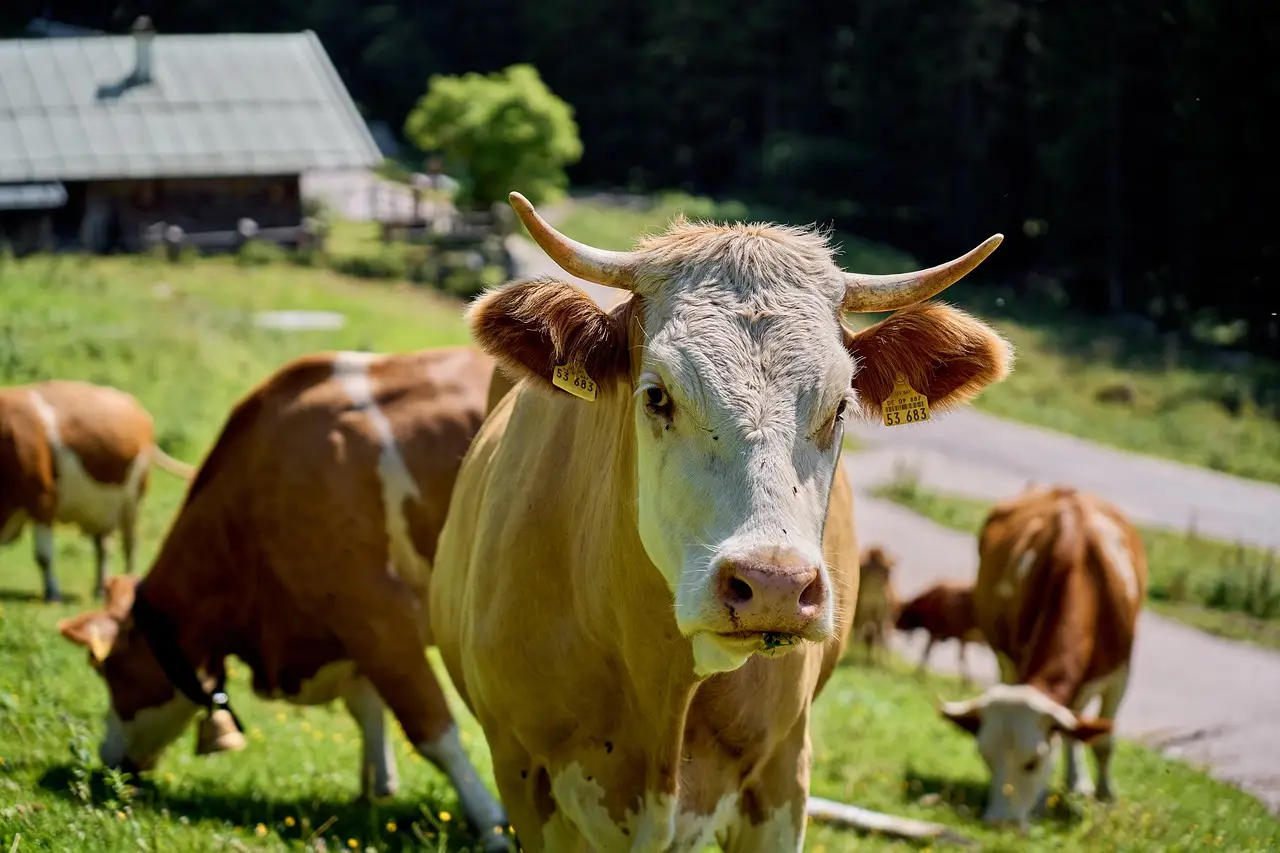
Photo: ckstockphoto / pixabay
Penn State's College of Agricultural Sciences secured $52.3 million in competitive research awards this past year — roughly $10 million more than the year before — despite an uncertain federal funding environment. Troy Ott, Peter and Ann Tombros Dean of the college, announced the figure on Nov. 5 at the 2026 Research Awards Ceremony, held at the Hintz Family Alumni Center on the University Park campus.
The ceremony also highlighted output: college scientists published more than 3,600 peer-reviewed journal articles over the past five years, according to Beth Gugino, associate dean for research operations and graduate education and associate director of the Pennsylvania Agricultural Experiment Station.
"Research has always required vision, persistence and a willingness to tackle complex challenges," Gugino said. "This year, more than most, those qualities have been tested and demonstrated across our college community."
Ott framed the funding gain as a measure of both science and persistence. "That accomplishment speaks not only to the quality of the science being conducted across the college, but also to the determination and creativity of our researchers in pursuing new opportunities and partnerships," he said.
Who won the top individual honors?
The Alex and Jessie C. Black Excellence in Research Award, honoring tenure-track faculty for original agricultural research, went to Kevin Harvatine, professor of nutritional physiology and the C. Lee Rumberger and Family Chair in the Department of Animal Science. Harvatine leads one of the world's top programs in dairy nutrition and lactation physiology, with work on fatty-acid metabolism, milk fat synthesis, rumen function and circadian rhythms that has delivered practical gains for dairy producers. He has authored more than 130 peer-reviewed publications and delivered more than 170 invited presentations worldwide.
The Early Achievement in Research Award went to Mônica Kersch-Becker, assistant professor of entomology, who joined Penn State in 2022. She studies how plant defenses, insects, microbes and environmental stress interact, and has secured more than $2.3 million in competitive funding, published 34 peer-reviewed articles and received an NSF CAREER Award.
Mark Guiltinan and Siela Maximova, both of the Department of Plant Science, shared Research Innovator of the Year for a partnership spanning more than 30 years in cacao biotechnology. Their tissue-culture, genetic transformation and plant regeneration technologies have enabled commercial propagation of more than 75 million cacao plants. Recent milestones include licensing gene-edited, disease-resistant cacao technology to Agronetica, a subsidiary of BetterSeeds, and a cell-culture platform to produce cocoa butter and other high-value compounds.
What do the fellowships fund?
Michela Centinari, associate professor of viticulture, and Adrian Barragan, associate research professor and extension veterinarian in the Department of Veterinary and Biomedical Sciences, were named 2026 Land-Grant Research Impact Fellows. Each receives $30,000 per year for three years. Centinari will build decision tools for managing spotted lanternfly infestations, building on a $7 million multistate USDA initiative. Barragan will advance his "Target Cow" approach, integrating microbiome science and animal health data to identify cattle at risk for disease, improve welfare, reduce antibiotic use and increase profitability.
Which teams were recognized?
The USDA-funded C-CHANGE Grass2Gas team, led by Christine Costello and Dan Ciolkosz of agricultural and biological engineering, received the Dennis and Janet Scanlon Integrated Team Research Award for work on farm profitability, renewable energy and environmental outcomes. The team has produced 18 peer-reviewed publications, decision-support tools and educational programs reaching thousands of stakeholders.
The Interdisciplinary Team Research Award went to the Cover Crop Cocktails Long-Term Experiment Team, led by distinguished professor Jason Kaye. Established in 2012 at the Russell E. Larson Agricultural Research Center at Rock Springs, the project follows a farmer advisory board and examines how cover crop mixtures affect soil health, nutrient cycling, productivity and resilience.
Research Professional Staff Awards went to Jen Williams of the Department of Animal Science and Cody DePew of the Department of Plant Science.
What publications earned high-impact honors?
Six research groups received High-Impact Research Publication Awards:
- Biodiversity: multitrophic species interactions and induced plant defenses, Journal of Animal Ecology (entomology faculty)
- Climate-Smart Agriculture: tomato defenses under salinity stress, Plant, Cell and Environment
- Human and Community Dynamics: severe floods and long-term opioid overdose mortality, PNAS
- Integrated Ecosystems: a manure shed identification framework, Agricultural Systems
- Nutritional and Food Security: model diets under cost and nutrition constraints, Food Policy
- One Health: genomic evolution of Salmonella Dublin in cattle and humans in the U.S., Applied and Environmental Microbiology (Department of Animal Science)
The Roy C. Buck Faculty Award went to Paige Kelly and Andrew Smolski, assistant professors in agricultural economics, sociology and education. Kelly's study of local welfare policy and racialized poverty, covering more than 2,100 U.S. counties, appeared in Sociological Quarterly; Smolski's qualitative study of farm financial crisis and farmer stress appeared in Rural Sociology.
With fellowship funding now flowing to Extension-oriented programs such as Target Cow and spotted lanternfly management, the college signaled that translating discovery into producer-level tools will remain a funding priority through 2029.
Source: morningagclips.com
Nathan Brooks
Show full bio
Senior reporter covering companies, deals and strategy in Small- and large-animal clinical practice at The Vet Scope.
Related articles
Kyla Ortved, Penn Vet Surgeon, First to Receive ACVS Rising Star Award
USDA Sends $300,000 to Utah State to Train Rural Vet Techs
NC State Alumna Funds First Food Animal Research Endowment
University of Nevada, Reno Launches In-State Animal Science Degree
WSU to Lead Global Livestock Initiative Backed by $40M