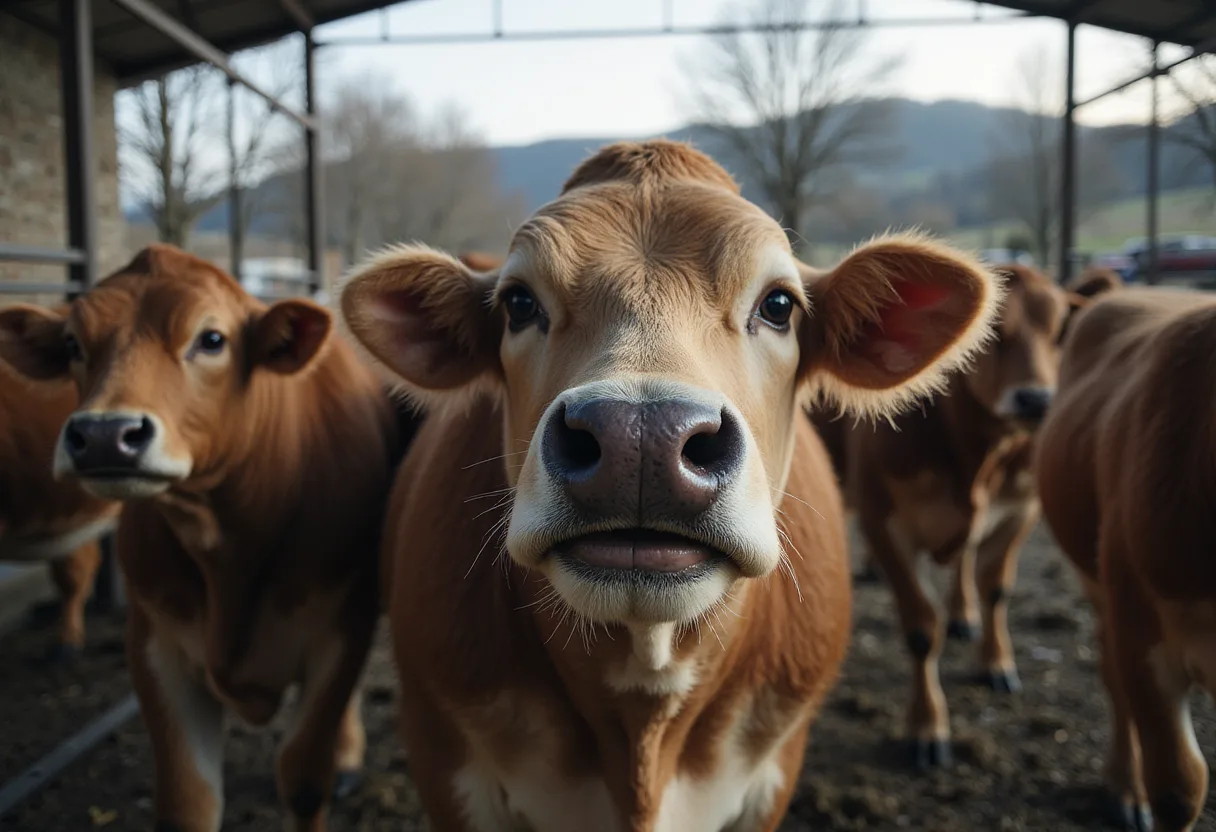
High-Protein Grazing Raises Blood Ammonia but Not Summer Scour Risk
A Teagasc grazing trial found no summer scour syndrome in 54 weaned calves on pasture up to 261 g CP/kg DM, though high-N swards raised ammonia, urea, coughing and loose faeces.
Updated
Zero cases of summer scour syndrome occurred in 54 recently-weaned dairy-beef calves grazing pasture containing up to 261 g crude protein per kg dry matter — directly challenging the anecdotal link between high-CP grazing and the condition in young calves.
The study, published in The Veterinary Journal (available online 29 September 2026; DOI 10.1016/j.tvjl.2026.106904) by researchers at Teagasc and University College Dublin, including Bernadette Earley and David Kenny, is an open-access controlled grazing trial in male beef × dairy calves.
What did the trial involve?
The research team used 54 calves, mean live weight 115 kg at turnout and 100 days of age, all recently weaned. They split the calves into three groups of 18 and assigned each group to perennial ryegrass-dominant pasture fertilised at three rates of calcium ammonium nitrate:
- Low nitrogen (LN): 15 kg N/ha per rotation
- Moderate nitrogen (MN): 60 kg N/ha per rotation
- High nitrogen (HN): 120 kg N/ha per rotation
Farmers applied fertiliser 14 days before each grazing. Calves rotationally grazed their assigned paddocks for 24–48 hours per (sub-)paddock over 28 days. That period was followed by 13 days without pre-grazing fertiliser, then 112 days during which all calves grazed common pasture together.
The investigators defined a case of summer scour syndrome (SSS) as persistent diarrhoea and weight loss without evidence of parasitic gastroenteritis or coccidiosis — a definition that forces exclusion of the two most common differential diagnoses in grazing calves.
What changed in the grass and the calves?
The fertiliser strategy worked as intended, generating three distinct pasture CP concentrations: 196 g/kg DM on LN, 227 on MN and 261 on HN. That gradient let the researchers separate the effect of grass protein itself from confounding management variables.
Physiologically, the calves tracked their pasture. Mean rumen ammonia, plasma ammonia and plasma urea concentrations were generally highest in the HN group, intermediate in MN and lowest in LN. Effects on rumen pH were inconsistent across the trial.
Clinical findings carried one clear signal: the proportion of calves coughing and showing diarrhoea (loose or runny faeces) was greater in the HN group than in MN or LN. Loose faeces on high-N pasture is a real, measurable outcome — but in this cohort it never progressed to the persistent diarrhoea and weight loss that define SSS.
What does this change at the farm gate?
For practitioners advising dairy-beef systems, the trial reframes a recurring clinical question. Owners often blame lush, heavily fertilised pasture when weaned calves scour in summer, and the anecdotal association with grass CP above 200 g/kg DM has circulated widely in pasture-based systems.
This study does not support that causal link, at least under its conditions. High-N fertilisation raised grass CP, raised rumen and blood ammonia and urea, and increased the proportion of coughing and loose faeces — yet induced no SSS in any of the 54 calves across 28 days of differentiated grazing plus 112 days on common pasture.
The practical implication cuts two ways:
- Food-animal practice: high rumen and plasma ammonia on high-CP pasture is a metabolic reality, so monitoring of calves on heavily fertilised swards remains justified, as does attention to coughing and faecal consistency in the first weeks after turnout.
- Diagnostic discipline: persistent diarrhoea with weight loss in a grazing calf still warrants ruling out parasitic gastroenteritis and coccidiosis before attributing it to pasture protein — exactly the case definition this trial applied.
The authors are explicit about scope. Under the conditions of this study — one grazing season, three fertiliser rates, one calf genotype class — increasing inorganic N application raised protein, ammonia and urea measures and the proportion of coughing and diarrhoea, but did not induce SSS. The study data are held by Teagasc and are available to researchers on reasonable request to the corresponding author.
Whether SSS emerges under different sward compositions, longer exposures or other risk factors remains the open question, and the Teagasc group's controlled framework offers a template for testing those variables next.
Original: ars.els-cdn.com
Grace Kim
Show full bio
Staff writer covering regulation, policy and their impact on Small- and large-animal clinical practice at The Vet Scope.
Related articles
Dry Conditions Drive Farmer Demand for Mineral Blocks
Nose-flap weaning cuts stress in beef cows, Calgary study finds
OSU Extension flags late winter as high-risk window for livestock
Water Quality Reshapes Dairy Calf Growth and Health Outcomes
Bovine coronavirus shedding at commingling cuts daily gain in calves