Frontiers study puts ChatGPT replies against veterinarian answers
Frontiers has published a perception study comparing ChatGPT and veterinarian responses to pet owners' medical questions. Full methods, sample size, and conclusions are not in the source text reviewed for this item.
Updated
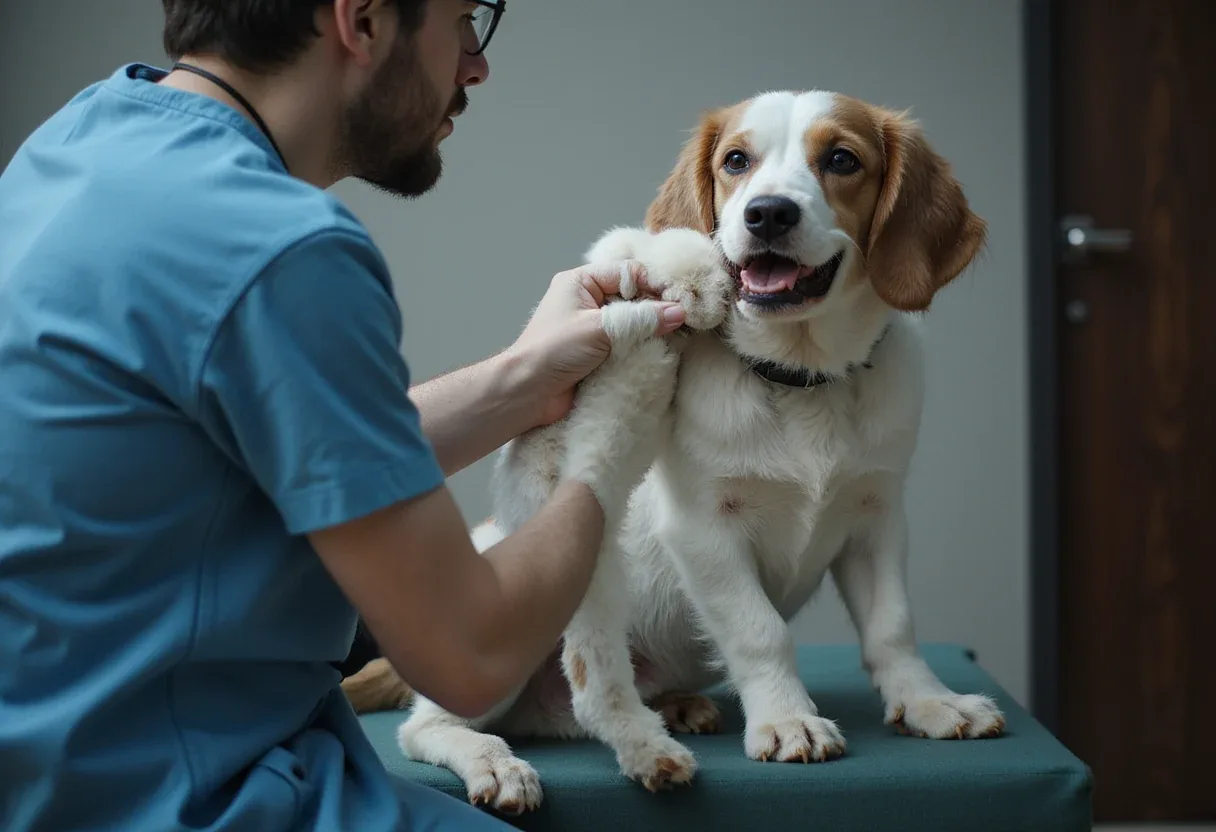
Photo: AI-generated
A peer-reviewed study comparing ChatGPT-generated replies with those written by practicing veterinarians has been published in Frontiers, addressing how pet owners judge each type of response to their medical questions.
The research, titled "Perceptions of ChatGPT- and veterinarian-generated responses to pet owners' medical questions," appears in Frontiers, the open-access publisher that hosts Frontiers in Veterinary Science and related titles.
What does the title reveal about the study?
The title points to a perception study: a format in which lay readers, often recruited as pet owners, are shown paired answers to the same clinical prompt and asked to score each on dimensions such as accuracy, clarity, empathy, and trustworthiness.
What does a perception study actually measure?
It is not clinical validation. A perception study does not measure whether an answer is medically correct. It measures whether the human on the receiving end believes it is, and whether they would act on it. A high perception score for an AI reply can coexist with factual errors the rater did not catch, and a low score can reflect tone rather than substance.
Why does it matter at the clinic?
For veterinary practices, the practical question this kind of paper tries to answer is whether client-facing AI tools can be trusted to draft discharge notes, triage phone messages, or summarize lab results without eroding the veterinarian-client relationship.
The companion-animal setting makes the question sharper than in human medicine. Pet owners do not have the same medical vocabulary as physicians' patients, and a confident-sounding but wrong answer can move a client toward or away from care faster, with thinner institutional backstops in place.
What should a practitioner do with this paper?
Until the full text is reviewed, the practical step is to read the abstract, check the rating dimensions, and compare them with what the practice already uses for client-message templates. If the paper rates empathy as the largest gap between AI and human replies, that tells the practice where to spend editing time when staff draft AI-assisted responses.
What the source actually contains
The source available to this newsroom is the publication record only. The full methods, sample size, species mix, scoring rubric, and statistical conclusions are not included in the source text. The only verifiable claim is the comparative design stated in the title: ChatGPT responses were placed against veterinarian responses for evaluation by readers.
Where the broader conversation stands
The paper lands against a backdrop of growing practitioner experimentation with large language models for client communication in companion-animal practice. Food-animal applications remain narrower, mostly confined to regulatory drafting and outbreak-screening literature scans. Public-health use is limited and not addressed by this study. The companion-animal implication is the one the new Frontiers paper is built around, and it is also where the daily volume of AI-assisted text is highest.
What changes at the exam table
The single concrete change this publication supports, on the basis of its title and what is known about perception studies generally, is procedural. Staff who draft replies from large language models should add a clinician review step, label AI-assisted messages internally if not externally, and log which communications were AI-influenced. None of that is new guidance. Each paper in this design makes the case harder to defer.
The forward-looking sentence grounded in the source: as more perception studies accumulate across journals, the next step the field will need is randomized work linking AI-assisted communication to measurable client behavior — appointment adherence, follow-through on recommendations, and patient-animal outcomes — rather than perception scores alone.
Source: Google News: Veterinary medicine
Amara Osei
Show full bio
Correspondent covering companies, deals and strategy in Small- and large-animal clinical practice at The Vet Scope.
Related articles
Pet-Directed Speech Linked to Repeat Visits in 400-Owner Survey
New Study Says 99% Dog Behavior Figure Was Overstated
Veterinarians Weigh Red Light Therapy Claims for Dogs and Cats
AVMA President Points to AI's Growing Role in Pet Veterinary Visits
AI Model Sorted 9,149 Low-Star Vet Reviews: 70.6% Cited Practice Management