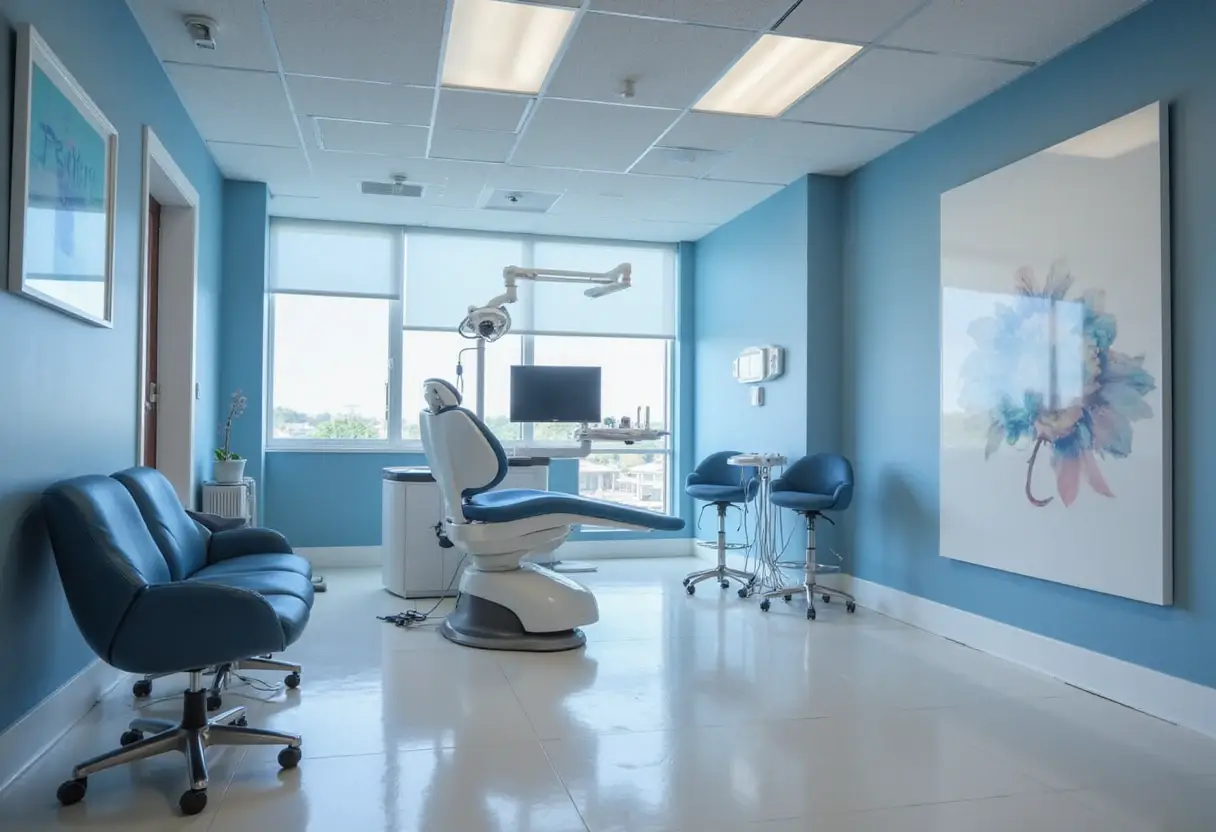
Fredna Dental Systems Brings Cone Beam CT to Indian Veterinary Market
Fredna Dental Systems announced India's first dedicated veterinary CBCT scanner, extending its dental imaging pipeline into animal health. The Blunt Times item lacks product specs, launch date, and executive quote.
Updated
Fredna Dental Systems will install what it calls India's first dedicated veterinary cone beam computed tomography (CBCT) unit, the company announced via The Blunt Times. The move extends a dental-imaging specialist into animal health and reframes access to 3D volumetric imaging for Indian clinicians who have, until now, relied on human-hospital CT or repurposed general-purpose equipment.
How the modality actually works
CBCT differs from conventional CT in two mechanical ways that matter at the exam table. A cone-shaped X-ray beam and a single rotating detector capture a full volumetric data set in one pass, typically within 8 to 40 seconds. Voxel resolution commonly lands between 0.08 mm and 0.4 mm, sharp enough to map root structures, fracture lines, and tympanic bulla detail. Radiation dose runs 10 to 50 times lower than medical multislice CT, which matters in dogs and cats weighing under 10 kg.
What changes at the Indian practice level
Indian companion-animal clinics have historically routed advanced imaging to human diagnostic centers, where a single CT study can run ₹8,000 to ₹25,000 ($95 to $300) and demands general anesthesia coordination across two facilities. A dedicated veterinary CBCT would compress that workflow into one practice, one anesthesia event, one read.
For dentistry and oral surgery, the modality replaces overlapping 2D dental radiographs with a single 3D volume. Practitioners planning extractions, endodontic therapy, jaw fracture repair, or cleft palate work get a complete map before the first incision. For otology, it clarifies middle-ear disease and bulla osteotomy planning. Orthopedic and exotic caseloads benefit similarly.
The food-animal gap
Food-animal applications remain the open question. Cattle, buffalo, and equine skulls exceed the field of view of most dental CBCT units, and farm economics rarely justify the capital outlay without a research or referral-hospital anchor. Indian dairy and equine hospitals in Gujarat, Punjab, and Karnataka could become early reference sites if the vendor offers a large-field detector.
What the source does — and does not — say
The Blunt Times item is a single headline linked to an original release; it carries no executive quotation, no product photograph, and no regulatory filing reference. Fredna has not disclosed the scanner model, price, install base, or launch date in the public announcement. India's Central Drugs Standard Control Organisation classifies diagnostic imaging devices separately from therapeutic drugs, so veterinary CBCT does not require CDSCO drug approval. The vendor will still need to comply with the Atomic Energy Regulatory Board's radiation-safety rules for X-ray equipment installation and operator certification.
The item also does not state whether Fredna will manufacture the unit in India, import an existing dental platform, or partner with an overseas OEM. Each path carries different implications for service, parts availability, and final cost to the buyer.
The market test ahead
The market test is whether Indian specialty and referral hospitals adopt the unit at a price point that recovers the capital outlay inside 36 to 60 months. Dental CBCT hardware in the human market now sells for $40,000 to $120,000 depending on field of view and software. A veterinary-tier unit could land below that band if Fredna strips dental-only modules and bundles animal-health software.
Watch for three disclosures over the next two quarters: a named product with field-of-view specifications, a launch quarter, and a service-network plan covering tier-1 and tier-2 cities. Until those land, the announcement remains a directional signal from a dental vendor entering animal health, not an installed base.
Source: Google News: Veterinary diagnostics
Grace Kim
Show full bio
Staff writer covering regulation, policy and their impact on Small- and large-animal clinical practice at The Vet Scope.
Related articles
Fredna launches India's first dedicated veterinary CBCT
Fredna Vet Diagnostics CT-Scans an Indian Spectacled Cobra
Fredna Vet Diagnostics Runs CT Scan on Indian Spectacled Cobra
Fredna Vet Diagnostics completes CT on Indian spectacled cobra
Purdue Launches Spatial Computing Hub, Pulls Veterinary Medicine Into the Build