Cornell Identifies Rare Human Genetic Disorder in Two Cats
Cornell scientists have identified a rare human genetic disorder in two unusually long-legged cats — the first documented appearance of the condition in felines.
Updated
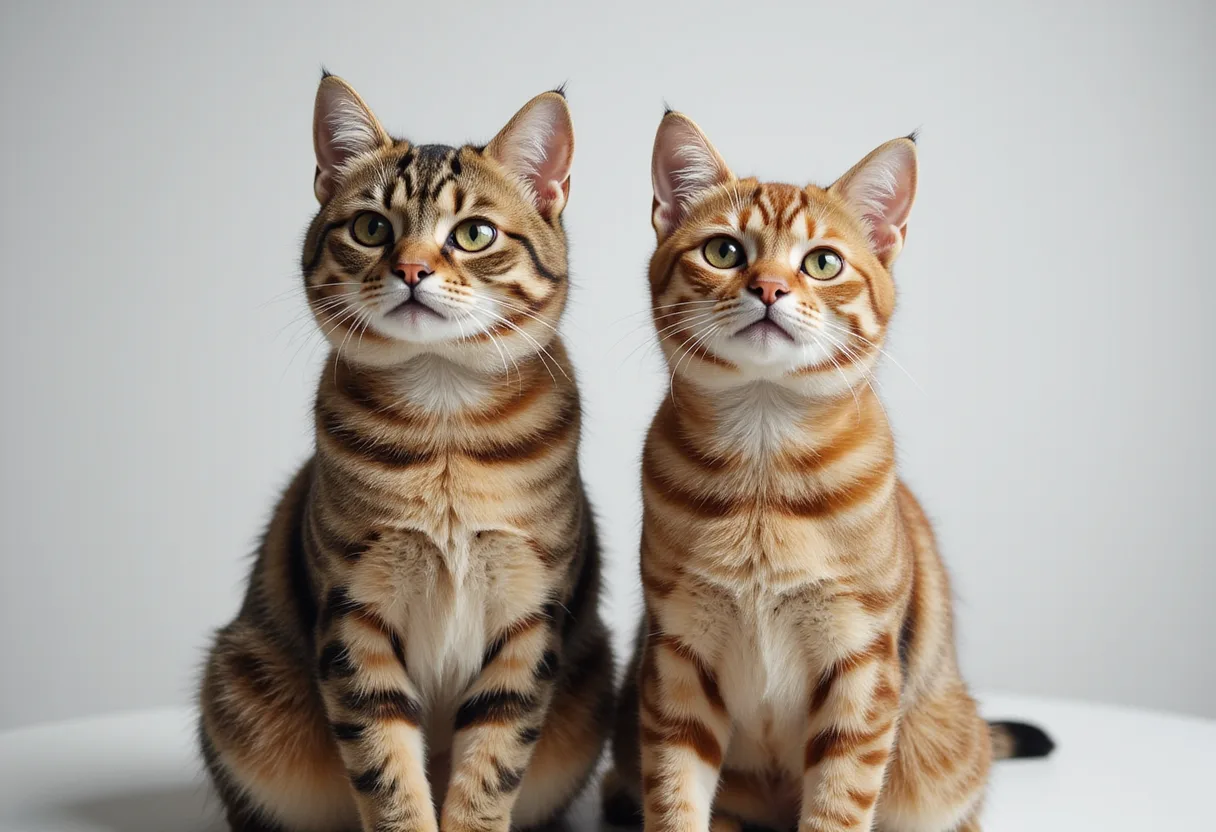
Photo: AI-generated
Two cats with strikingly long legs have received a diagnosis that veterinary medicine has never before documented in their species: a rare genetic disorder previously known only in humans. Scientists at Cornell University identified the condition, according to a report published by Science Daily.
The signalment sits at the center of the finding. Two feline patients presented with an unusual body conformation — disproportionately long limbs — a physical sign that in human medicine points toward a defined class of hereditary connective-tissue and skeletal disorders. The Cornell team matched the cats' presentation and genetic analysis to one such rare human condition, marking the first identification of the disorder in cats.
The finding matters at the exam table. Cats with abnormal limb proportions typically arrive as curiosities — presented for conformational quirks rather than illness. The Cornell report suggests clinicians should read extreme long-limbed conformation as a potential marker of an underlying hereditary syndrome rather than a benign anatomic variant, particularly when the phenotype appears in related animals or repeats within a lineage.
What changes for companion-animal practice?
The immediate clinical relevance is diagnostic. When a cat shows the combination of unusual limb length and any accompanying systemic or skeletal signs, the Cornell finding gives practitioners a named differential — and a reason to pursue genetic testing rather than dismiss the conformation as cosmetic.
For veterinary genetics, the case adds a new species to the disorder's known range. Diseases first characterized in humans and later identified in animals, or vice versa, have repeatedly served as translational bridges: the animal model enables research into disease mechanism, and affected animals benefit from therapies developed in human medicine. Whether that pathway opens here depends on further characterization of the two cases.
The report does not state the specific disorder's name, the cats' breed, sex, age, or the test method used — details that will carry the most weight for clinicians once the underlying study is reviewed in full. The single hardest fact stands regardless: two cats, one rare human genetic disorder, first identification in the species, and Cornell scientists behind the diagnosis.
Why rare findings in two animals still count
A report built on two patients is a case series, the smallest rung on the evidence ladder. It cannot establish prevalence, inheritance pattern in cats, or breed predisposition. What it can do — and what this one does — is establish that the disorder exists in felines at all.
That matters for three audiences:
- Clinicians gain a new differential for long-limbed conformation in cats.
- Geneticists gain a cross-species data point for a rare human disorder.
- Owners of affected lineages gain a possible explanation for animals previously labeled simply unusual.
No regulatory or food-animal dimension
The finding carries no food-animal or public-health implications. It concerns companion animals exclusively, and no drug, vaccine, or regulatory action — FDA CVM, EMA, USDA or otherwise — attaches to it. Its value is purely diagnostic and scientific.
The comparison that frames the significance: a disorder so rare that its appearance in two cats constitutes publishable news is, by definition, one most practitioners will never see — but every long-legged kitten they do see now carries a slightly longer differential list than it did before this report.
Science Daily's report does not indicate a timeline for peer-reviewed publication of the underlying work. When the full characterization appears, breeders and clinicians will be watching for the inheritance question first: whether the trait tracks a family line, which would move the finding from curiosity to screening consideration.
Source: Google News: Veterinary medicine
Amara Osei
Show full bio
Correspondent covering companies, deals and strategy in Small- and large-animal clinical practice at The Vet Scope.
Related articles
Cornell reports first feline Marfan syndrome cases in sibling cats
Two Brother Cats Become First Documented Feline Marfan Syndrome Cases
Cornell reports first feline Marfan syndrome in sibling cats
Feline Cancer Oncogenome Mapped: Over 50% of Cat Mammary Tumors Carry FBXW7
Why Large Dogs Live Shorter: Researchers Point to DNA