Cornell CVM Offers Guidance on Dogs' Anxious Behavior
Cornell's veterinary college publishes owner guidance on canine anxious behavior, signaling that veterinary schools now expect practitioners to screen for and address anxiety routinely.
Updated
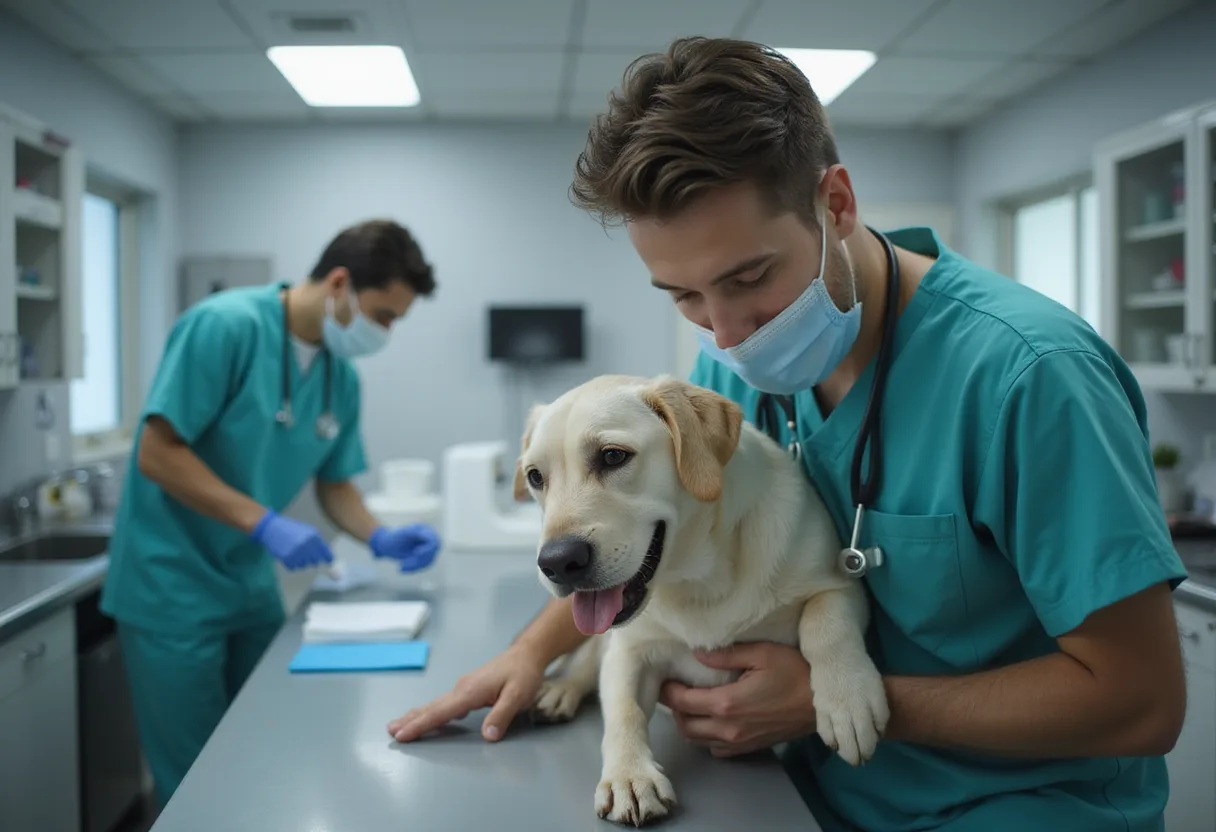
Photo: AI-generated
Cornell University College of Veterinary Medicine has published owner-facing guidance on anxious behavior in dogs, addressing how to help animals cope with situations they find unsettling. The advisory targets one of the most common behavioral complaints presented to companion-animal practices and arrives as veterinary behaviorists continue to push for earlier recognition of anxiety signs before they escalate.
The Cornell guidance centers on a practical premise: dogs regularly encounter situations — unfamiliar environments, loud events, changes in routine — that trigger anxious responses, and owners can take concrete steps to reduce that distress rather than simply managing the aftermath. For practitioners, the advisory reinforces a message the profession has been repeating for years: anxious behavior is a welfare issue and a clinical one, not a training failure.
At the exam table, that framing matters. Clients frequently present dogs whose fear responses — trembling, hiding, destructive behavior, vocalization — have been misread as stubbornness or poor discipline. Cornell's decision to publish owner-directed material on the topic signals that veterinary schools increasingly expect general practitioners to screen for and discuss anxiety as part of routine preventive care, much as they now screen for pain.
The advisory is a consumer-education piece rather than a peer-reviewed study, so it carries no sample size or trial design. Its weight comes from its institutional source: Cornell's College of Veterinary Medicine, one of the country's leading veterinary academic institutions, whose client-facing materials typically reflect the current consensus of its clinical behavior service.
For companion-animal practice, the implications are straightforward. Owner education materials from academic institutions give practitioners a credible third-party reference to hand clients who dismiss behavioral concerns or attribute them to personality. Behavior complaints remain among the leading reasons for veterinary visits and, unresolved, anxiety-related problems are a common driver of relinquishment and euthanasia — outcomes the profession has worked for decades to reduce.
The food-animal sector has no direct stake in this advisory. Nor does it raise public-health implications in the regulatory sense: it involves no drug, vaccine, or agency action from FDA CVM, EMA, or USDA. Its relevance is confined to the companion-animal side of the profession, where behavioral medicine has been gaining ground as a recognized discipline with its own referral pathways, pharmacologic options, and certification processes.
What the guidance does underscore is a shift in who is expected to act. A generation ago, advice on anxious dogs came largely from trainers or breeders. Today, veterinary schools are publishing it directly, positioning the veterinarian as the first and most authoritative point of contact for behavioral questions. That shift affects practice-level workflow: history-taking that includes behavioral screening, waiting-room protocols that reduce fear, and treatment discussions that may combine environmental management with behavior modification and, where indicated, pharmacologic support prescribed under veterinary supervision.
It also affects client communication. Owners searching for help with an anxious dog now find institutional veterinary guidance alongside an ocean of unvetted online content. Practices that engage the topic proactively — with handouts, pre-visit questionnaires, or references to materials like Cornell's — are better positioned to keep those clients in the veterinary channel rather than losing them to non-medical advice.
The advisory does not announce new research, a product approval, or a policy change. Its significance is cultural and practical: a top veterinary college has judged canine anxiety important enough to address pet owners directly, in plain language, as part of its public education mission.
Cornell's behavior resources, including this guidance, are available through the College of Veterinary Medicine's public channels, and practices looking for client-education materials on anxious behavior will likely see further owner-facing content from academic institutions as behavioral medicine continues to move into the mainstream of companion-animal care.
Source: Google News: Veterinary drugs
Grace Kim
Show full bio
Staff writer covering regulation, policy and their impact on Small- and large-animal clinical practice at The Vet Scope.