Surgeons Reconstruct Border Collie's Skull After Horse Kick
A border collie kicked by a horse required surgical reconstruction of fractured facial bones — a case that maps equine-trauma triage and modern canine maxillofacial surgery.
Updated
Photo: AI-generated
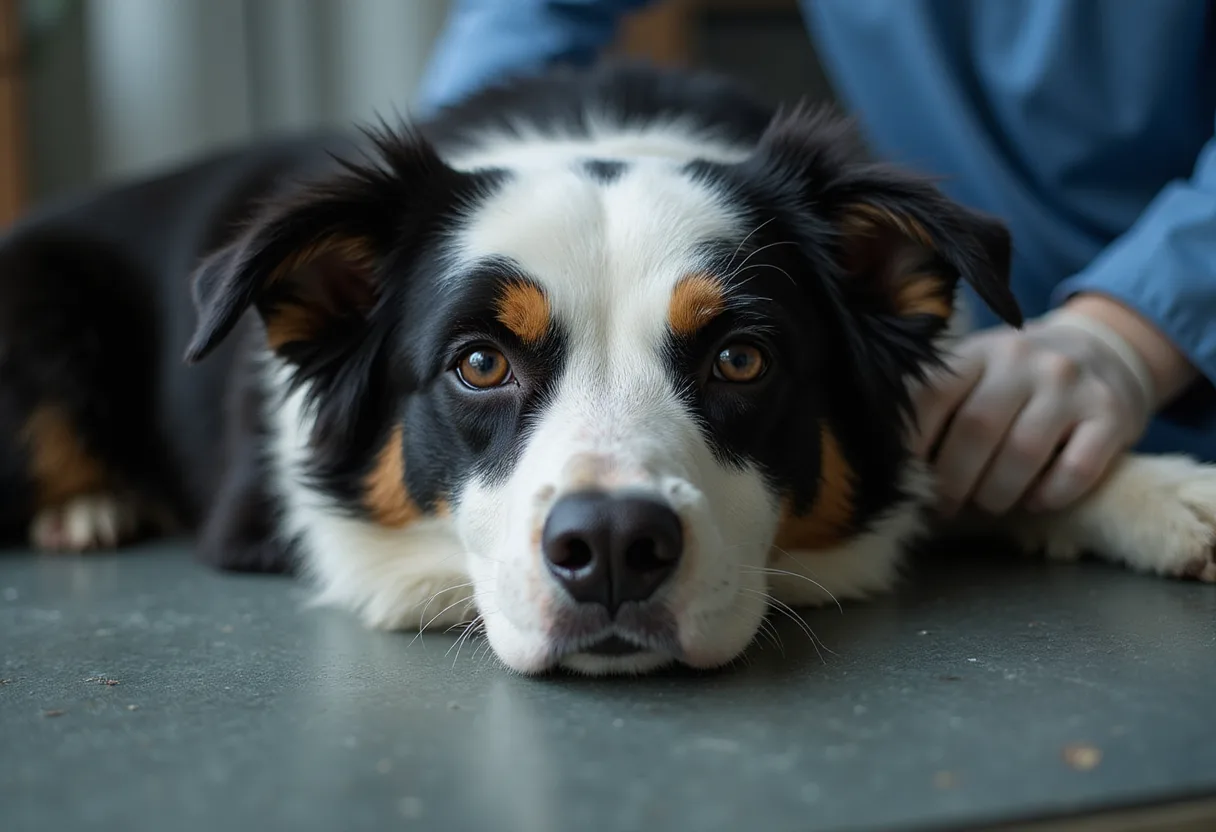
A border collie sustained fractures to multiple facial bones after being kicked by a horse, and a surgical team reconstructed the dog's skull in a case that highlights both the mechanics of equine-inflicted trauma in dogs and the current capabilities of veterinary maxillofacial surgery.
The case, reported by dvm360, centers on a working-breed dog struck in the head by a horse — an injury pattern veterinarians in rural and mixed-animal practice see with regularity. A horse's kick delivers force concentrated through a single hoof strike, and when that force lands on a dog's face, the thin bones of the maxilla, orbit and nasal cavity frequently give way before the skull's thicker structures fail.
Surgeons opted for reconstruction rather than conservative management, rebuilding the fractured facial bones to restore both the integrity of the skull and the function of the structures the damaged bones protect — the airway, the orbits and the occlusal alignment of the jaw. Facial reconstruction of this type demands precise imaging before the first incision. Computed tomography is the standard of care for mapping comminuted facial fractures in dogs, because radiographs alone routinely underestimate the number and displacement of fragments in this region.
The signalment matters here. Border collies and other herding breeds spend their working lives in close quarters with horses, and their instinct to control movement puts them within striking distance of a hind hoof. Practitioners serving farm and ranch clients counsel owners that the peak risk window is the moment a dog presses toward a horse's hindquarters — the strike zone for a straight-back kick that lands with the horse's full weight behind it.
At the exam table, the case reinforces several triage priorities for any dog presented after a suspected kick. The visible facial swelling is often the least urgent finding. Airway patency comes first, followed by assessment for orbital involvement, dental arcade disruption and palpable crepitus along the facial planes. Dogs that remain neurologically normal after a facial strike still warrant imaging when asymmetry, epistaxis or difficulty prehending food persists beyond the immediate post-injury period, because fragment displacement can compromise nasal airflow and ocular function days after the swelling obscures the original anatomy.
The surgical pathway chosen in this case — open reconstruction of the fractured facial bones — reflects the shift in companion-animal trauma care over the past two decades. Internal fixation and plating systems scaled for canine facial anatomy now allow surgeons to restore normal contour and function where earlier practice often accepted cosmetic and functional deficits in comminuted injuries. For a working breed, return to function carries particular weight: a dog that cannot scent, prehend or breathe freely through a damaged nasal passage cannot work.
No drug, vaccine or device approval is at issue in this case; it is a clinical surgical report rather than a regulatory matter. For the food-animal side of the equation, the case cuts the other way: it is a reminder that horse–dog interactions on mixed operations carry costs in both directions, and that herd-horse handlers who also run dogs benefit from explicit separation protocols during feeding, loading and veterinary handling.
The owners' willingness to pursue reconstruction, and the surgical team's execution of it, also speak to the economics of advanced companion-animal care in rural practice — referral networks now carry trauma cases from the barn to the operating theater within hours in most regions.
The dog's outcome and any long-term follow-up on return to working function will tell practitioners how complete that reconstruction proved to be.
Source: Google News: Veterinary medicine
Nathan Brooks
Show full bio
Senior reporter covering companies, deals and strategy in Small- and large-animal clinical practice at The Vet Scope.
Related articles
WSAVA Releases 2026 Global Dental Guidelines for Pets
Fredna launches India's first dedicated veterinary CBCT
Fredna Dental Systems Brings Cone Beam CT to Indian Veterinary Market
Lung ultrasound findings shift after colic surgery in horses, study finds
Brazilian Veterinary Oncologists Release Consensus on Canine Sarcoma