Cats Can Work in Therapy, UNAM Veterinarian Says — If Selected Well
UNAM's Claudia Edwards says well-socialized cats can support therapy for autism and motor disabilities, after a 249-student WSU study linked 10-minute animal contact to lower cortisol.
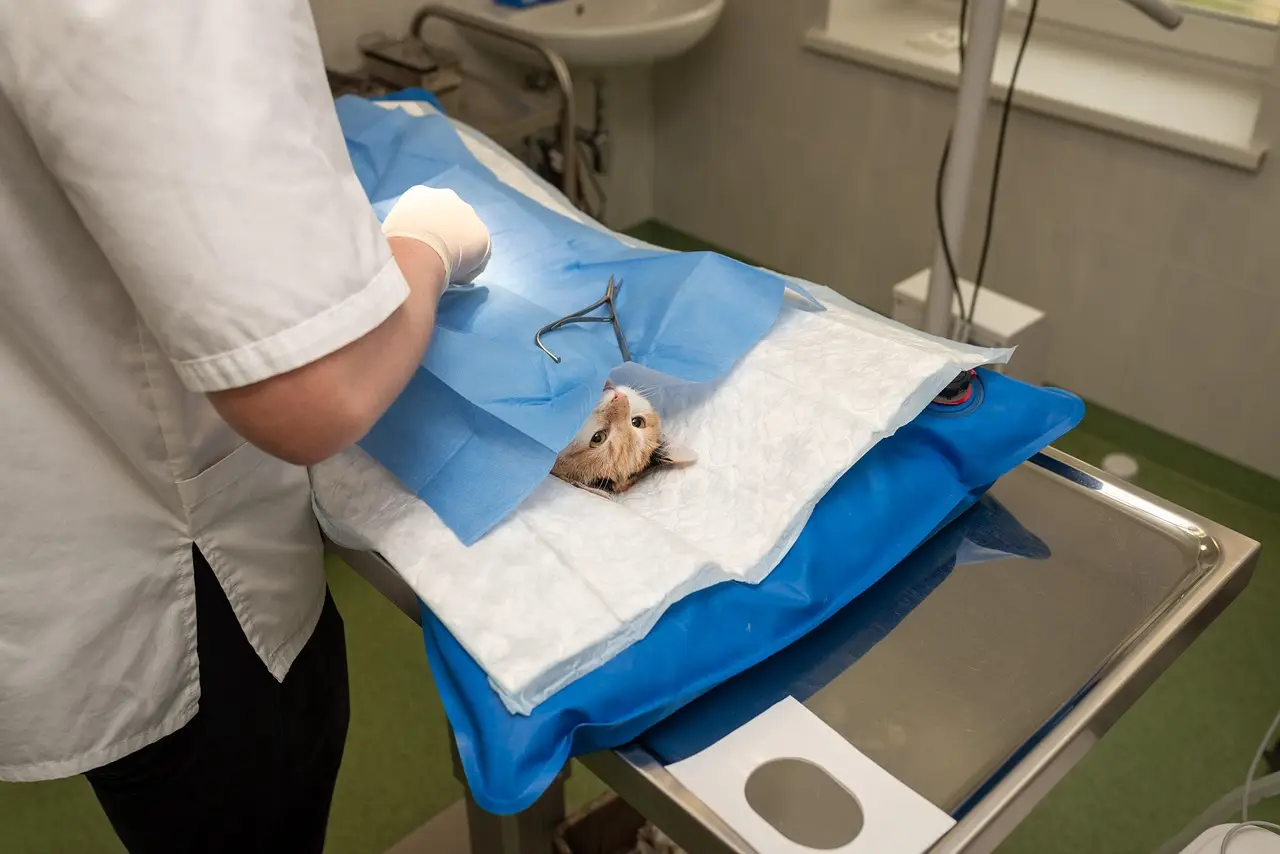
Photo: andreas160578 / pixabay
A 2019 Washington State University study of 249 college students found that a single 10-minute hands-on session with cats and dogs significantly reduced salivary cortisol — the strongest physiological backing for a claim UNAM veterinarian Claudia Edwards made in July 2025: cats belong in animal-assisted therapy, provided they are properly selected and never forced to interact.
Edwards, a professor at UNAM's Faculty of Veterinary Medicine and Animal Science, laid out her position in an interview published by UNAM Global. Her core message targets a stubborn clinical prejudice. "There is a myth that cats are unfriendly," she said. "But the truth is that, when they are well socialized, cats can help facilitate different therapies, for example, for people with motor disabilities or children with autism."
The point matters at the practice level. Clients and therapy-program coordinators increasingly ask veterinarians which animals can serve in intervention settings. Edwards's answer gives practitioners a screening framework rather than a blanket endorsement. Not every cat qualifies. Temperament decides.
What does well-socialized mean in practice?
Edwards defined the working cat by three traits: a steady temperament, sociability, and tolerance of human contact. A cat that meets all three can support intervention in several concrete settings she named:
- People with motor disabilities, through structured interaction activities.
- Children with autism, as part of defined therapeutic processes.
- Nursing homes, where cats provide companionship to residents.
- Children with language difficulties, where the animal's presence helps facilitate activities.
The framing comes with a hard boundary. Animal-assisted therapy does not replace medical or psychological treatment. It works only as a complement within an existing care plan. Practitioners advising therapy programs should state that distinction to clients upfront. Takeaway: socialization opens the door; it does not change the cat's role from companion to clinician.
What did the cortisol study actually measure?
The Washington State University research, published in 2019, divided 249 college students into groups. One group had direct, 10-minute physical interaction with dogs and cats. Other participants only watched the animals, looked at pictures of them, or waited without any contact.
Only the hands-on group showed a significant drop in salivary cortisol, a hormone tied to the body's stress response. Ten minutes produced the effect. Observation alone did not.
The findings carry a public-health caveat worth repeating in exam rooms. Petting a cat is not a treatment for anxiety or depression. What the study adds is evidence that brief, direct animal contact produces measurable physiological change in some people. That is a complement, never a substitute. Takeaway: the effect is real, measurable, and narrow.
Which cats should practitioners screen out?
Selection sits at the center of any feline-assisted intervention, according to the research Edwards cited. Some cats carry behavioral traits suited to assistance programs. Others do not tolerate certain environments or levels of contact, and pushing them into those settings fails the animal and the patient alike.
Edwards and the UNAM Global reporting identify five screening criteria veterinarians should apply before a cat enters a therapeutic activity:
- Sociability and baseline behavior.
- Tolerance for human contact.
- Ability to function across different environments.
- Well-being throughout the activity itself.
- The absence of any forced interaction, at any point.
The welfare clause is not decorative. Edwards stressed that the interaction must proceed without forcing the bond — a standard that protects both the cat and the credibility of the program.
The evidence base keeps moving. In March 2025, Washington State University reported a study conducted with researchers in Belgium that identified behavioral traits in certain cats favoring their inclusion in animal-assisted service programs. That work, still developing, points toward formal selection tools practitioners could one day use in practice.
For now, Edwards's framework gives the profession its working position: assess the individual cat, protect its welfare, and frame feline-assisted therapy as a complement to care — never a cure.
Source: Google News: Veterinary medicine
Elena Vasquez
Show full bio
Market editor covering money, funding and market shifts around Small- and large-animal clinical practice at The Vet Scope.
Related articles
FelineVMA Opens Free Resource Center on Feline Visit Stress
Cornell CVM Offers Guidance on Dogs' Anxious Behavior
Intercat Tension Affects Up to 87.7% of Multicat Homes
Cats Gain on Dogs as U.S. Pet Spending Contracts, Forcing Clinic Rethink
Veterinarians Weigh Red Light Therapy Claims for Dogs and Cats