AVMA Frames 'The Future of Veterinary Medicine Is Human'
The AVMA has published a feature titled 'The future of veterinary medicine is human,' reframing clinical direction around clients, households, and One Health. The headline alone carries no operational directive; practitioners will need the full feature.
Updated
Photo: Bluesnap / pixabay
What does the framing change?
The American Veterinary Medical Association has posted a feature titled The future of veterinary medicine is human, the headline appearing in veterinary news aggregations that carry AVMA bylines.
The headline inverts the field's habitual vocabulary. Veterinary editorial content usually names its future in technical terms — diagnostics, telemedicine, AI-assisted imaging, preventive protocols, regenerative therapies. A title that names "human" instead places the client, the household, and the working relationship between practitioner and owner at the center of what the profession is becoming.
The choice of noun tells readers — and the profession — that the next decade's most consequential changes may not live in the lab or the imaging suite but in the exam-room conversation.
What does "human" mean for companion-animal clinics?
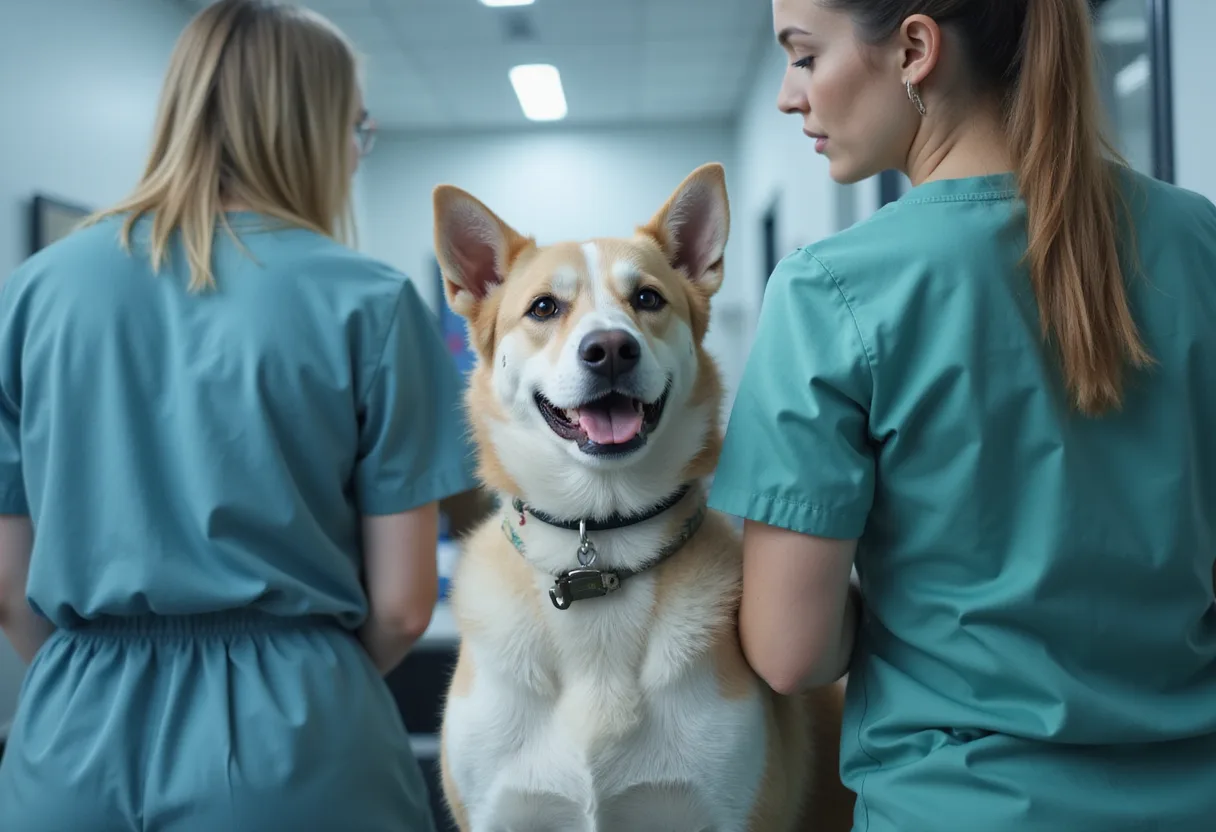
Companion-animal clinics encounter the framing first. A feature that names "human" as the operative word reframes the client conversation as a clinical deliverable on par with the physical exam, the vaccination, or the prescription.
Scheduling, communication training, follow-up cadence, and pricing structure all sit downstream of how the practice positions that conversation. Owners who read an AVMA feature of this scope typically audit which operational elements currently match the framing — including how estimates are written and how follow-up is scheduled.
Reception-desk scripts, technician handoffs, and discharge instructions all become test surfaces for the headline:
- Greeting and triage language
- Estimate delivery and consent flow
- Technician-to-doctor handoff
- Discharge instructions and recheck cadence
- Follow-up communication between visits
What does "human" imply for food-animal medicine?
Food-animal implications operate under a separate logic. "Human" in a production-medicine context reads as One Health — the linkage between livestock management, antimicrobial stewardship, and the human food supply.
The framing aligns with the AVMA's longstanding editorial posture on residue avoidance, zoonotic risk, and traceability in production-animal medicine. For beef, dairy, swine, and poultry operations, the editorial direction signals continuity rather than rupture.
Producers and their attending veterinarians will recognize the human-side focus as familiar language, not a new rule — and will look for any operational shift in the feature body, not in the headline.
Where does public-health fit?
Public-health framing completes the loop. A feature that centers "human" in the field's future is consistent with the One Health emphasis on zoonotic surveillance, rabies control, and foodborne illness tracing — without specifying any change in scope, budget, or accreditation.
State and federal veterinary public-health roles sit inside that frame, even when budget lines for them do not. The framing neither enlarges nor contracts those roles on the evidence of the headline alone.
What changes if the framing stays editorial-only?
What remains missing from the headline alone is what, if anything, the association has actually changed. The title suggests reframing rather than a new standard, a new curriculum mandate, or an accreditation revision.
Practitioners seeking operational specifics will need to read the feature itself, not the headline carried through the news feed. That gap — between editorial signal and practice-level directive — is the single most important thing to measure when the full article appears.
The publishing venue sets the appropriate reading speed. Association features at this title length tend to argue for a direction rather than issue a directive. The exam-room test of the framing will arrive in how clients are greeted, how estimates are written, and how follow-up is scheduled over the next several quarters; not in any single announcement day.
Reading the headline as a forecast, not a rule, keeps the practice from over-rotating in either direction. The signal-and-discipline sequence — editorial first, operational second — is the pattern veterinarians should expect from a venue with the AVMA's editorial cadence.
Whether the framing moves from editorial to operational — whether the AVMA pairs the headline with a curriculum update, an accreditation change, or a practice-management guide that practitioners can adopt on Monday morning — is the question the training pipeline and practice owners will resolve in the quarters ahead.
Source: Google News: Veterinary medicine
Amara Osei
Show full bio
Correspondent covering companies, deals and strategy in Small- and large-animal clinical practice at The Vet Scope.
Related articles
Why Veterinary Medicine's Future Hinges on Its People, Not Just Its Tools
AVMA Panel Calls for Overhaul of Animal Health for 21st Century
AVMA President Points to AI's Growing Role in Pet Veterinary Visits
AI Use Among Veterinary Professionals More Than Doubles in 2 Years
Medneo Acquires Burgess Diagnostics to Enter UK Veterinary Imaging