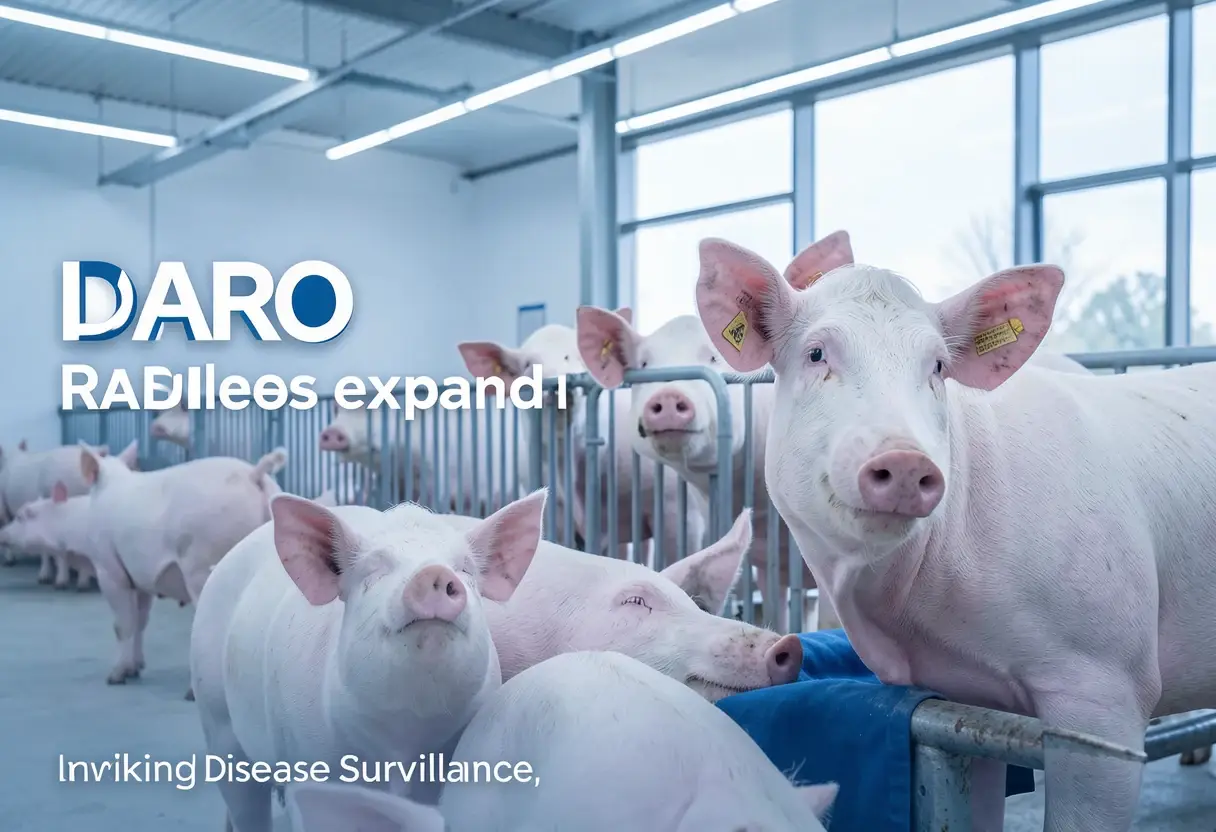
Alveo and Royal GD Broaden Livestock Diagnostics Partnership Beyond Poultry
Alveo and Royal GD have widened their livestock diagnostics partnership beyond poultry, extending a previously avian-focused collaboration into broader food-animal testing.
Photo: William Hamilton / The Met · CC0
Alveo and Royal GD have expanded their livestock diagnostics partnership beyond poultry, extending a collaboration previously centered on avian testing into broader food-animal species.
The National Provisioner reported the announcement, which marks a scope change for a partnership that had operated within the poultry diagnostics market. No financial terms, species list, or rollout timeline appeared in the announcement as reported.
What does the expansion change?
For veterinary practices and production-animal operations, the significance lies in where the two companies' capabilities now point. Alveo, a diagnostics company, and Royal GD, the Dutch animal-health organization based in Deventer, Netherlands, have combined field-side testing platforms with reference-laboratory expertise. Extending that model beyond poultry signals intent to cover additional livestock species, though the announcement did not specify which ones.
Diagnostics partnerships of this type typically target one of two bottlenecks: speed of results at the farm level, or depth of interpretation that only a reference lab provides. The poultry market has been an early proving ground for rapid on-farm assays, given flock-level economics and the speed at which avian pathogens move. Whether the expanded partnership translates to cattle, swine, or small ruminants remains to be detailed by the companies.
Why the food-animal angle matters
For food-animal practitioners, broader access to coordinated diagnostics affects how quickly a suspected outbreak moves from clinical sign to confirmed cause. Poultry operations have benefited from shortened testing cycles; replication of that model in other production species would change the decision timeline for treatment, culling, and movement controls.
The public-health dimension sits in the background. Livestock diagnostics underpin zoonotic disease surveillance, and expanding testing capacity across species strengthens early detection — a point regulators including the USDA and European food-safety authorities weigh when assessing national disease readiness.
What comes next
The companies have not yet published a species-by-species plan, pricing structure, or geographic availability. Practices and producers watching this space should look for the first non-poultry assay announcements, which will clarify whether the expansion is incremental or a full portfolio move.
The expansion signals that livestock diagnostics consolidation, already visible in poultry, is now widening its base across the food-animal market.
Source: Google News: Livestock health
Amara Osei
Show full bio
Correspondent covering companies, deals and strategy in Small- and large-animal clinical practice at The Vet Scope.
Related articles
Alveo and Royal GD Expand Point-of-Need Testing to More Livestock Species
Animal Health Sector Backs EU Plan to Phase Out Animal Testing
IGAD Pushes Stronger Animal Health Labs for Regional Surveillance
DARO Raises $2.5M to Expand Swine Disease Surveillance
BRIN and IAEA Expand Zoonotic Surveillance Across 18 Countries