Africa CDC Expert Links 'One Health' to African 'Ubuntu' Philosophy
An Africa CDC expert says "One Health" captures the spirit of "Ubuntu," reframing zoonotic disease strategy as a principle long embedded in African ethical thought.
Updated
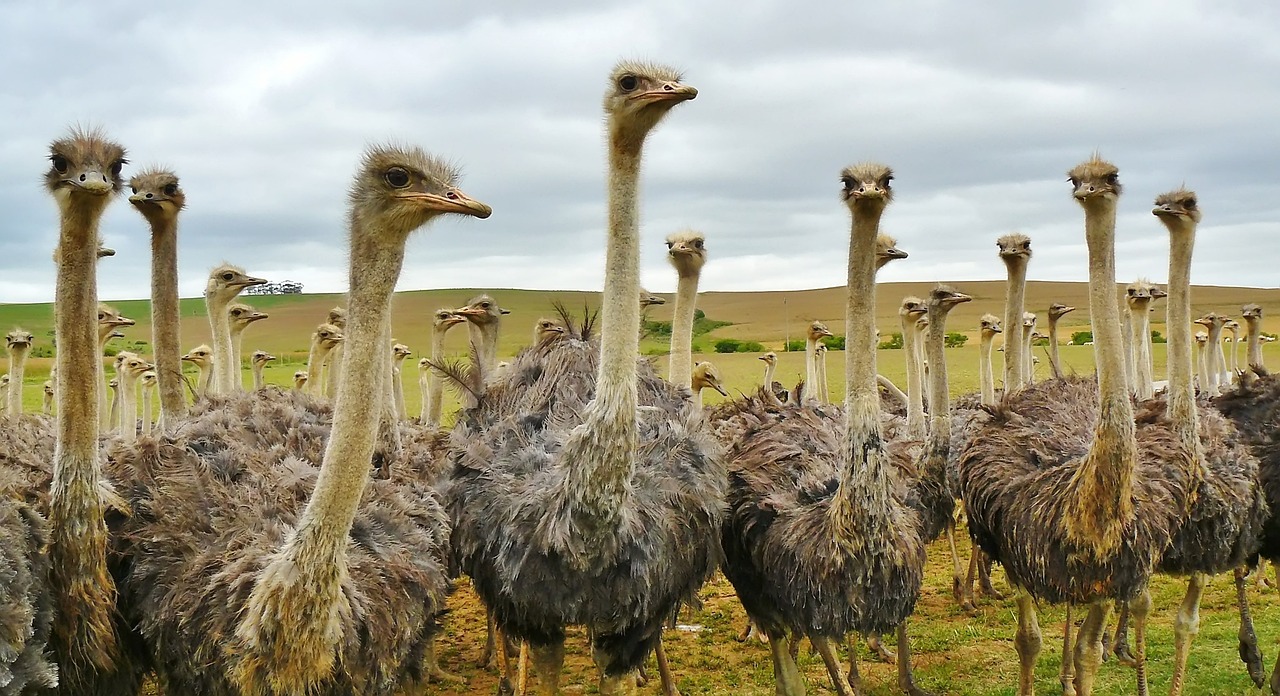
Photo: cocoparisienne / pixabay
An expert at the Africa Centres for Disease Control and Prevention has equated the global "One Health" approach with the African philosophy of "Ubuntu," arguing that the framework's core premise — human, animal and environmental health are inseparable — mirrors a concept already embedded in African thought.
The remark positions One Health not as an imported technical framework but as a formalization of a principle many African communities have long practiced: that the wellbeing of people, livestock, wildlife and the land they share cannot be divided.
What is "Ubuntu" in this context?
Ubuntu, a word rooted in southern African Bantu languages, is commonly summarized as "I am because we are." It frames identity and welfare as collective rather than individual. Applied to disease control, the logic extends the collective beyond humans: the health of a community depends on the health of its animals and its environment, because pathogens move freely among all three.
That framing matters for veterinary practice across the continent. Roughly 60% of emerging infectious diseases in humans are zoonotic in origin, and the Africa CDC has made integrated surveillance of animal and human health a continental priority. When the agency's own experts describe One Health in cultural rather than purely technical terms, they signal an effort to build local ownership of surveillance, vaccination and reporting programs — the operational layer where veterinarians, public health officers and community animal health workers actually meet.
Why the framing matters at the clinic and the kraal
One Health operates on paper through joint ministries, shared surveillance data and coordinated outbreak response. It operates in practice through the people closest to animals: veterinary officers, para-veterinarians and livestock keepers.
For the veterinary profession in Africa, the Africa CDC's framing carries several practical implications:
- Surveillance built on community trust is more likely to capture early reports of unusual animal deaths — often the first signal of a zoonotic spillover.
- Messaging that draws on familiar concepts, rather than imported jargon, can improve compliance with livestock vaccination campaigns and reporting requirements.
- Cross-sector coordination between veterinary and human health services becomes easier to justify to governments and funders when it is anchored in a widely recognized ethical principle.
The Ubuntu comparison also speaks to a persistent criticism of One Health: that it is frequently articulated in donor and institutional language, far from the communities expected to implement it. Linking the framework to an African philosophical tradition reframes it as continuity rather than imposition.
One Health as continental policy
The Africa CDC, the African Union's public health agency headquartered in Addis Ababa, has promoted One Health as part of its broader mandate to strengthen health security across the continent's 55 member states. Zoonotic threats such as Ebola, mpox and avian influenza have repeatedly demonstrated why animal-health surveillance sits at the front line of human outbreak prevention — and why veterinary services are integral to the agency's epidemic preparedness architecture.
An agency expert framing One Health as the spirit of Ubuntu suggests the argument has moved beyond logistics. It is now also an argument about values: that no single sector's health can be secured in isolation, and that African conceptual resources are sufficient to express and drive that integration.
What comes next
How far the cultural framing travels into policy and funding decisions remains to be seen. But if it strengthens community engagement in animal surveillance and cross-sector reporting — the operational core of One Health — it will matter less as rhetoric and more as a practical instrument for early detection of the next spillover.
Source: Google News: Zoonotic disease
Grace Kim
Show full bio
Staff writer covering regulation, policy and their impact on Small- and large-animal clinical practice at The Vet Scope.
Related articles
No Planet Without One Health: The Argument Linking Animal, Human and Environmental Health
WHO launches joint action to reduce zoonotic disease risks in Indonesia
Global leaders commit to stronger animal health preparedness
Rwanda Targets Zero Rabies Deaths by 2030 Through One Health
Stakeholders Pledge One Health Framework to Curb Zoonotic Disease