Veterinary Sedative Medetomidine Detected in 83% of Philadelphia Fentanyl
Veterinary sedative medetomidine now contaminates 83% of Philadelphia fentanyl samples and ~20% of Scottish heroin. No human antidote exists, and UK scheduling is pending.
Updated
Medetomidine, a sedative licensed for cats and dogs, appeared in an estimated 83 per cent of fentanyl samples tested in Philadelphia between 2024 and 2025, according to analysis summarised by University of Lancashire neuropharmacologist Colin Davidson.
The same veterinary drug surfaced in roughly one in five heroin samples submitted for testing in Scotland between April and July, raising urgent questions about diversion from legitimate veterinary supply chains and the absence of a proven human reversal agent.
What is medetomidine?
Medetomidine is an alpha-2 adrenoceptor agonist patented in 1981 and introduced in Europe in 1987 under the brand name Domitor for sedation of dogs and cats. It belongs to the same pharmacological class as xylazine, the veterinary tranquilliser that has contaminated the US illicit opioid market since the early 2020s.
Both compounds act on the same receptors and can produce peripheral vasoconstriction. Xylazine use in humans has been linked to severe necrotic wounds; clinicians have not yet consistently reported identical lesions with medetomidine, but the structural similarity has prompted vigilance. As Davidson wrote in The Conversation: "Medetomidine is closely related to xylazine, another veterinary sedative that has turned up in illicit drugs in the US and UK. Both act on the same type of receptors in the body and can narrow blood vessels."
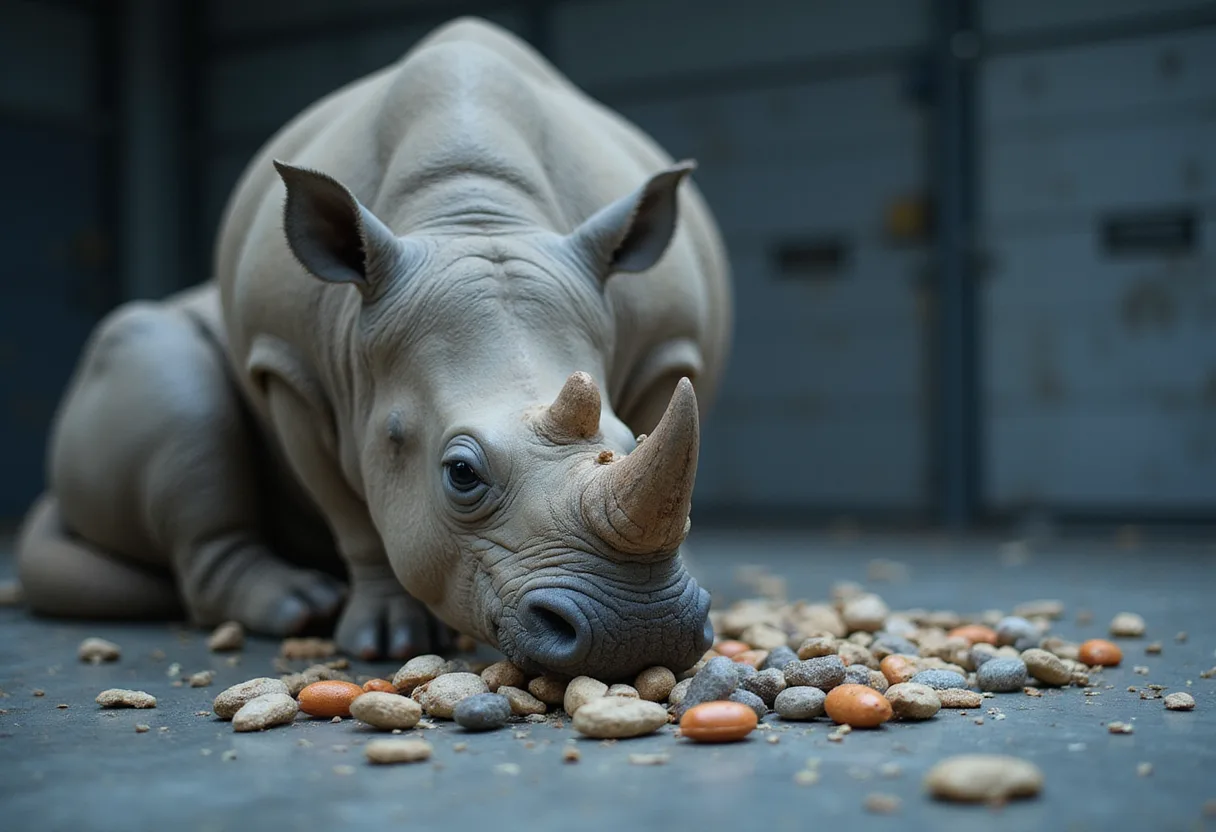
The street name "rhino tranq" is misleading, Davidson noted. Actual rhinoceros immobilisation in field veterinary practice relies on etorphine, an ultrapotent opioid more than 1,000 times stronger than morphine.
How much more potent is it than xylazine?
Medetomidine is roughly 100 times more potent than xylazine by weight. A dose as small as one hundredth of a comparable xylazine amount can produce equivalent sedation. Even trace contamination can:
- Drive severe hypertension followed by rebound hypotension
- Produce marked bradycardia
- Cause a biphasic cardiovascular response — initial vasoconstriction and pressure spike, then a crash
This pharmacological profile complicates emergency management, particularly when users co-ingest opioids. Medetomidine reduces activity in the locus coeruleus, the brain's wakefulness centre, rather than depressing respiratory drive the way fentanyl does. Combined exposure therefore stacks two distinct, potentially fatal mechanisms.
Why is there no human antidote?
Veterinary practitioners reverse medetomidine routinely with atipamezole, an alpha-2 antagonist FDA-approved for use in dogs. No equivalent product carries approval from the FDA Center for Drug Evaluation and Research or the EMA for human use. Davidson warned that rapid reversal in humans risks a dangerous withdrawal syndrome: vomiting, tachycardia and rebound hypertension.
Standard opioid overdose kits contain naloxone, which does not address alpha-2 agonist toxicity. Patients presenting to emergency departments with combined fentanyl–medetomidine exposure may regain respiratory drive after naloxone yet remain cardiovascularly unstable.
Where is the supply coming from?
The supply picture differs from xylazine, which US investigators have traced largely to Chinese chemical manufacturers. Davidson suggested medetomidine in the US may originate either through diversion of veterinary stocks or clandestine synthesis. The UK picture remains unclear.
What did UK regulators recommend?
In October 2025, the UK's Advisory Council on the Misuse of Drugs issued three recommendations:
- Classify medetomidine as a Class C controlled substance, mirroring the 2024 scheduling of xylazine
- Train police, ambulance crews and emergency department staff on recognition and management
- Mandate routine testing of seized drugs at border-control laboratories
The UK government has not yet published its formal response.
What does this mean for veterinary practice?
Companion-animal clinicians should expect heightened scrutiny of medetomidine stock control. Practices already logging controlled-substance use under Schedule 4 records in the UK — or DEA registration in the US — should audit reconciliation frequency and report any unexplained shrinkage.
Public-health laboratories need access to rapid detection. Field test strips exist for xylazine but not yet for medetomidine; laboratory mass spectrometry remains the only reliable identification method.
What comes next?
Researchers must prioritise a human reversal agent that counters both medetomidine and xylazine without provoking rebound cardiovascular events. Until then, harm-reduction services — including Glasgow's Thistle consumption facility, the UK's first — will carry the frontline burden alongside clinicians who may never have been trained to recognise an alpha-2 agonist toxidrome.
Original: static.independent.co.uk
Daniel Okafor
Show full bio
News editor covering technology and product news in Small- and large-animal clinical practice at The Vet Scope.
Related articles
CDC Flags 'Rhino Tranq' as Veterinary Sedative Spreads Through Fentanyl Supply
AVMA presses federal action on xylazine scheduling and rural vet shortage
Subcutaneous sedation works in dogs — but needs higher doses
CDC Warns Veterinary Tranquilizer Is Spreading in Illicit Fentanyl
CDC warns veterinary sedative is spreading in illicit fentanyl