Smart Litter Box Data Detects CKD Signs Earlier in Cats
A 136-cat Purina and Ohio State study shows smart litter box monitors can detect CKD-linked elimination changes before owners notice, provided trends trigger documented workups and nutrition follow-through.
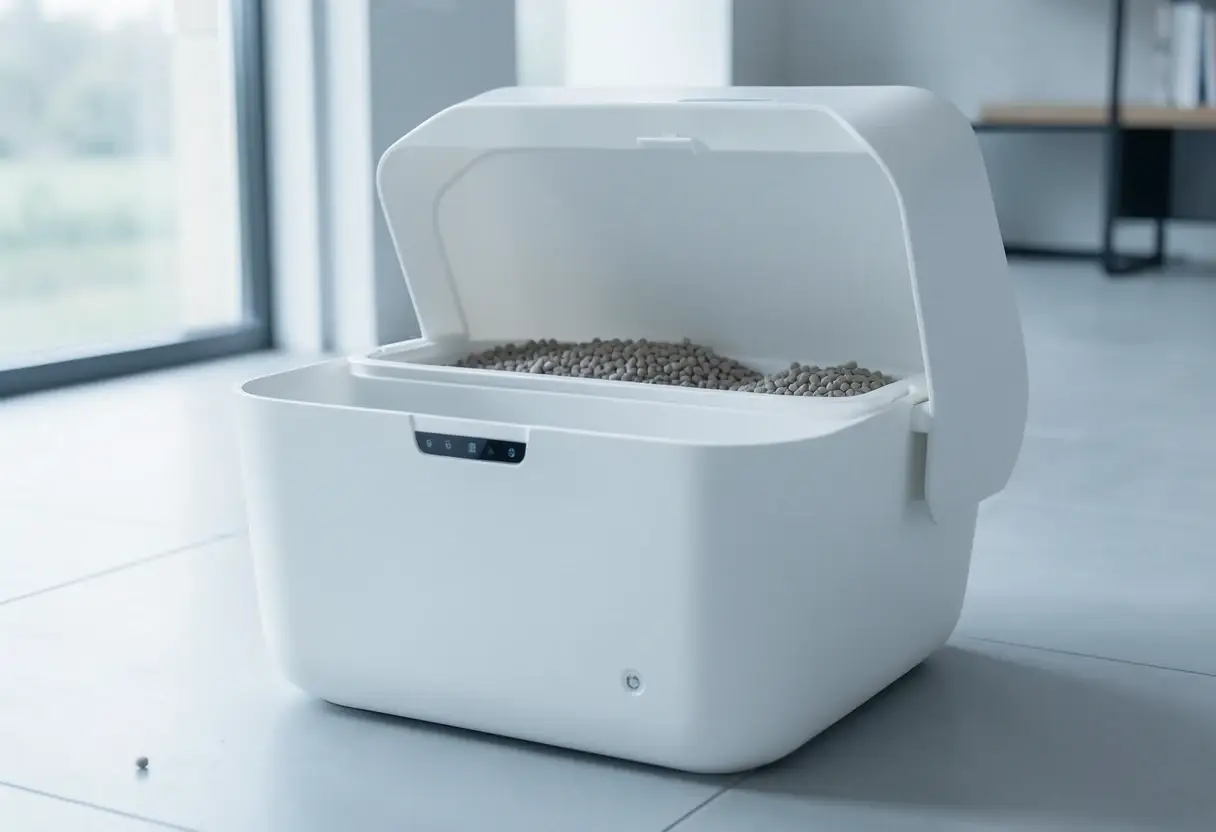
Photo: AI-generated
A 136-cat study from Nestlé Purina PetCare Global Research and Development and The Ohio State University found that passive, in-home smart litter box monitoring can identify elimination behavior patterns associated with chronic kidney disease before clinical signs become obvious.
The stakes are straightforward. Cats mask illness well, and owners routinely miss gradual changes in urination, defecation, and other litter box behaviors between visits. A change from an individual cat's own defecation and urination pattern, the authors stress, is often more meaningful than any single isolated data point.
What did the study actually measure?
The researchers compared cats with CKD against age- and sex-matched cats with no known conditions. The cohort spanned 136 cats across training and validation sets, and the team integrated device-derived behavioral features into a machine-learning framework for predictive modeling.
Smart litter boxes captured repeated measures around the clock: weight, elimination frequency, visit duration, estimated urine output, defecation patterns, and covering behavior. Several of the metrics that separated CKD cats from controls — litter box activity duration, digging force — are ones owners cannot assess accurately without objective monitoring technology.
That is the practical point. These reports give the team a more complete picture than owner recall alone, and they can support triage, diagnostic prioritization, nutrition planning, and follow-up.
What should trigger a workup?
Abnormal trends should prompt veterinary review and, when indicated, physical examination; serum biochemistry; urinalysis including urine specific gravity; blood pressure measurement; and CKD staging.
Beyond kidney disease, the same data can flag other problems early:
- Increased urine output or more frequent urination, especially with weight change, may point to diabetes, reduced kidney concentrating ability, hyperthyroidism, or other systemic disease.
- Urinary tract disease may appear as more frequent litter box visits, longer or unproductive urination attempts, changes in urine color, or elimination outside the box.
Follow-up questions should cover thirst, appetite, weight changes, urine clump size, medications, diet, and behavior.
The gut-kidney axis enters the picture
At the 2026 American College of Veterinary Internal Medicine Forum, Purina scientists and collaborators from Texas A&M University, The Ohio State University, University of Pennsylvania, and Kansas State University reported differences in fecal metabolites in cats with CKD. The changes included lipid-related shifts, higher short-chain fatty acids, and N1-methyl-2-pyridone-5-carboxamide as a potential fecal marker.
The findings fit growing interest in the gut-kidney axis: the connection between the gut microbiome, waste products, inflammation, gut barrier health, and kidney function. From a nutrition standpoint, they support strategies that may promote a healthier gut microbiome and reduce the buildup of waste products linked to kidney disease.
After diagnosis, therapeutic renal nutrition can help manage phosphorus and electrolyte balance, renal workload, energy intake, protein adequacy, and quality of life. Earlier recognition matters here. It may allow intervention while appetite and body condition remain more stable.
Nutrition can also support management of urinary tract disease itself, helping dilute urine and reduce recurrence risk in susceptible cats.
From data point to action
The value of digital monitoring is not the data point alone. It is what the team does next. Device-generated trends become clinically useful when reviewed consistently, documented clearly, communicated accurately, and confirmed diagnostically when indicated.
At the Purina Institute Global Summit 2026, this approach was described as anticipatory care — supported by real-time data, preventive medicine, and nutrition science.
Clinical teams can drive the process by ensuring trends lead to documentation, triage, diagnostic confirmation, and nutrition follow-through. Monitoring data is most useful when it leads to clear action.
The bottom line for practitioners: smart litter box monitoring can reveal changes in elimination behavior and body weight before clinical signs are obvious, but the data must be interpreted alongside history, examination findings, laboratory testing, blood pressure assessment, and other diagnostics. Paired with clear workflows, client communication, timely escalation, and nutrition follow-through, these trends can extend care beyond the consulting room and support earlier, more individualized long-term care for cats.
Source: dvm360.com
Elena Vasquez
Show full bio
Market editor covering money, funding and market shifts around Small- and large-animal clinical practice at The Vet Scope.
Related articles
Thirteen Fatty Acids Form a Stable Identity Code in Cat Urine, Study Finds
Cats Gain on Dogs as U.S. Pet Spending Contracts, Forcing Clinic Rethink
CFIA Approval Opens Canadian Market for Antech's Rapid Tests
Global veterinary cat diet market index seen rising 68% by 2035
Senior Pets Are Falling Out of Veterinary Care. A Structured Pathway Pulls Them Back