Review defines herd health management for livestock farms
A 2026 narrative review unifies decades of herd-health thinking around shared goals, risk identification, prevention, monitoring, and evaluation for farm veterinarians.
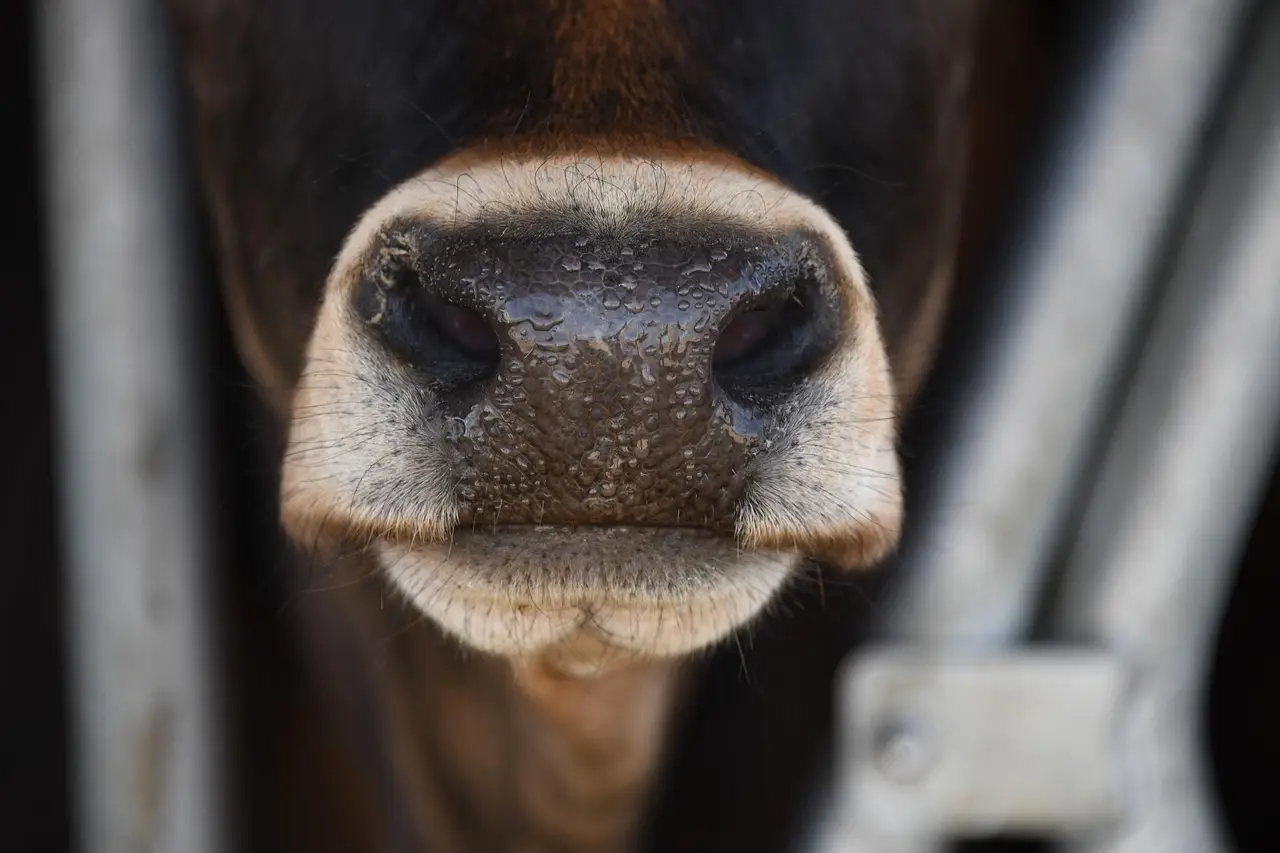
Photo: eliza28diamonds / pixabay
A 2026 narrative review found 39 competing definitions of animal health among 500 veterinary textbooks and proposes one working definition for herd health management in livestock production.
What did the review examine?
“What is herd health management? A narrative review,” by Esben Østergaard Eriksen, Ken Steen Pedersen and Jens Peter Nielsen, appeared in Acta Veterinaria Scandinavica 68(1), article 25. The authors searched Web of Science for “herd health,” set no date limits, and synthesized definitions, historical practice, and management models. The narrative review enrolled no herds and tested no intervention.
Population-level, prevention-focused veterinary work grew with livestock intensification after the Second World War. In Danish pig production, dietary antimicrobial supplements, climate-controlled pens, stronger biosecurity, and better feed knowledge helped lower common weaning age from 7 to 10 weeks to about 4 weeks during the 1970s.
Dairy-derived management principles then entered pig production; the European College of Bovine Health Management and European College of Porcine Health Management were established in 2003 and 2004, respectively.
Takeaway: The review defines a way to work, not whether one protocol improves herd performance.
How does the proposed definition work?
The unit of work is a population: a herd can include cattle, pigs, poultry, or related wild animals, but the framework applies to livestock on one farm. The 500-textbook review had found 39 definitions spanning normality, biological function, homeostasis, physical and psychological well-being, and productivity, including reproduction.
The authors exclude productivity because poor health often impairs output, while high output can severely harm health, as high milk yield can in cattle. They describe productivity-based definitions as old, rarely used, and reliant on logical fallacy and an anthropocentric viewpoint.
Eriksen, Pedersen, and Nielsen define herd health as “the presence of normal biological function, including homeostasis and the absence of disease, among the animals populating a given farm.”
- Herd health consultancy: expert advice to a producer on promoting herd health.
- Veterinary herd health consultancy: that advice delivered by a veterinarian.
- Herd health management program: flexible outline specifying themes, services, visit intervals, and data.
- Herd health management concept: flexible draft for assessing or solving a herd health problem, based on evidence or expert opinion.
Management means continuous planning, implementation, and evaluation of production, finance, marketing, and human-resources decisions; farm-management science often treats management, decision-making, and problem-solving as interchangeable.
The authors advise dropping “veterinary herd health management” as unclear, while retaining porcine and bovine variants because biology and context differ.
Historical definitions remained inconsistent. Blood’s 1978 health program coordinated optimal health and productive efficiency; his 1979 definition covered preventive measures for herd health. Later accounts stressed economic returns and recurring visits beyond one-off pregnancy diagnosis, castration, or dehorning.
Takeaway: Shared labels do not erase biological differences among cattle and pigs.
What changes at each herd visit?
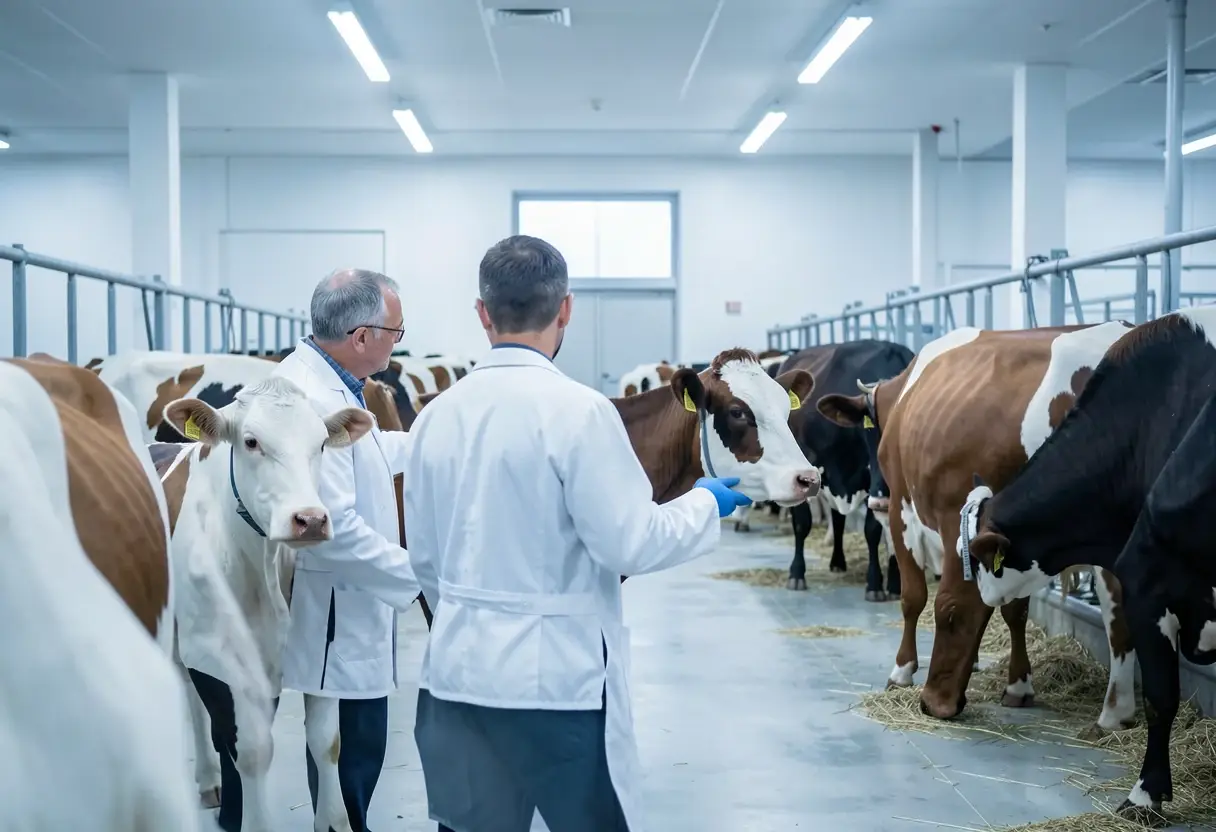
The framework is continuous and cyclic across strategic, tactical, and operational levels. At regular visits, veterinarian and producer make tactical plans; between visits, producer and personnel implement them; at the next visit, they evaluate results.
Each cycle moves from assessing conditions to setting goals, identifying risks, selecting practices, and choosing monitoring indicators. Goals span health, productivity, and externalities and should follow S.M.A.R.T.: specific, measurable, assignable, realistic, and time-related.
Expected benefits include better growth or yield, lower feed, medicine, or labor costs, and greater work satisfaction. Producers may also expect prudent antimicrobial use, health, and welfare.
Expectations often diverge. In 2007, only 50% of Dutch dairy producers said their veterinarian knew their goals and tried to achieve them through advice. Their priorities also reflect social norms, emotions, experience, fear, risk perception, finances, local culture, legislation, media, and consumer opinion. Veterinarians must discuss those priorities rather than assume financial gain drives every decision.
If performance differs from a goal, the authors call it a herd health problem. Risk identification then examines possible causes and requires veterinary expertise about causation. The veterinarian selects alternatives by weighing which removes risk most efficiently at lowest resource and labor cost, with few negative externalities and acceptable fit with producer values.
Prevention operates at two levels:
- Primary prevention removes exposure to infectious agents through cleaning and disinfection, specific-pathogen-free production systems, and biosecurity.
- Secondary prevention prevents colonization from becoming clinical disease through vaccination programs or prophylactic antibiotic treatment.
The review names no vaccine or antibiotic product and evaluates no approval status under FDA CVM, EMA, or USDA.
Monitoring should use indicators tied directly to goals and ideally reliable and valid; measures can capture performance, such as growth rate, or its causes.
Takeaway: Each visit should end with an agreed goal, intervention, and measurable test—not advice alone.
How should veterinarians judge success?
Before-and-after comparisons cannot show that a new practice caused improvement because production fluctuates and other factors change. Herd-specific randomized trials offer the strongest causal evidence by assigning tagged animals or groups, such as pens, to usual or new practices and comparing groups, but resource demands and practical constraints make them uncommon.
Alternatives include evolutionary operation designs from industrial process management, process behavior charts showing moving averages and natural limits, and state space models combining prior expectations with observed data to forecast development. Practice still often relies on descriptive before-and-after comparisons; these advanced methods remain uncommon in herd health management.
Takeaway: Better tools exist, but resource limits still push many programs toward weak before-and-after evidence.
What do the findings mean across sectors?
- Food animals: The framework addresses cattle, pig, and poultry herds on farms. Veterinarians must coordinate goals, risk reduction, prevention, monitoring, and evaluation rather than wait for failure.
- Companion animals: The paper centers on livestock populations; it neither tests nor validates the framework for household pets or practices centered on individual animals.
- Public health: Prudent antimicrobial use and externalities belong in goal-setting, but the review reports no pathogen, zoonosis, antimicrobial-resistance, or population-health estimates.
Takeaway: Food-animal veterinarians can document goals and select one measurable risk now; whether clearer goals and stronger evaluation improve routine herd decisions needs testing.
Original: doi.org
Elena Vasquez
Show full bio
Market editor covering money, funding and market shifts around Small- and large-animal clinical practice at The Vet Scope.
Related articles
Feed Innovation Positioned as Key to Sustainable Livestock Health
Bavarian Calf Study Maps Antimicrobial Use, Weight Gain and Mortality
Nigeria and Denmark Expand Cooperation on Livestock Development
Frontiers Editorial Maps Advances in Livestock Genetics and Breeding
UK Government Confirms Work on Livestock Vaccine Strategy