Purdue, Elanco Break Ground on One Health Research Institute
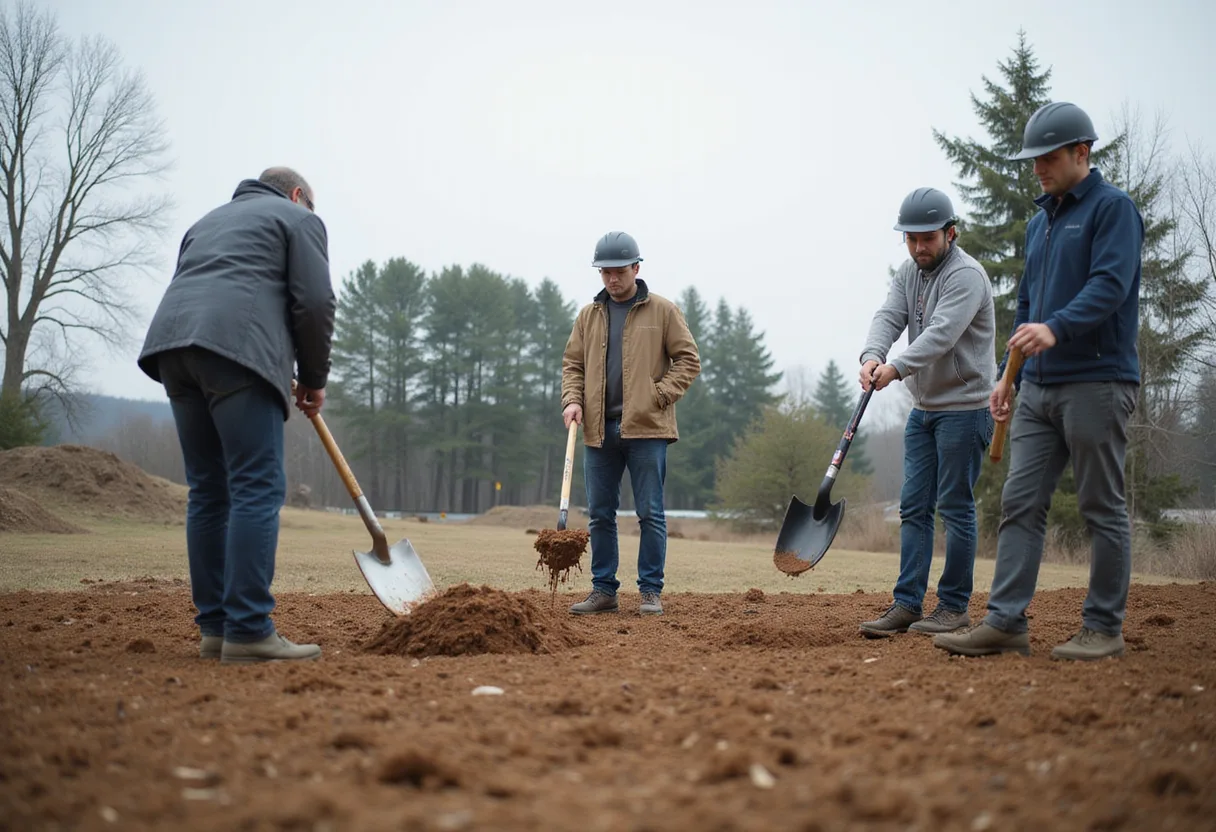
Groundbreaking began on the One Health Research Institute, the academic anchor of the One Health Innovation District, in a project tied to Purdue University and Elanco Animal Health.
Updated
Photo: AI-generated
Groundbreaking has begun on the One Health Research Institute, the academic anchor of the One Health Innovation District in a project tied to Purdue University and Elanco Animal Health, according to Investing News Network.
The institute's stated mission rests on the One Health framework — the principle, endorsed by the CDC, FDA, USDA and the World Health Organization, that human, animal and environmental health share determinants. The principle demands that surveillance and research cross those boundaries.
What does the project change for veterinary research?
The district's purpose is to colocate academic investigators, industry scientists and clinical partners. For practicing veterinarians, the most concrete downstream effect is a concentrated translational-research hub.
Translational research is the bench-to-barn work that turns a laboratory finding into a labeled product a clinician can prescribe, dispense or administer. A single Midwestern site combining a veterinary school with an animal-health manufacturer is unusual, and it creates an opportunity to compress the timeline between discovery and regulatory submission.
What is the role of each anchor?
Purdue University is one of the larger U.S. veterinary colleges by enrollment, with established programs in infectious disease, comparative oncology and production-animal medicine.
Elanco Animal Health is among the largest animal-health companies by revenue, with a portfolio spanning companion-animal parasiticides, food-animal vaccines and therapeutics.
The pairing places a public veterinary school next to a manufacturer with FDA- and USDA-licensed products in active distribution. Any academic discovery at the institute has a near-term commercial route.
What does "One Health" mean for the work conducted there?
The institute frames its research around zoonotic disease, antimicrobial resistance and food-system resilience. Those three priorities overlap with the FDA's Veterinary Feed Directive, the USDA's National Action Plan for Combating Antibiotic-Resistant Bacteria, and the CDC's One Health agenda.
Surveillance data, diagnostic platforms and translational trials are expected to emerge from the site and feed directly into product pipelines.
What is the regulatory path for products developed there?
Any new molecular entity that becomes a drug will fall under the FDA Center for Veterinary Medicine (CVM), which reviews pharmaceuticals for animals. Vaccines and certain diagnostic kits fall under the USDA Center for Veterinary Biologics, which licenses veterinary biologics through a separate process.
Companies with transatlantic reach such as Elanco must also pursue parallel approval through the European Medicines Agency (EMA). Locating the institute near an industry partner is likely to give academic findings a direct regulatory channel.
How does this affect different veterinary sectors?
For companion-animal practice, the practical implications include a potentially faster pace of new therapeutics for chronic disease — osteoarthritis, endocrine disorders and oncology, where the FDA CVM has approved a steady stream of products in recent years.
For food-animal veterinarians and producers, the institute could accelerate vaccines, parasiticides and antimicrobial alternatives, all reviewed under the FDA CVM.
For public-health veterinarians, colocation of academic, industry and regulatory-adjacent expertise may expand the surveillance workforce and improve data flow on zoonotic and antimicrobial-resistance threats.
What remains to be confirmed?
The source announcement confirms the groundbreaking event but does not specify a completion date, building size, capital investment, headcount of researchers or a formal research agenda. Purdue and Elanco are likely to release these details in subsequent statements.
Looking ahead
The next milestones to track are the institute's commissioning date, the first named industry and academic tenants, and any joint research or licensing agreements signed by the two anchor organizations in the months after groundbreaking.
Source: Google News: Animal health industry
Grace Kim
Show full bio
Staff writer covering regulation, policy and their impact on Small- and large-animal clinical practice at The Vet Scope.
Related articles
Purdue and Elanco Break Ground on One Health Research Institute
Purdue and Elanco break ground on One Health Research Institute
Purdue Veterinary College Expansion Targets Workforce Pipeline
Elanco Puts $25 Million Behind Animal Health Innovation
FDA opens grant applications for veterinary drug research