Neosaxitoxin and bupivacaine face off in canine eye trial
Eight authors led by M.R. Ribeiro posted a head-to-head trial of neosaxitoxin vs. bupivacaine for peribulbar anesthesia in dogs undergoing reconstructive keratoplasty in The Veterinary Journal on 14 October 2026.
Updated
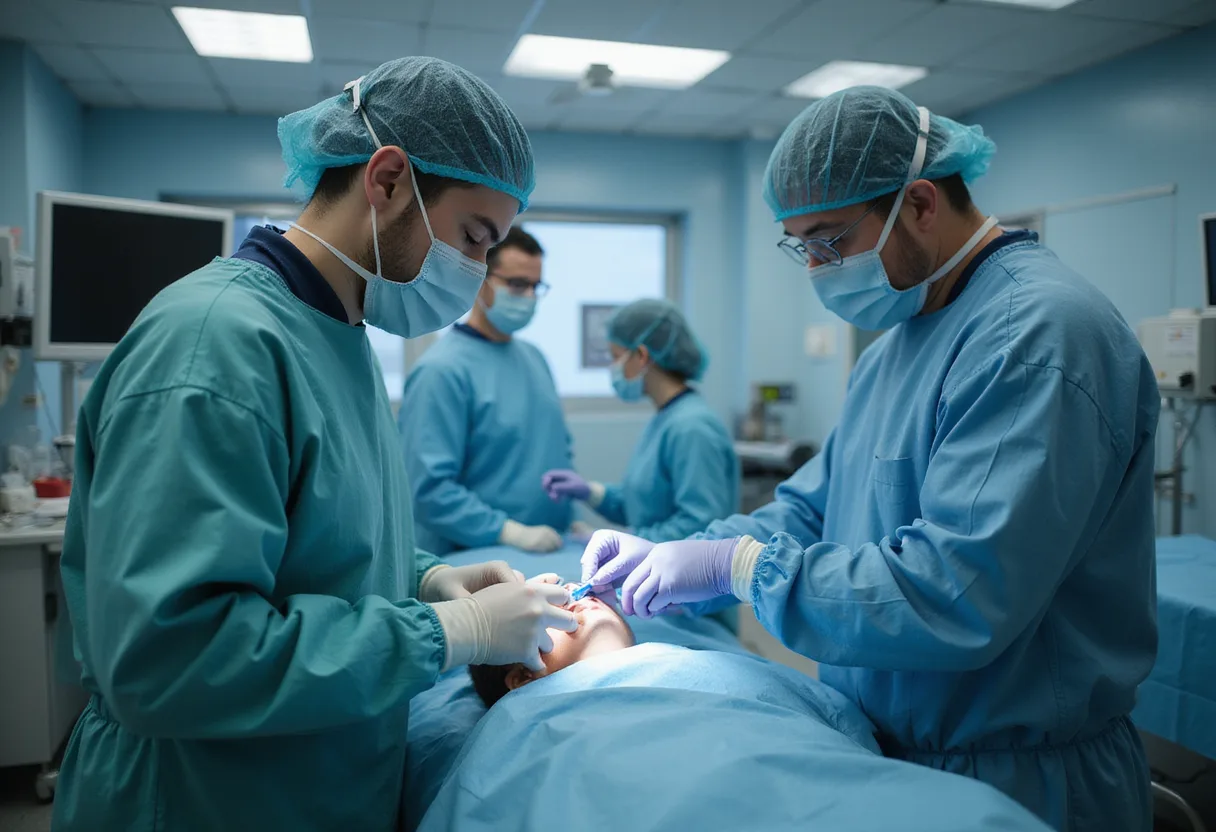
Photo: AI-generated
Eight authors posted a canine keratoplasty trial comparing neosaxitoxin with bupivacaine for peribulbar anesthesia online on 14 October 2026 in The Veterinary Journal.
The paper, "Comparison of peribulbar anesthesia with neosaxitoxin or bupivacaine in dogs undergoing reconstructive keratoplasty," lists M.R. Ribeiro as first author and R.N. Cassu as senior investigator. Collaborators R.A. Reed and M. Barletta carry board certification in veterinary anesthesiology. Coauthors B.K. Ariga, D.R. Gomes, D.S. Alves, and S.M.C. F. Andrade complete the byline.
What does the trial compare?
Peribulbar anesthesia deposits local anesthetic around the equator of the globe, targeting the ciliary ganglion and the sensory nerves that supply the cornea, producing both akinesia and analgesia. The technique differs from retrobulbar injection in needle position, depth, and risk of globe perforation.
Reconstructive keratoplasty rebuilds diseased or perforated corneas with graft tissue and remains the surgical option of last resort for deep ulcers, perforations, and stromal scarring in dogs. Such cases demand a still operative field and analgesia extending hours into recovery.
The Veterinary Journal paper poses a parallel question for both agents: which delivers the better peribulbar block — bupivacaine, the workhorse amide in veterinary ocular anesthesia, or neosaxitoxin, the paralytic shellfish toxin that recent regional anesthesia literature has investigated as a long-acting alternative?
Why does the comparison matter now?
Bupivacaine holds a long-standing role in veterinary regional ocular anesthesia. Neosaxitoxin remains an investigational compound in the regional anesthesia literature. A direct canine trial in the peribulbar space — a corner of clinical scholarship measured in single-digit paper counts — gives the comparison immediate relevance for the veterinary ophthalmologists who perform corneal grafts.
Corneal grafting carries a guarded prognosis in dogs because of vascular ingrowth, suture complications, and facial nerve dysfunction that disrupts lid closure. Survival depends in part on minimizing post-operative patient interference with the surgical site, making analgesic duration a clinical parameter rather than an academic one.
What does the available record show?
The journal listing available at the time of this report registers publication on 14 October 2026 and supplies only the title, the eight-author byline, and the journal venue. Sample size, blinding, primary endpoint, follow-up interval, and statistical design will surface when the full text posts. Until those details appear, the trial's clinical conclusions remain opaque.
What changes for the exam table or the surgical suite?
Companion-animal practice will not move on the publication alone. Bupivacaine peribulbar blocks remain the standing choice in referral ophthalmology. Should the trial report favorable findings for neosaxitoxin on onset and duration, veterinary anesthesiologists will weigh the agent against adjuncts such as systemic NSAIDs and topical opioids for the post-operative window. A negative result would reinforce bupivacaine and redirect attention toward combination protocols.
Food-animal and public-health implications do not arise here. The trial sits inside a specialty frame.
The paper registers as a substantive canine keratoplasty-anesthesia study in a procedure- and drug-specific niche, one that small-animal surgeons and anesthesiologists will follow for at least the next year.
Forward-looking: the publication anchors the Ribeiro-Cassu-Reed-Barletta collaboration as the probable source of the next round of canine neosaxitoxin trials expected to define the drug's operating envelope in ocular surgery.
Source: The Veterinary Journal (Elsevier)
Nathan Brooks
Show full bio
Senior reporter covering companies, deals and strategy in Small- and large-animal clinical practice at The Vet Scope.
Related articles
Texas A&M Reports Hemoperfusion for Dog After Oclacitinib Overdose
Non-Opioid Analgesic Shows Early Promise for Surgical Pain in Dogs
Subcutaneous sedation works in dogs — but needs higher doses
Trametinib Shows Tumor-Shrinking Activity Against Oral Cancer in Dogs
Veterinarians Weigh Red Light Therapy Claims for Dogs and Cats