Hypoxia-Driven Apoptosis Linked to Wooden Breast Fibrosis in Broilers
A December 2026 Poultry Science study links hypoxia-induced apoptotic pathways to fibrosis progression in wooden breast myopathy of fast-growing broilers, with processing-economics implications.
Updated
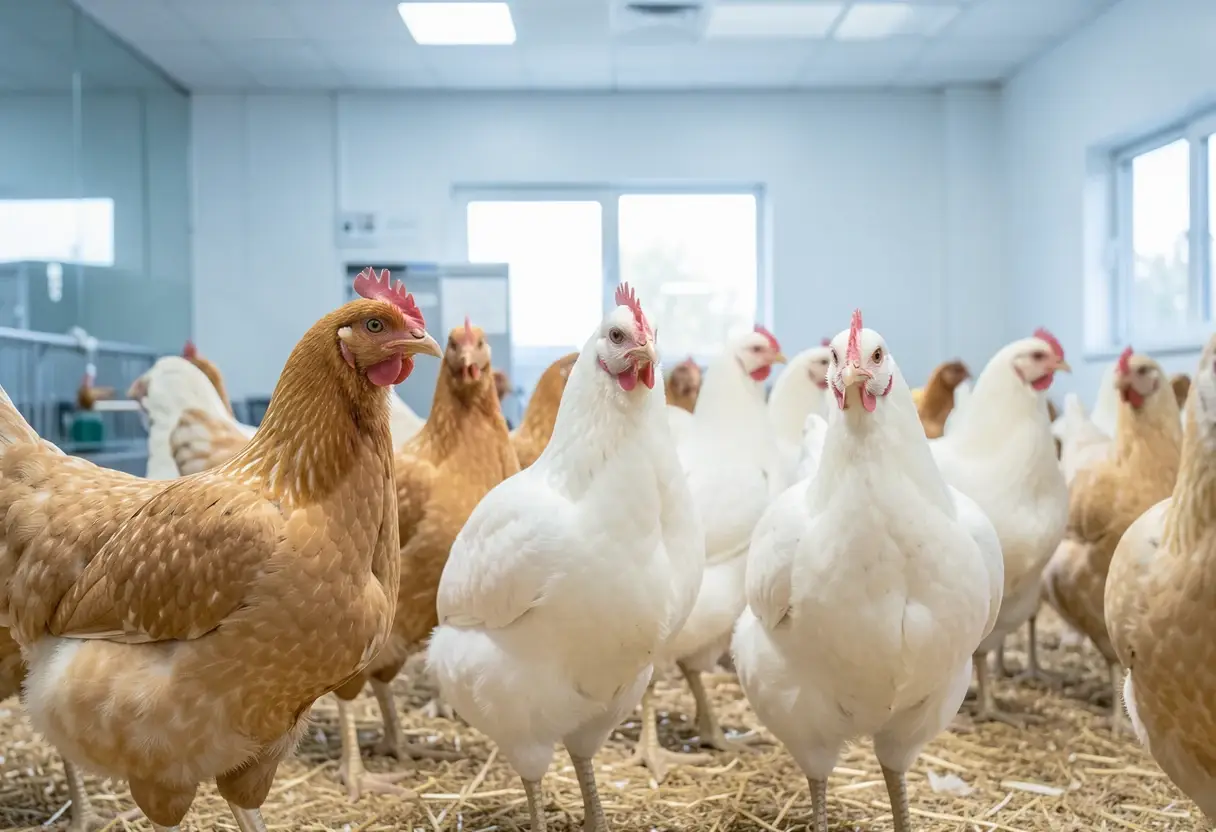
Photo: Tama66 / pixabay
A peer-reviewed study published in December 2026 in Poultry Science, Volume 105, Issue 12, examines how hypoxia-induced apoptotic pathways contribute to fibrosis progression in wooden breast myopathy among fast-growing broilers.
The paper, authored by Shixiong Yan, Hongmei Shi, Muhammad Sarfaraz Iqbal, Gao Yang, Zhang Fei and Mikhlid H. Almutairi, targets one of the most consequential muscle-quality defects in modern poultry production: wooden breast, a myopathy characterized by hardened pectoral muscle and fibrotic tissue that reduces meat quality and processing value.
What does the study investigate?
The authors focus on the mechanistic link between two processes already suspected in the disease:
- Hypoxia, or oxygen deficiency in rapidly growing breast muscle tissue
- Apoptosis, programmed cell death that, when dysregulated, can trigger fibrotic replacement of muscle fibers
Fast-growing broiler lines reach market weight in roughly six weeks, and their pectoral muscles grow faster than their vascular supply can oxygenate. The study's central question is whether oxygen-starved muscle cells die through apoptotic pathways and whether that cell death then drives the deposition of fibrotic tissue — the stiffening that defines the condition at slaughter and on the cutting table.
By mapping these pathways, the work aims to explain fibrosis progression rather than merely describe the lesion.
Why does this matter at the processing plant?
Wooden breast has moved from a curiosity to an economic factor since fast-growing genotypes came to dominate global broiler production. Affected fillets are firm to the touch, pale, and often accompanied by extracellular connective tissue that downgrades them from premium whole-muscle products.
For veterinarians and poultry health advisors, the mechanistic framing matters for a practical reason: if hypoxia initiates the apoptotic cascade that leads to fibrosis, then interventions that improve muscle oxygenation — through nutrition, genetics, or housing management — could plausibly reduce lesion severity before birds reach the plant. The study provides the biological groundwork for evaluating such strategies.
What are the species and production implications?
This is a food-animal story with no companion-animal or direct public-health dimension. The findings apply specifically to fast-growing commercial broiler lines, where selection for rapid breast-muscle accretion has outpaced the supportive vasculature.
The condition does not raise a food-safety concern; the burden falls on meat quality, carcass downgrade rates and the economics of further processing, where fibrotic tissue must be trimmed or redirected to lower-value products.
What comes next?
The authors' pathway-level analysis, published in Poultry Science's December 2026 issue, gives poultry scientists and breeding companies a defined set of molecular targets — apoptotic signaling under hypoxic stress — for future work on mitigation through genetic selection or metabolic management of fast-growing flocks.
Source: Poultry Science (Elsevier)
Amara Osei
Show full bio
Correspondent covering companies, deals and strategy in Small- and large-animal clinical practice at The Vet Scope.
Related articles
Immunocastration and Testosterone Supplementation Studied in Male Chickens
Poultry Science study maps diet levers for 22-35 day broiler performance
Broiler Survival Under Heat Stress Tied to Body Weight, Study Finds
Puerarin improved meat quality in chickens via gut-muscle axis, December 2026 Poultry Science study finds
MV x500 broiler study slated for December 2026 Poultry Science issue