House Soiling in Senior Dogs Signals Cognitive Decline, Not Just Urinary Disease
A prospective study of 84 senior dogs links house soiling to executive dysfunction and dilute urine, not pyuria or bacteriuria — urging cognitive screening when urinalysis comes back clean.
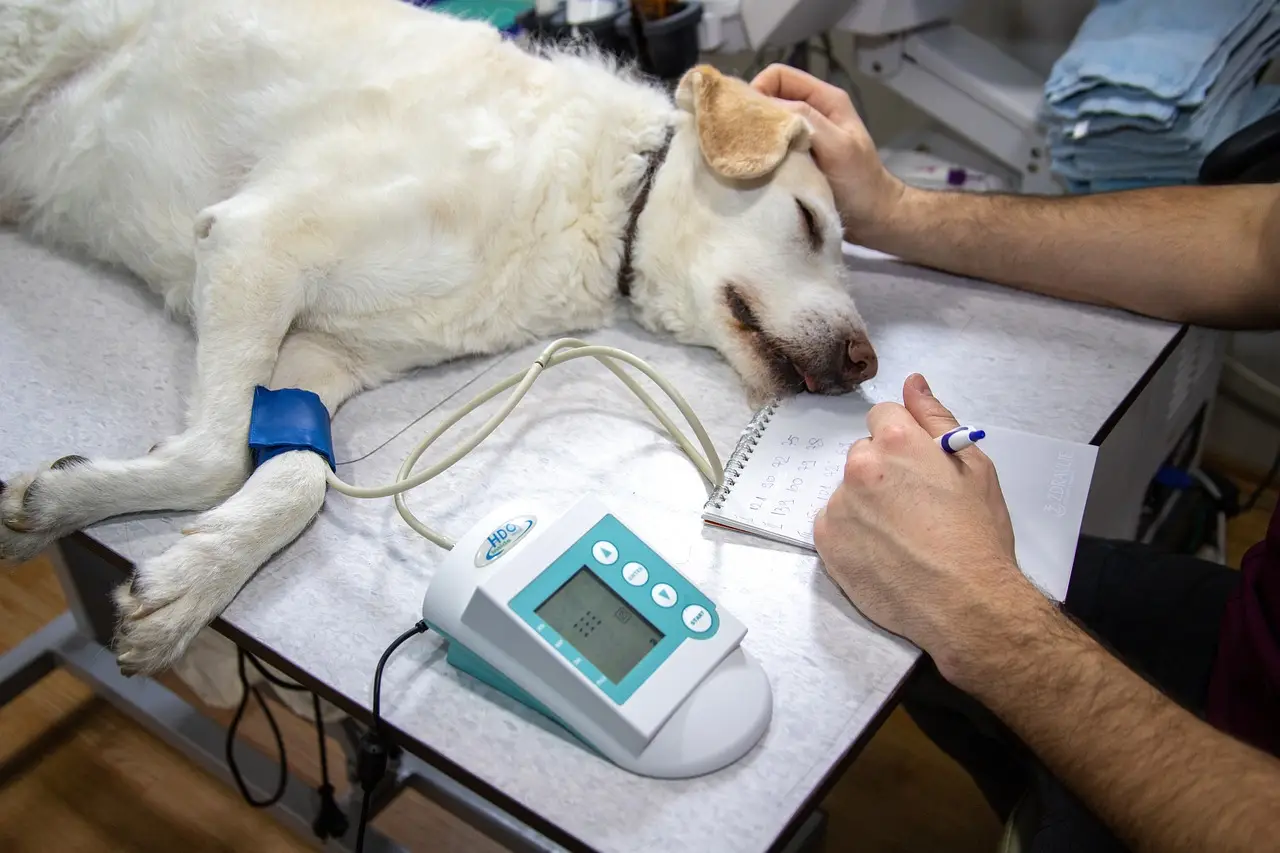
Photo: RandyJost / pixabay
House soiling in senior dogs tracked with poorer executive function and lower urine specific gravity, but not with pyuria, bacteriuria, or proteinuria, in a prospective study published in the Journal of Veterinary Internal Medicine. When an older dog starts having accidents, a normal urinalysis should not end the workup.
Researchers at the North Carolina State University College of Veterinary Medicine, with collaborators at the University of Pennsylvania and Université de Montréal, designed the exploratory study to fill two gaps: no prior canine research had examined the relationships among cognitive decline, house soiling, and urinalysis findings, and longitudinal urinalysis data in aging dogs were lacking.
How the study was designed
The prospective, longitudinal, observational study enrolled 84 client-owned senior and geriatric dogs from the NC State Longitudinal Study of Neuroaging. Mean age at enrollment was 12.77 years (SD, 1.91 years). The cohort included 53 spayed females, 1 intact female, 29 neutered males, and 1 intact male.
Dogs were evaluated roughly every 6 months. Each visit included a free-catch urinalysis, an owner-completed Canine Dementia Scale (CADES) questionnaire, and a cognitive test battery. Of 268 total visits, 231 had all three components and entered the analysis. Visits with suspected urinary tract infection — 6 visits from 6 dogs — were excluded from cognitive analyses.
The urinalysis variables were urine specific gravity (USG), pyuria (>5 WBC/HPF), hematuria (>5 RBC/HPF), bacteriuria (more than trace), and proteinuria (>15 mg/dL). House soiling was measured with the 5-item CADES soiling domain, scored 0 to 25. The cognitive battery covered sustained gaze, inhibitory control via a cylinder task, a detour task, working memory, and response to a pointing cue.
The analysis used mixed-effects models with each dog as a random effect, so repeated visits from the same dog could be tracked over time.
What did the urinalyses show?
Sediment abnormalities were rarer than many clinicians would expect. Excluding proteinuria, only 30 of 231 samples (about 13%), from 23 dogs, were abnormal:
- Pyuria: 19 samples from 18 dogs
- Hematuria: 14 samples from 10 dogs
- Bacteriuria: 11 samples from 8 dogs
Proteinuria was far more common, present in 194 samples (84%), though most readings were trace or 1+. Median USG was 1.027 (range, 1.005–1.056), and USG decreased significantly with age (P < .001). Female dogs had higher odds of bacteriuria than males (odds ratio, 2.45; P = .03); sex showed no association with pyuria, hematuria, or proteinuria.
The numbers point one way. In this cohort, active urine sediment was the exception, not the rule.
Which factors predicted soiling?
Age and dilute urine drove soiling scores. CADES soiling scores ranged from 0 to 25 with a median of 3. Each additional year of age corresponded to roughly a 71% increase in the expected soiling score (P < .001). Each 0.001 increase in USG was associated with about a 2.4% lower expected soiling score (P < .001), suggesting age-related loss of concentrating ability contributes to accidents independently of cognition, likely through increased urine volume and frequency.
Pyuria (P = .28) and bacteriuria (P = .63) were not significantly associated with soiling, and soiling did not differ by sex (P = .58).
What about cognition?
After adjusting for age, higher soiling scores predicted poorer performance on two executive-function tasks: inhibitory control (P < .001) and the detour task (P = .02). Soiling was not independently associated with sustained gaze (P = .29) or working memory (P = .15). Age itself was associated with declines in sustained gaze, working memory, and detour performance (all P < .001). USG predicted no cognitive outcome.
One finding cut against expectation: hematuria associated with better inhibitory control (P = .05). The authors urged caution, noting the small number of hematuric samples and calling the result possibly spurious. Their initial hypothesis — that cognitive decline would accompany more urinalysis abnormalities — was not supported by the data.
What changes at the exam table?
For practitioners, the study supports a broader workup when senior dogs present for house soiling. Urinalysis remains essential. A normal or near-normal result should not close the case. The authors state that soiling in aging dogs may not reflect only urinary or systemic disease and may be an early sign of cognitive decline.
Practical steps from the findings:
- Ask about other canine cognitive dysfunction signs — disorientation, sleep-wake changes, altered social interaction, reduced learned behaviors — when an older dog has new house soiling.
- Use a validated owner questionnaire such as CADES to document behavioral change over time.
- Treat reduced concentrating ability as a separate contributor in dogs with dilute urine, and investigate its underlying causes.
What are the limits?
The authors flag several constraints. No a priori sample size calculation was performed, so the study may have been underpowered for small associations, and the low number of abnormal urinalyses limited analysis of urinary findings. Urine cultures were not performed, so infection, sterile inflammation, and contamination could not be distinguished. The CADES soiling domain combines urination and defecation, which may blur urinary-specific effects. The cohort skewed healthier and female-heavy, and as an exploratory observational design, the study cannot establish causation.
Future studies with larger and more diverse populations, urine cultures, and separate measures of urinary and fecal soiling could clarify how cognitive decline, urinary tract health, and house soiling interact in aging dogs. (Rafatpanah Baigi S, et al. J Vet Intern Med. 2026;40(5):aalag208.)
By Elena Vasquez
Source: dvm360.com
Elena Vasquez
Show full bio
Market editor covering money, funding and market shifts around Small- and large-animal clinical practice at The Vet Scope.
Related articles
AAHA publishes first-ever guidelines for canine cognitive dysfunction
Diagnostic Criteria for Canine Dementia Defined Under Olby's Leadership
Senior Pets Are Falling Out of Veterinary Care. A Structured Pathway Pulls Them Back
Senior Pet Supplements: Omega-3s Carry the Evidence, Most Others Don't
Proprioceptive deficits found in 1 of 4 dogs without neurologic signs