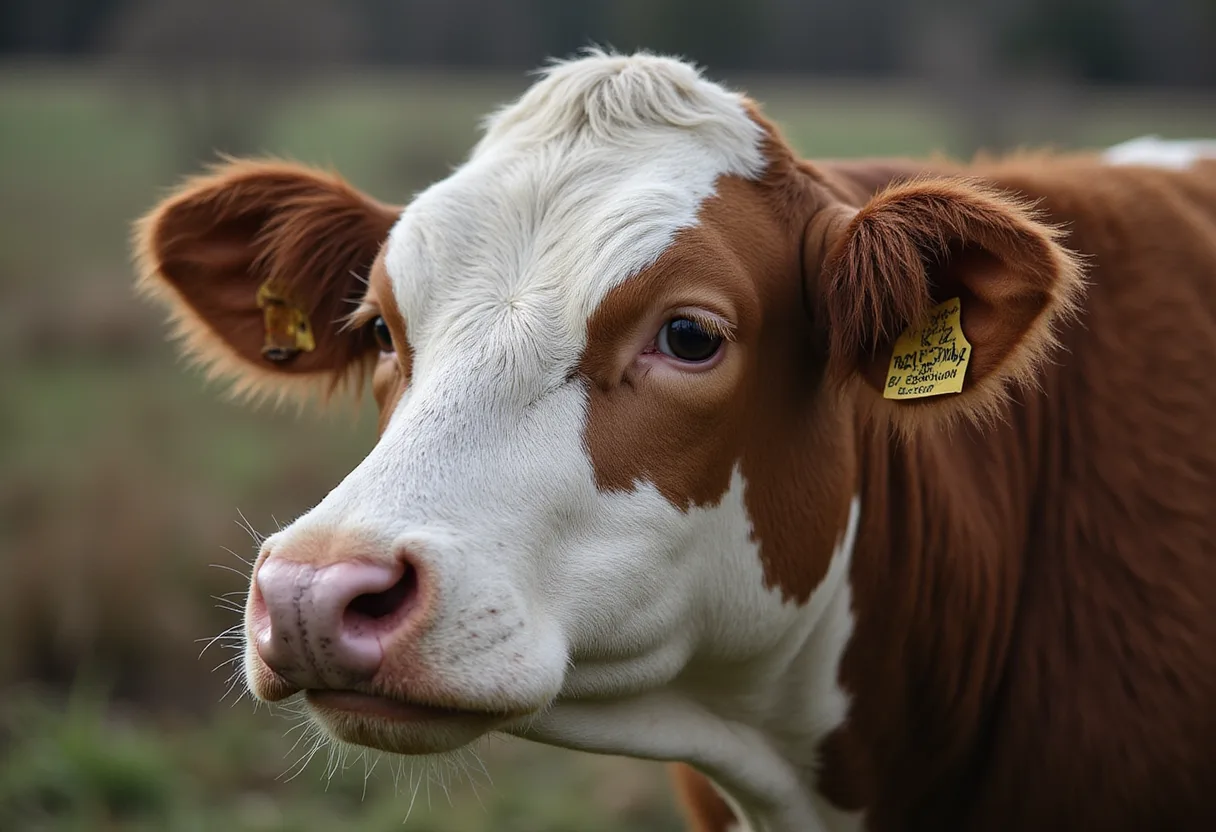
Gansu Eimeria ovinoidalis isolate shown to reshape lamb gut microbiota
A Veterinary Journal study published 12 October 2026 pairs lesion data with microbiota profiling in lambs infected with a Gansu Eimeria ovinoidalis isolate.
Updated
A study published in The Veterinary Journal on 12 October 2026 documents both the pathological injury and the gastrointestinal microbiota changes that follow infection with an Eimeria ovinoidalis isolate sourced from Gansu, China.
The paper, available online 12 October 2026, comes from a team led by Fuzhen Luo and Wanling Yao, working with co-authors Erbing Chen, Baoshan Wang, Zhen Huang, Sihan Zuo, Zhenpeng Li, Jie Wang, Wanhong He, Xiping Fan and Wangdong Zhang.
Eimeria ovinoidalis is one of the most pathogenic coccidia of sheep. It damages the intestinal mucosa of young animals, and lamb production in regions like Gansu — where the isolate was recovered — carries the exposure risk. The study pairs two measurements that clinicians usually track separately: how much tissue damage the parasite causes, and how the gut microbial community shifts alongside that damage.
What does the study measure?
The authors inoculated lambs with the Gansu isolate and then examined two outcomes in the same animals. First, they characterized the pathological injury — the lesions the parasite produces in the gastrointestinal tract. Second, they profiled the gastrointestinal microbiota to see which bacterial populations change during infection.
That dual design matters for practice. Coccidiosis control in lambs typically rests on anticoccidial drugs, management hygiene, or both. If infection measurably disrupts the microbiota, then tissue repair and microbial recovery become part of the convalescence picture, not just parasite clearance. The study gives practitioners a documented baseline for what an E. ovinoidalis isolate from northwest China actually does in the animal.
Why the isolate's origin matters
Parasite isolates differ by geography. A strain circulating in Gansu may not behave identically to reference isolates used elsewhere, and regional characterization is what allows vaccine or drug evaluation to match field conditions. By naming the isolate's origin, the study anchors its findings to a defined field population.
For food-animal veterinarians, the relevance is direct. Lambs are the affected class. The findings speak to flock-level decisions: when to intervene, what damage to expect at necropsy or on histology, and how to interpret gut-health data from affected groups. No companion-animal or direct public-health implication follows from this parasite, which is host-adapted to sheep.
What changes at the exam table
The study's contribution is diagnostic and prognostic framing. When a lamb presents with diarrhea and Eimeria oocysts are found on fecal exam, the degree of mucosal injury — and the microbial disruption that accompanies it — shapes both the severity assessment and the recovery timeline. A documented profile of lesion-plus-microbiota change gives practitioners a reference point for what a pathogenic isolate like E. ovinoidalis produces.
The findings also carry weight for researchers evaluating anticoccidial candidates or probiotic adjuncts in sheep. If infection shifts the microbiota in a defined way, then candidate products can be measured against that shift — not just against oocyst counts.
The full paper, "Pathological Injury and Gastrointestinal Microbiota Changes in Lambs Infected with Eimeria ovinoidalis Isolate from Gansu, China," is available online from The Veterinary Journal as of 12 October 2026. Readers working in ovine practice can expect the detailed lesion scores and microbial taxonomic data to inform how coccidiosis in lambs is assessed — and potentially how recovery is supported — in endemic regions.
Source: The Veterinary Journal (Elsevier)
Grace Kim
Show full bio
Staff writer covering regulation, policy and their impact on Small- and large-animal clinical practice at The Vet Scope.
Related articles
Largest Livestock Crossing Reopens After Screwworm Outbreak
Q Fever and Rift Valley Fever Seroprevalence Study Published for Bangladesh Livestock
CDC Posts Clinical Overview of New World Screwworm Online
Healthy Livestock Can Transmit Drug-Resistant Bacteria to Humans
Frontiers Editorial Maps Ethnomedicine Route to Livestock Disease Control