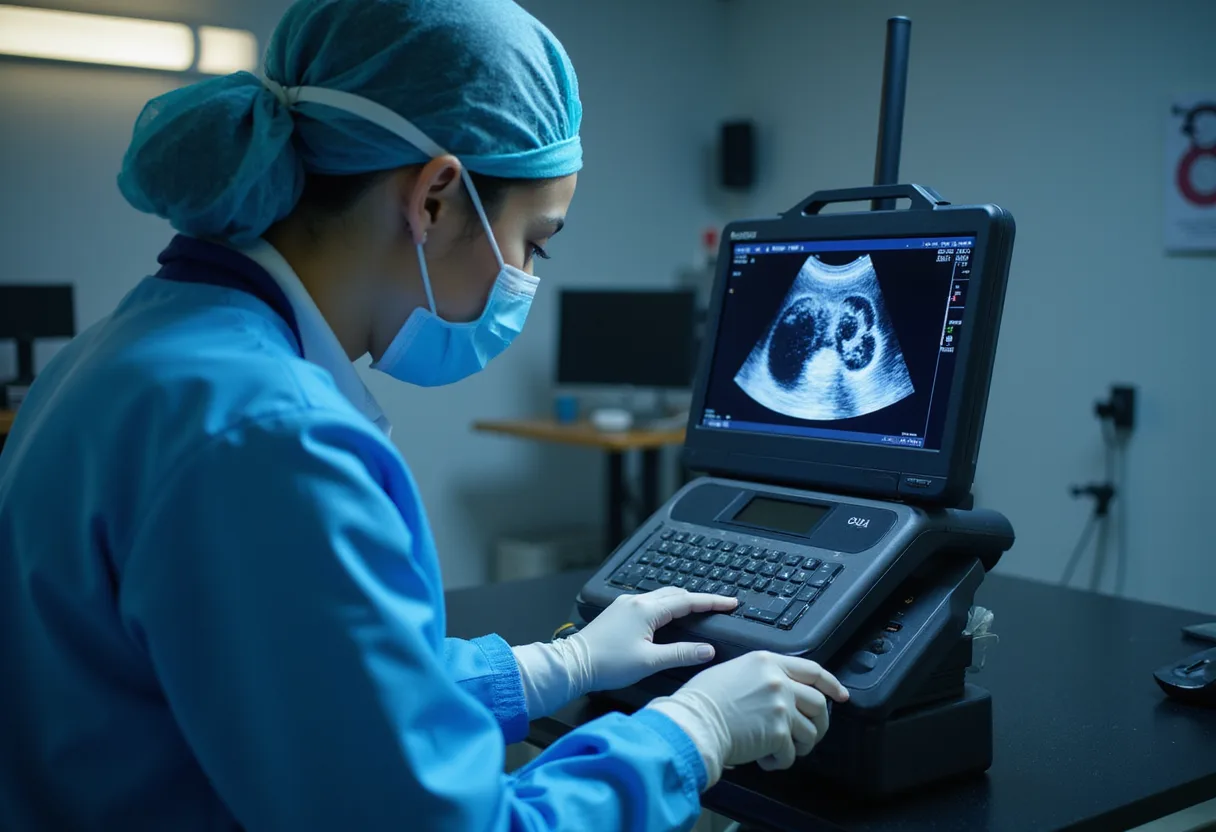
First Horse Treated With Focused Ultrasound for Sarcoid Tumors
A horse named Pea is the first equine patient to receive focused ultrasound for sarcoid skin tumors, Virginia Tech reports, opening a new noninvasive testing path.
Updated
A horse named Pea has become the first patient to receive focused ultrasound treatment for sarcoids, the most common skin tumors veterinarians see in horses, in a first-of-its-kind procedure performed at Virginia Tech.
The case marks the first time this noninvasive technology has been directed at equine sarcoids, a tumor type that has resisted reliable treatment options for decades. Sarcoids are locally invasive skin tumors that frequently recur after surgical removal, cryotherapy, or topical chemotherapy, and they present a persistent management problem in equine practice.
What changes at the exam table?
Focused ultrasound works by concentrating sound waves on a targeted tissue depth, delivering therapeutic energy without incisions. For equine practitioners, the appeal is straightforward: sarcoids commonly appear on limbs, the head, and other sites where surgical margins are hard to achieve and where recurrence drives repeated, costly interventions for owners.
Until now, this technology had not been applied to sarcoids in any horse. Pea's treatment establishes the first clinical data point for the approach in this species and tumor type.
Why one case matters
A single-patient first application does not establish efficacy, and no outcome data, follow-up interval, or tumor response has yet been reported from the case. What it does establish is feasibility: that focused ultrasound can be delivered to equine sarcoid tissue at all.
That distinction matters for how clinicians should frame the development with clients. The appropriate read is that a new noninvasive modality has entered early testing for a tumor type with no uniformly effective standard of care — not that a new treatment is available.
What comes next
Virginia Tech's veterinary team will need to report tumor response, recurrence, and safety data from Pea's case before any broader conclusions are possible. Subsequent patients would be required to characterize dosing, treatment intervals, and outcomes across sarcoid subtypes and body locations.
For now, the case signals a new direction in equine oncology: if the approach proves effective in follow-up, focused ultrasound could offer owners a non-surgical alternative for a tumor that currently sends many horses back to the treatment room again and again.
Source: Google News: Veterinary medicine
Amara Osei
Show full bio
Correspondent covering companies, deals and strategy in Small- and large-animal clinical practice at The Vet Scope.
Related articles
Lung ultrasound findings shift after colic surgery in horses, study finds
Brazilian Veterinary Oncologists Release Consensus on Canine Sarcoma
Medneo Acquires Burgess Diagnostics to Enter UK Veterinary Imaging
Rare Russian Trotter Saved by Pioneering Penn Vet Surgery
Thoracic Ultrasound Evaluated as Diagnostic Tool for Sheep Respiratory Disease