Felycin-CA1, ReadyRESCUE and a portable scope headlined the 2026 New York Vet Show
Felycin-CA1, the first FDA conditionally approved feline HCM drug, joined a 5-year-shelf-life activated carbon and a field-portable endoscopy console at the 2026 New York Vet Show.
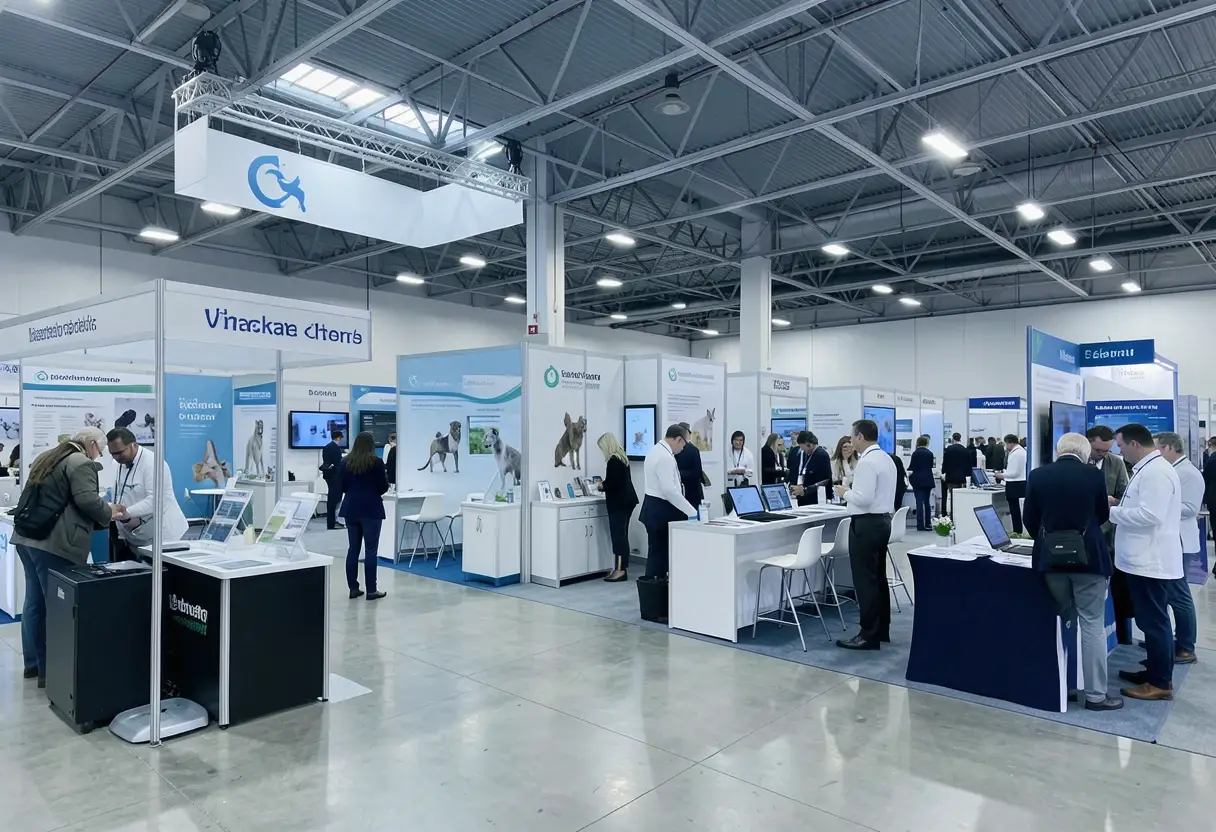
Photo: AI-generated
The FDA's first conditionally approved drug for feline hypertrophic cardiomyopathy, a charcoal alternative with a 5-year shelf life, and a portable endoscopy console drew attention last week at the 2026 New York Vet Show, held at the Jacob K. Javits Convention Center in New York City. Company representatives walked dvm360 through each product on the show floor.
A cleaner answer for toxin ingestion
Mat Glassman, VMD, DACVS, MBA, founder and CEO of ReadyRESCUE, described the activated carbon product for dogs and cats that have swallowed toxins as a compact, cleaner version of activated charcoal. It takes up less volume than traditional charcoal, he said, and doesn't end up "all over your technicians or your animals."
The numbers matter at the shelf. ReadyRESCUE lasts 5 years, against 2 years for traditional charcoal, at roughly the same cost.
The product consists of synthetic carbon spheres that the company's website calls denser and more uniform than powdered charcoal, and it contains no sorbitol. It ships in 30-g vials dosed by body weight and is sold to veterinary practices and directly to pet owners, who can administer it at home as a bridge to veterinary care.
Glassman said the University of Georgia ran the company's validation studies by weight. "It's just as absorbent as activated charcoal, but our activated carbon just is in a much better delivery format," he said. Company testing with common toxins found the product as effective by weight as activated charcoal and Toxiban, which the site identifies as the charcoal product most hospitals use.
The limitations are explicit. ReadyRESCUE binds poorly to xylitol, ethylene glycol, alcohols, heavy metals and corrosive substances. It should not go to unconscious animals or those with a gastrointestinal obstruction or a compromised airway. The site classifies it as a device, which the FDA does not formally regulate. Veterinary advisers guided development, including Benjamin Brainard, VMD, DACVAA, DACVECC, director of clinical research at the University of Georgia College of Veterinary Medicine.
What does the first HCM drug change for cats?
Hypertrophic cardiomyopathy, a thickening of the heart muscle, affects about 1 in 7 pet cats and about 1 in 3 cats older than 9 years. Some cats show no signs of illness for years.
Felycin-CA1 (sirolimus delayed-release tablets; PRN Pharmacal) became the first drug conditionally approved for cats with HCM when the FDA granted conditional approval in March 2025 for managing ventricular hypertrophy in cats with subclinical disease. TriviumVet developed the once-weekly tablet; it launched under the PRN Pharmacal brand in June 2025 and is available only by prescription.
Dan Fortuna of PRN Pharmacal said the company is targeting cats with subclinical HCM in stages B1 and B2, particularly higher-risk animals, including certain purebreds and older males. Finding those cats means bringing more of them in for blood work, including NT-proBNP testing.
"I feel personally it's going to revolutionize how we deal with cats on a wellness basis," Fortuna said.
Sirolimus is used at higher doses in people to prevent organ transplant rejection. The FDA said the drug is not expected to suppress the immune system at the feline dose, that cats should be screened for liver disease before starting it, and that it should not be used in cats with preexisting liver disease or diabetes mellitus.
The approval rested on the RAPACAT trial, a randomized, double-blinded, placebo-controlled study of 43 client-owned cats with subclinical HCM at 2 veterinary referral centers. Cats received a placebo or a low or high dose of delayed-release rapamycin — another name for sirolimus — once weekly for 6 months. Maximum left ventricular wall thickness was significantly lower in the low-dose group than in the placebo group at study end. The drug was well tolerated, with no significant difference in adverse events between groups. That low dose, 0.3 mg/kg, is the approved target dose.
The FDA grants conditional approval when a drug treats a serious or life-threatening disease or meets an unmet animal health need and proving effectiveness would require a particularly difficult study. Detecting subclinical HCM demands advanced diagnostics, the agency noted, which makes enrolling enough cats hard.
A larger trial, the HALT HCM Study, is meant to support full approval. The blinded, randomized, placebo-controlled study, run by TriviumVet at clinical sites across the United States, follows cats with ACVIM stage B1 or B2 HCM and elevated NT-proBNP concentrations through 12 months of once-weekly dosing. TriviumVet lists the study as fully enrolled. In March 2025, the company said it aimed to enroll 300 cats and expected to complete the study by 2028.
Endoscopy that travels to the patient
The All in One Endoscopy System from Panther Veterinary, a division of Panther Healthcare, combines an HD camera, image processor and light source in a single console that runs both flexible and rigid scopes. Per the company's product page, it handles flexible procedures such as upper gastrointestinal endoscopy and bronchoscopy and rigid procedures such as laparoscopy and arthroscopy, with scopes and accessories sized for companion, large and exotic animals.
A Panther Healthcare representative said the system is compact and portable enough for field work with horses and other large animals. It includes a 3-meter scope for equine use, suction, air and water attachments, and it can connect to a larger monitor.
"The light source is built into the system, so it's very easy to use and very easy to set up," the representative said.
The exhibit circuit continues: the Fetch Long Beach Veterinary Conference runs Dec. 3–5, 2026, in Long Beach, California, where dvm360 will again report from the exhibit hall — and where HALT HCM data may edge Felycin-CA1 closer to full approval.
Source: dvm360.com
Grace Kim
Show full bio
Staff writer covering regulation, policy and their impact on Small- and large-animal clinical practice at The Vet Scope.
Related articles
FDA CVM Pilot Targets Domestic Animal Drug Manufacturing
FDA CVM Clears BRD Treatment for Cattle Alongside Several New Dog Drugs
Cornell Veterinarians Weigh In on CBD Use in Animals
Canine bone cancer pain drug clears hurdle for FDA conditional approval
Heavy Metals and Glyphosate Found in Nearly All Cat Foods Tested